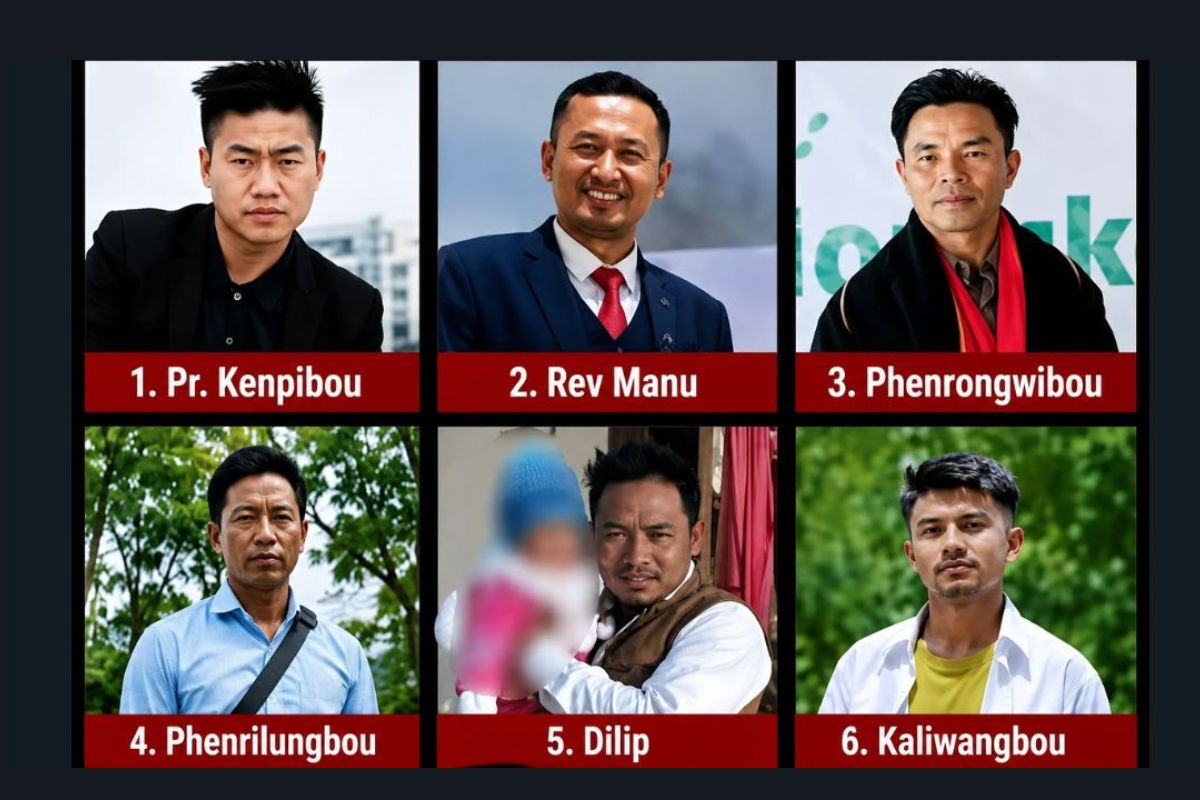
The Kuki-Zo Council (KZC) has publicly admitted that members of the Kuki-Zo community killed six Naga civilians who were taken hostage earlier this year in Manipur. The rare acknowledgment came during a press conference on June 25, 2026, at the Churachandpur district headquarters, where KZC Chairman Henlienthang Thanglet called the killings a “great mistake” and apologised on behalf of his community.
“I admit the Kuki-Zo community made a great mistake in killing the six Kutcha Naga civilians. It was done out of emotion. I strongly criticise it and apologise on behalf of my people,” Thanglet stated, according to multiple reports and video footage from the event. He urged people not to blame the entire Kuki-Zo community for the actions of a few individuals and called for an impartial investigation into all incidents of violence linked to the ongoing conflict.
The six Naga civilians, identified through reports as including members of the Liangmai Naga community, were abducted on May 13, 2026, from Leilon Vaiphei village in Kangpokpi district. Their bodies were recovered on June 10 near Kharam Vaiphei village after an extensive search operation involving hundreds of security personnel, sniffer dogs and forensic teams. The bodies were in a decomposed state, and DNA testing and post-mortem examinations were carried out at Jawaharlal Nehru Institute of Medical Sciences (JNIMS) in Imphal.
The killings took place amid rising tensions between Naga and Kuki communities, which intensified in early 2026 alongside the larger Meitei-Kuki-Zo conflict that began in May 2023. The violence, triggered by disputes over Scheduled Tribe status, land rights and demographic concerns, has claimed more than 250 lives and displaced tens of thousands of people. While the conflict initially centred on clashes between the Meitei and Kuki-Zo communities, it later spread to Naga areas in the northern hills.
The abductions followed the ambush killing of three Thadou (Kuki-Zo) church leaders and pastors in Kangpokpi district on May 13. Kuki groups alleged Naga involvement or proxy actions, while Naga organisations denied responsibility and described the incident as part of a continuing cycle of retaliation. During the unrest, both communities reportedly took hostages. Nagas later released Kuki hostages, estimated at around 14 to 16 people, but the six Naga men remained missing until their bodies were recovered.
Naga civil society organisations, including the United Naga Council (UNC), condemned the killings and observed shutdowns demanding justice. The All Naga Students’ Association, Manipur (ANSAM), rejected the KZC apology, calling it “insincere” and “insulting.” The organisation also criticised the use of the term “Kacha Nagas,” describing it as derogatory, and said justice requires the identification, arrest and punishment of those responsible under the law rather than public apologies alone.
During the press conference, Thanglet referred to earlier incidents, including an alleged fight involving a drunk Tangkhul Naga youth, the killing of Kuki-Zo individuals, the burning of villages and the ambush on the pastors. He claimed that the Kuki-Zo community had suffered heavily, alleging 14 deaths and shortages of essential supplies, and questioned attempts to portray the entire community as violent. KZC spokesperson Ginza Vualzong also called for a fair investigation into all incidents involving every side.
Manipur’s ethnic conflicts have deep historical roots linked to colonial-era policies, post-independence administrative divisions between the Imphal Valley and the hill districts, disputes over land, and competition over resources, including alleged poppy cultivation and cross-border issues with Myanmar. Although Nagas and Kukis have experienced periodic clashes over the years, the Meitei-Kuki violence that began in 2023 further deepened existing divisions.
By February 2026, direct confrontations between Naga and Kuki groups had increased in districts such as Ukhrul, Kangpokpi and Senapati. Incidents of arson, ambushes and abductions became more frequent, while allegations of state bias, arms looting and the involvement of insurgent groups complicated efforts to restore peace under President’s Rule and the current government led by Chief Minister Yumnam Khemchand Singh.
Amnesty International and other organisations have called for the immediate release of all hostages and urged all sides to end the cycle of violence, warning about the growing risks faced by civilians.
The KZC’s statement is the first public expression of regret by a major Kuki-Zo civil society organisation over these killings. It came after the bodies were recovered and amid increasing public pressure. While some see the apology as a step towards reducing tensions, others believe it falls short without arrests, transparent investigations and accountability. ANSAM’s rejection of the apology reflects the deep mistrust that remains between the communities.
The Manipur Chief Minister has vowed action against those responsible for atrocities, while central security forces continue to remain deployed across affected areas. However, with more than 250 people killed since 2023, thousands displaced and large numbers of weapons still in circulation, restoring peace will require addressing issues such as land rights, political representation, disarmament and balanced development.