
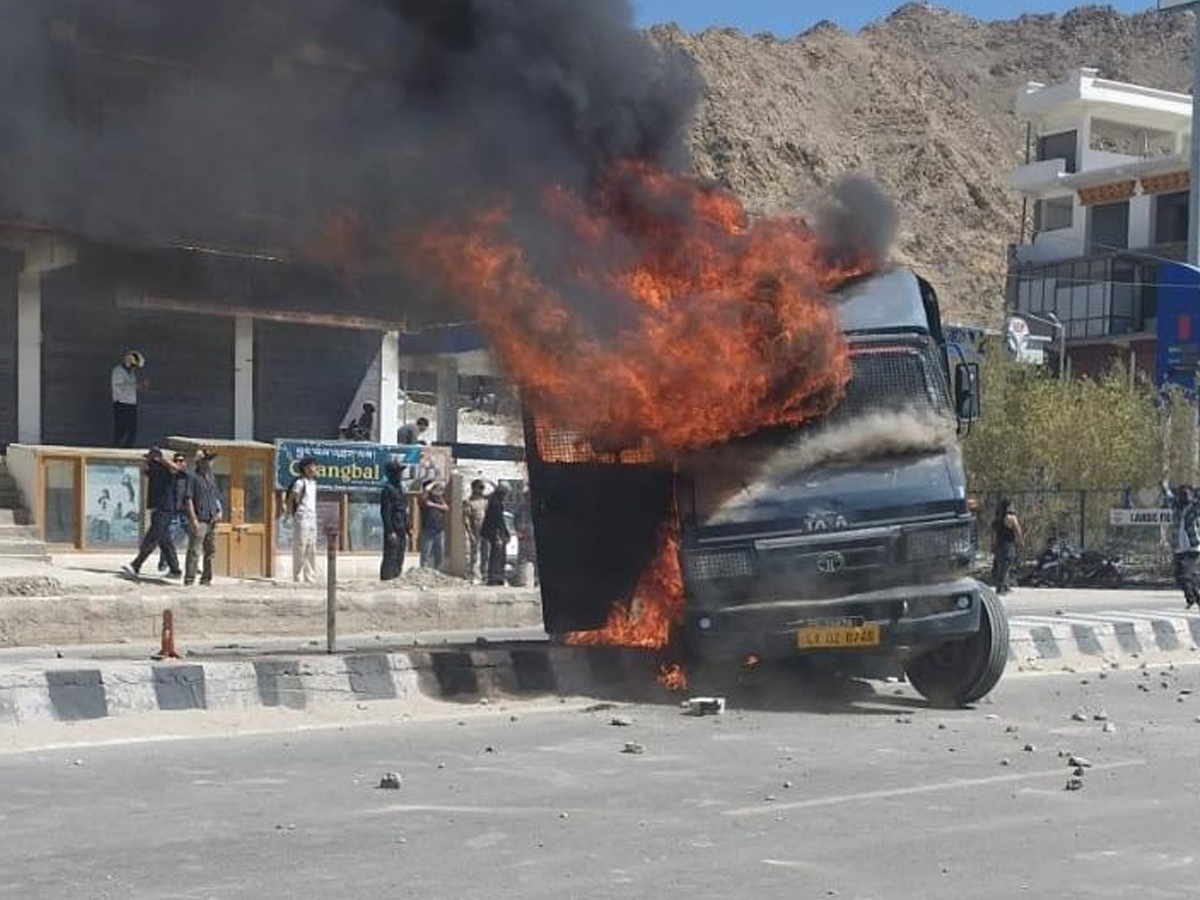
Protests led by mostly young men turned violent in Leh, the capital of Ladakh, on Wednesday. The unrest followed warnings by leaders of the Leh Apex Body (LAB) that public patience was running out. LAB is an independent organisation representing local interests.
The protests are not only about statehood but also about protecting Ladakh’s unique cultural and tribal identity. Buddhist and Muslim communities have joined forces in this movement.
Hunger Strikes Continue
The LAB leadership began a 35-day hunger strike on September 10. Famous activist Sonam Wangchuk participated initially under the LAB umbrella but ended his strike, condemning the violence as “nonsensical.”
LAB leaders, along with the Kargil Democratic Alliance (KDA), have been negotiating with the Ministry of Home Affairs (MHA) over their demands for the past four years.
Immediate Demands Behind the Protest
LAB youth called for a major protest on Wednesday, demanding an immediate meeting with the central government. The last meeting was in May 2025.
The MHA scheduled the next talks for October 6, 2025. LAB members rejected the date, calling it “just dictation” while people are still on hunger strike. This disagreement led to violent protests.
In a press conference, LAB co-chairman Chering Dorjey said, “Our protest is peaceful, but people are getting impatient. The situation may get out of our hands.”
Wangchuk’s Concerns
Sonam Wangchuk said the BJP-led central government promised to include Ladakh under the Sixth Schedule of the Constitution. He emphasized this should happen before the upcoming Hill Council polls.
He added, “They (people) tell us we are getting nothing through peaceful protest. We do not want anything to happen that may be embarrassing for India.”
Major Demands of the Leh-Ladakh Protest
The demands have been ongoing since Ladakh became a Union Territory in 2019. The UT of Jammu and Kashmir has an elected assembly, but Ladakh remains under central administration.
Key grievances include:
- Statehood for Ladakh – UT status has not fulfilled local demands for self-governance and protection.
- Inclusion under the Sixth Schedule – To safeguard tribal status and rights.
- Separate Public Service Commission – To address local unemployment.
- Two Parliamentary Seats – Ladakh currently has one seat and wants more representation at the Centre.
Many locals are frustrated as protections for land ownership by non-locals ended after the abrogation of Article 370. These changes have intensified the movement.