
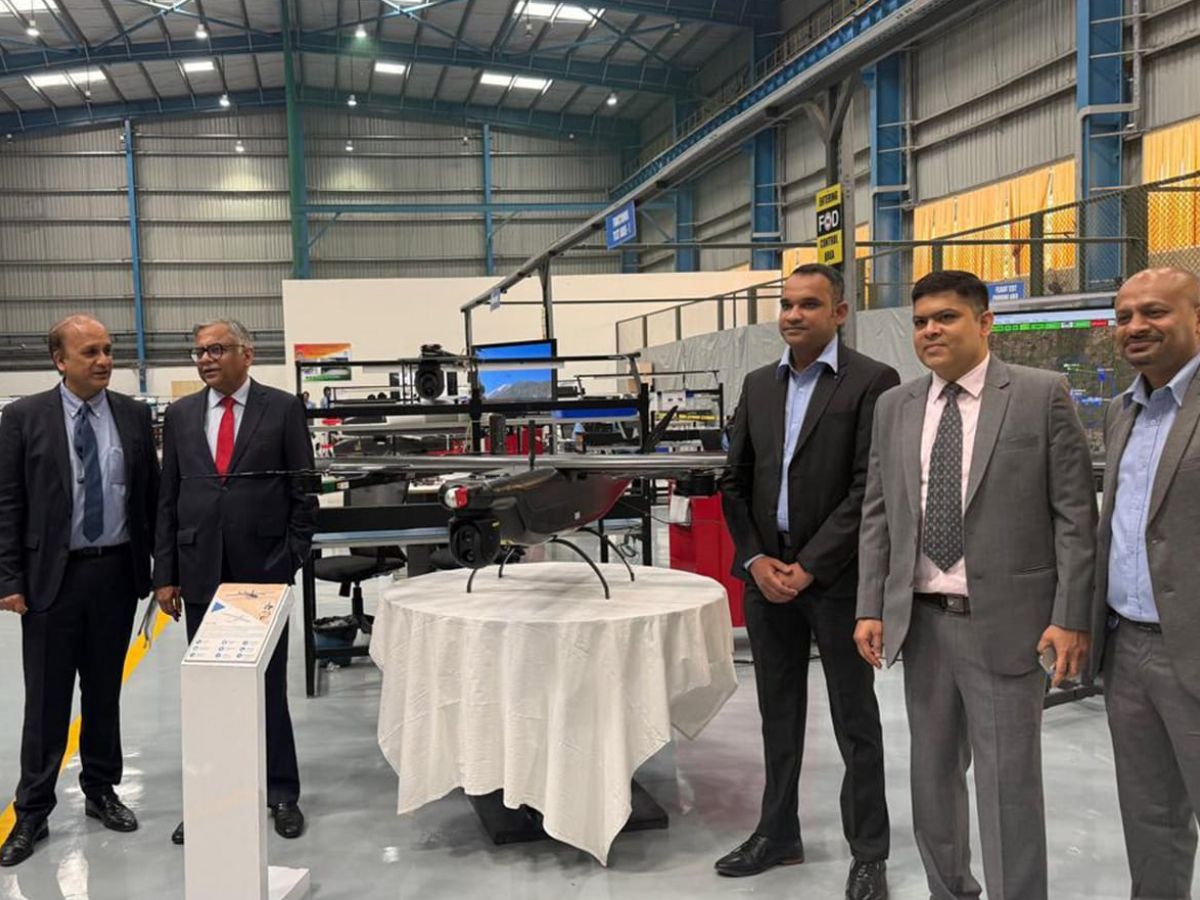
The visit by Tata Sons Chairman N. Chandrasekaran to the upcoming C-130J Maintenance, Repair and Overhaul (MRO) facility in Bengaluru may appear at first glance to be a routine corporate milestone. In reality, it highlights a far more significant shift in India’s defence preparedness: the emergence of private-sector capability in sustaining military aircraft during an increasingly uncertain global security environment.
The facility, being developed by Tata Advanced Systems in partnership with Lockheed Martin, is scheduled to be commissioned by the end of 2026 and will become India’s first private-sector defence MRO hub dedicated to the C-130J Super Hercules transport aircraft. The centre will provide depot-level maintenance, heavy repairs, component overhaul, structural restoration, avionics upgrades and training support for the Indian Air Force’s fleet of C-130Js. Construction is expected to be completed by the end of 2026, with the first aircraft likely to enter the facility in early 2027.
The significance of the project extends far beyond maintenance. Across the world, military planners have been forced to reassess supply-chain vulnerabilities exposed by ongoing conflicts in Europe, the Middle East and elsewhere. Modern warfare is increasingly demonstrating that military readiness depends not only on acquiring advanced platforms but also on the ability to repair, maintain and rapidly return them to service.
For India, which faces a complex security environment stretching from the western frontier to the Indo-Pacific, aircraft availability can be as important as fleet size. Transport aircraft such as the C-130J play a crucial role in special operations, rapid troop deployment, humanitarian assistance, disaster relief and logistics support in remote regions. A domestic heavy-maintenance capability reduces dependence on overseas facilities and shortens turnaround times, helping keep aircraft operational when they are needed most.
The project also reflects a broader transformation in India’s defence industrial ecosystem. Traditionally, military maintenance and sustainment have been dominated by state-owned entities. The Tata-Lockheed Martin venture signals the growing role of private industry in supporting frontline military assets, complementing the government’s push for greater self-reliance in defence manufacturing.
Its importance becomes clearer when viewed alongside other major aerospace initiatives. Tata is already producing C-295 transport aircraft in India through its partnership with Airbus, while additional investments are being made in helicopter assembly and aerospace manufacturing infrastructure. Together, these developments indicate the gradual emergence of a domestic aerospace ecosystem that spans manufacturing, assembly, maintenance and lifecycle support.
The Bengaluru MRO facility could also position India as a regional support hub. Lockheed Martin has indicated that the centre could eventually support not only Indian Air Force aircraft but also regional and international C-130J operators. Such a role would strengthen India’s standing within global aerospace supply chains while generating high-skill employment and technical expertise.
As geopolitical tensions rise and military supply chains become increasingly strategic, the ability to sustain defence platforms at home is emerging as a critical component of national security. In that context, India’s first private military aircraft MRO facility is not merely an aviation project. It is part of a larger effort to ensure that the country’s armed forces remain operationally resilient in an era where readiness, self-reliance and industrial capacity are becoming as important as the weapons themselves.