
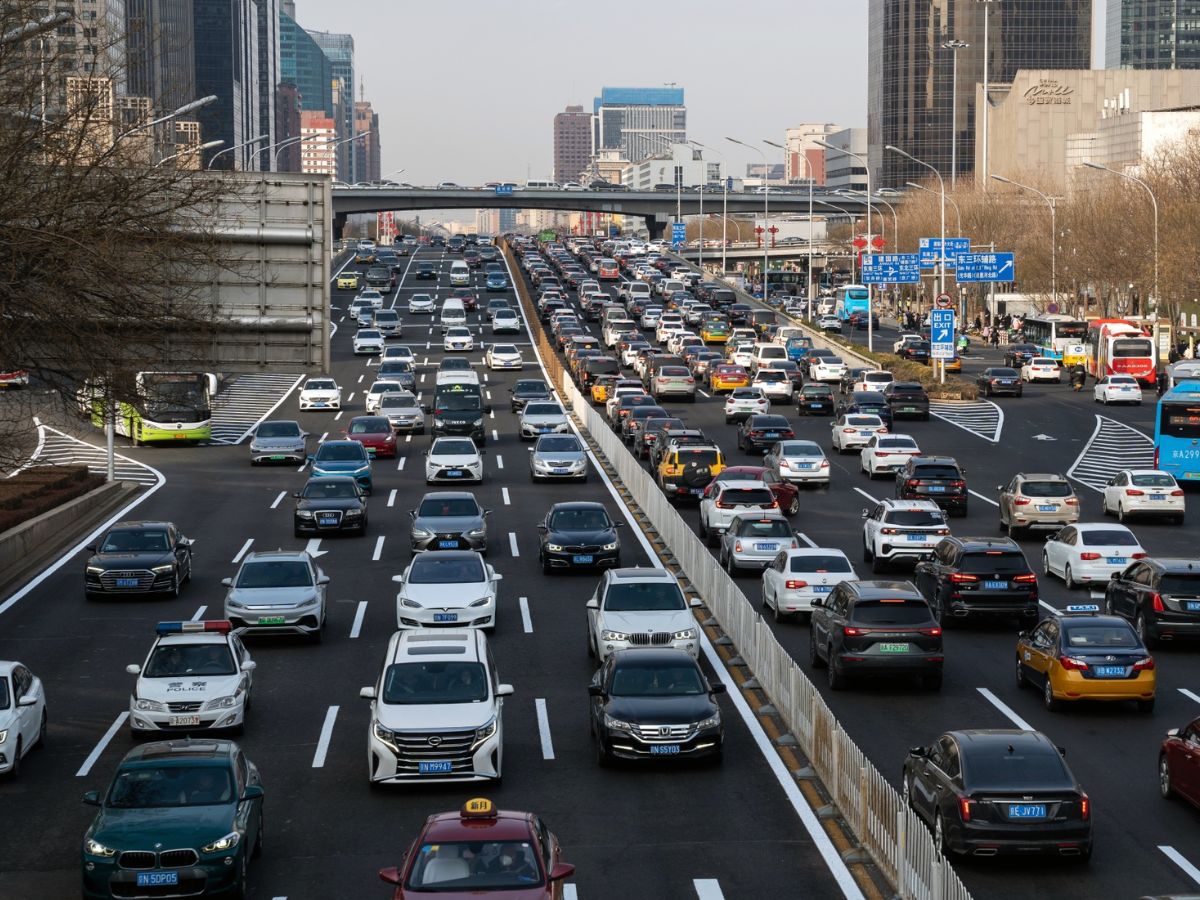
The Supreme Court on Wednesday withdrew the protection earlier given to owners of old, high-polluting vehicles in the National Capital Region (NCR), including Delhi. This decision affects diesel vehicles older than 10 years and petrol vehicles older than 15 years that fall under BS-III emission norms or lower.
The court modified its August 12 order, which had earlier stopped authorities from taking strict action against such vehicles. The change came after the Commission for Air Quality Management (CAQM) informed the court that the earlier relief had allowed highly polluting vehicles to return to NCR roads, worsening air pollution levels. These vehicles were also protected from being seized by enforcement agencies.
Supreme Court modifies earlier order
A bench comprising Chief Justice of India Surya Kant, Justice Joymalya Bagchi, and Justice Vipul M Pancholi clarified the revised position, stating, “The August 12, 2025 order is modified to the extent that no coercive steps shall be taken against the owners of BS-IV and newer emission standard vehicles on the ground that they are 10-year old diesel and 15-year old petrol vehicles.”
This means that only BS-IV and newer vehicles will continue to enjoy protection, while older BS-III and below vehicles will now face enforcement action.
CAQM flags pollution risk from older vehicles
The CAQM’s recommendation was placed before the court by Additional Solicitor General Aishwarya Bhati. She explained that after studying pollution levels in Delhi-NCR, the expert body found that BS-I, BS-II and BS-III vehicles were still operating on roads, posing serious health risks to residents.
The commission noted, “For controlling vehicular emissions, BS-III and below standard vehicles are required to be kept out of purview of order dated August 12, 2025 of the Supreme Court considering the emission potential of these vehicles in comparison to BS-VI emission standards.”
CAQM stressed that vehicle emissions remain one of the biggest contributors to poor air quality in the region, and the continued use of End-of-Life (EoL) vehicles has long been a major concern.
Past rulings and long-term impact
The National Green Tribunal (NGT) had earlier issued multiple orders between 2014 and 2015 to restrict the movement of End-of-Life vehicles in NCR. These directions were later upheld by the Supreme Court on October 29, 2018.
In its assessment, CAQM pointed out that BS-III vehicles have been in use for over 15 years, BS-II vehicles for more than 20 years, and BS-I vehicles for over 24 years. Given Delhi-NCR’s severe pollution, especially during winter when weather conditions trap pollutants, stricter controls are necessary.
The report stated, “Since Delhi-NCR faces an extraordinary situation, specially during the winter season due to poor dispersal of pollutants on account of unfavourable meteorological conditions, there is a need to restrict plying of polluting vehicles based on emission standards in Delhi-NCR.”
Fuel ban and future enforcement
According to CAQM data, nearly 93% of vehicles in Delhi-NCR are light motor vehicles and two-wheelers, which form the bulk of polluting vehicles on the road.
To ensure compliance with court orders, the commission directed in April 2025 that fuel supply be denied to all End-of-Life vehicles from November 1, 2025. The same rule will apply to five high-vehicle-density NCR districts starting April 1, 2026.
This latest Supreme Court order is expected to strengthen pollution control efforts and reduce the number of highly polluting vehicles operating in the region.