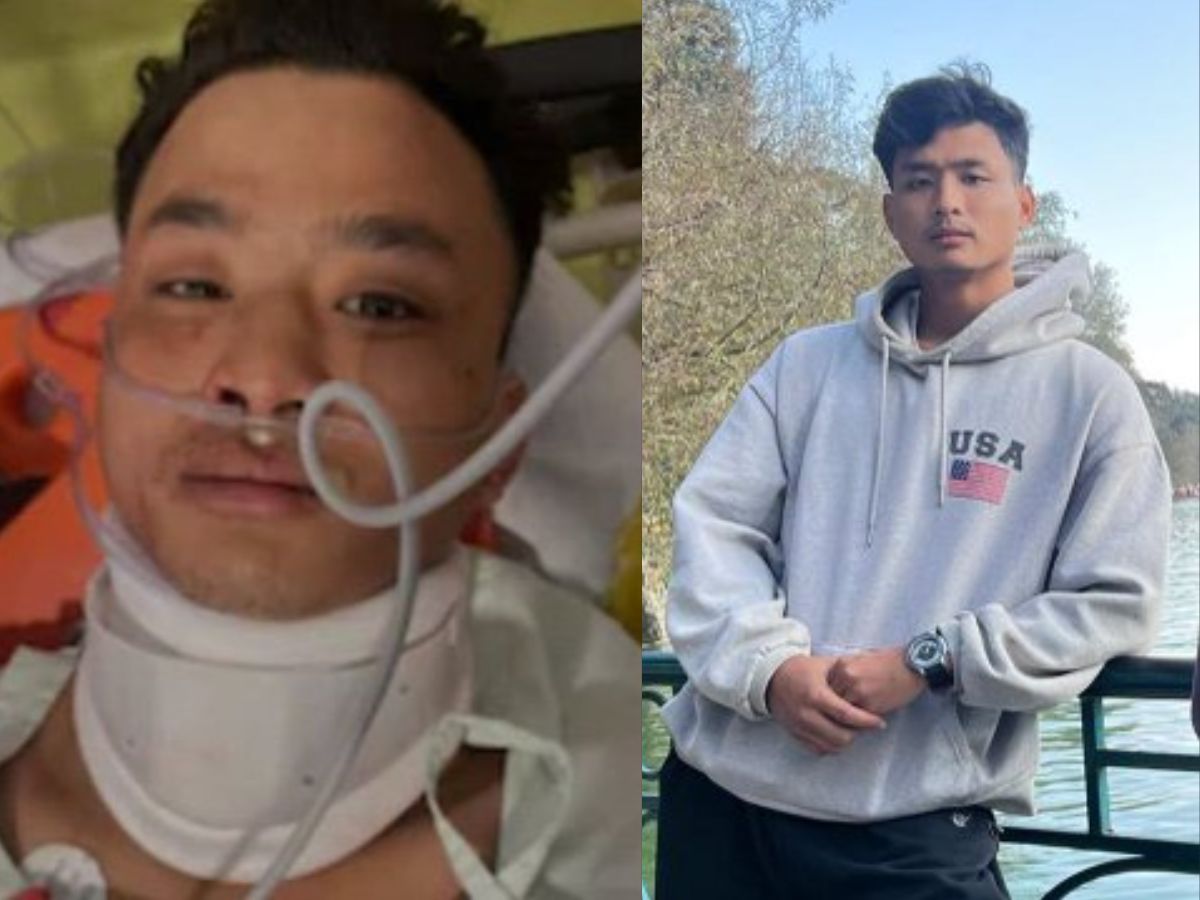
Anjel Chakma Death Case: A simple outing to buy groceries turned into a deadly confrontation for Anjel Chakma, a 24-year-old MBA student from Tripura, on 9 December 2025 in Dehradun, Uttarakhand.
Anjel Chakma, a 24-year-old MBA student from Tripura, was killed in a racially motivated attack in Dehradun, Uttarakhand.
Listen to his brother’s firsthand account of what happened during the attack.
The HATRED stirred up by vile forces will divide our entire society. pic.twitter.com/VCC09iGjcJ
— Dr Ranjan (@AAPforNewIndia) December 28, 2025
An exchange over hurtful racial remarks erupted into violence, leaving him critically injured. After battling for life in the hospital for over two weeks, Anjel died on 26 December, intensifying national outrage and calls for justice.
Who Was Anjel Chakma?
Anjel Chakma lived in Dehradun for over a year while studying for his MBA at a local university. He came from Nandannagar in West Tripura’s Unakoti district and was the son of a Border Security Force (BSF) jawan based in Manipur.
Friends and family remember Anjel as calm and kind. He had a promising future ahead, but tragedy struck before he could complete his ambitions.
What Led to the Tripura Attack? Racial Slurs & Confrontation
On December 9, Anjel and his younger brother Michael were near a roadside canteen in the Selakui area of Dehradun when a group of six men allegedly targeted them. The men hurled racial slurs such as “Chinese,” “Chinki,” “Nepali”, and even mockingly asked if they had come to buy pork, terms commonly used in derogatory contexts.
Anjel Chakma protested the abuse, asserting his identity. At one point, he said, “We are not Chinese… We are Indians. What certificate should we show to prove that?” This confrontation quickly escalated.
What is the Case of Anjel Chakma?
The case began when Anjel Chakma and his younger brother, Michael, were accosted by a group of six men in the Selakui area of Dehradun. The group allegedly hurled racial slurs like “Chinki,” “Chinese,” and “Momo” at them, mocking their appearance and Northeastern origin. Anjel stood up against the abuse and said, “We are not Chinese… We are Indians. What certificate should we show to prove that?”
The argument quickly escalated into physical violence. Anjel was repeatedly struck with a sharp object and a metal kadaa, receiving severe injuries to his head, back, neck, and abdomen. He was rushed to Graphic Era Hospital, where he fought for life for 17 days before succumbing to his wounds.
Tripura Attack: Who Were the Attackers & What Happened to Them?
Police identified six men allegedly involved in the assault. Five have been arrested so far:
- Avinash Negi
- Suraj Khwas
- Sumit
- Shaurya Rajput
- Ayush Badoni
Two of the five are juveniles and have been sent to a juvenile facility.
The sixth suspect, named Yagya Awasthi, is believed to have fled to Nepal. Authorities have announced a ₹25,000 reward for information leading to his arrest, and a police team has been sent to Nepal to track him down. After Anjel’s death, police upgraded the case to include murder charges alongside the original assault FIR.
Tripura Attack: Police Claimed This Was Not Due to ‘Racism’
Despite widespread belief that racial slurs triggered the attack, police have stated that they are not officially treating the case solely as a racial hate crime. Senior officers noted the assailants and Anjel were drinking alcohol and described the altercation as a dispute that escalated — not officially confirmed as racially motivated in police records.
The local SSP also pointed out that one of the accused is from Manipur, adding complexity to the narrative. However, many observers and community leaders disagree, citing the racial insults as central to how the violence unfolded.
The Brutal Tripura Assault & Long Fight for Life
What started as words turned into violence. The attackers allegedly struck Anjel Chakma with a sharp weapon and a metal ‘kada’, inflicting deep injuries to his head, back, neck, and abdomen.
Police describe the assailants as appearing intoxicated at the time of the attack. Anjel was rushed to Graphic Era Hospital but remained in critical condition for 17 days before succumbing to his injuries on December 26. Medical reports showed serious trauma, including spinal and brain injuries, underlining the brutality of the assault.
Tripura Attack: Calls for Anti-Racial Violence Laws
Civil rights groups and organisations like the Chakma Development Foundation of India (CDFI) have urged the Union Home Minister to introduce fast-track trials and stringent legislation specifically targeting hate crimes.
Supporters argue that such laws are needed to protect students and citizens from discrimination based on appearance or ethnicity.
Similar Incidents Involving Northeastern Citizens
Anjel Chakma’s case is not the first time people from Northeast India have faced racial abuse outside their home region. Over the years, victims have reported verbal taunts, physical harassment, and discrimination in various cities. Common slurs include calling Northeasterners “Chinese,” “Nepali,” or “Momo” — terms that wrongly equate Indian citizens with foreign identities.
Student groups and human rights advocates have frequently highlighted these patterns. Many students from the Northeast report feeling unsafe or unwelcome in universities far from home due to repeated racial ridicule and prejudice.
Tripura Attack: Public & Political Reaction
The killing has drawn widespread condemnation. Tripura CM Manik Saha spoke with Uttarakhand CM Pushkar Singh Dhami, demanding swift justice and stricter action against the perpetrators.
Student bodies, civil rights groups, and community organisations, including the Chakma Development Foundation of India (CDFI), have called for fast-track trials and stronger anti-racial violence laws.
Many online and offline protests have erupted, with supporters emphasising that racism has no place in a diverse nation and demanding systemic change to protect minorities.
Why This Case Matters?
Anjel Chakma’s death has sparked a broader national conversation about racism and safety for people from the Northeast. His final stand asserting his Indian identity before the attack has resonated widely, especially among students from diverse backgrounds.
The case exposes how prejudice and ignorance can lead to tragic consequences, highlighting the need for societal change and stronger protections for marginalized communities.