
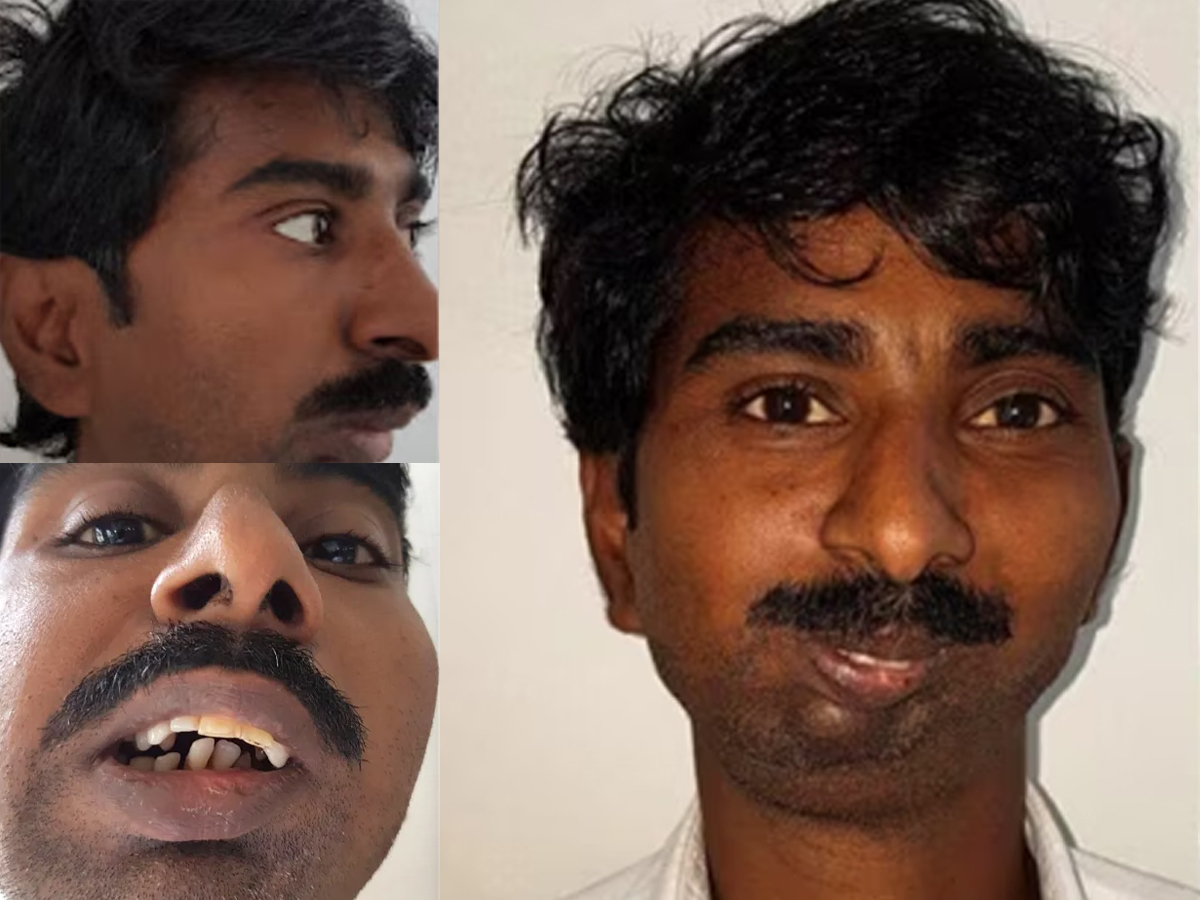
Rajendra Panchal from Pune suffered from a rare jaw condition from the age of one. After falling on his face as a toddler, his jaw was damaged, leaving him unable to open his mouth more than 1.5 cm.
His family could not afford proper medical care, and Panchal survived on a liquid and semi-solid diet for 38 years. The condition, called Temporomandibular Joint (TMJ) ankylosis, also left him malnourished over the years.
How Was Panchal’s Jaw Restored?
In 2017, Panchal underwent surgery at the MA Rangoonwala College of Dental Sciences and Research Centre. Maxillofacial surgeon Dr Sameer Garde performed the procedure free of cost. “It is a rare case. Normally, in such cases, it is diagnosed and treated without much delay.
But, here, the patient has persisted with the condition for 38 years, making it even more extremely rare,” said Dr Garde. The four-hour surgery successfully restored a mouth opening of 45 millimeters, giving Panchal a new lease on life.
Online Racism and Misuse of Panchal’s Image
Recently, Panchal’s photo has been misused online by anonymous accounts to mock Indians. Racist users shared his image to stereotype Indian physical features, exposing him to public humiliation. Social media has become a platform for xenophobic and derogatory content, often targeting individuals from South Asia with harmful memes and posts.
Corporate Apology After Racial Slurs
Racism against Indians isn’t limited to individuals. Polymarket, a U.S.-based cryptocurrency prediction platform, faced backlash after an unofficial company post included ethnic slurs.
The post accused users from India, Nigeria, and Turkey of pretending to be women. Neal Kumar, the company’s Chief Legal Officer, apologized on social media, saying, “The post earlier this week from an unofficial Company account was unacceptable, and we take full responsibility. As an Indian American, looking up the history of the term sucked.” He added, “I’ve always found engagement to be far more effective than rage, and believe this came from a place of misunderstanding, not hate… We apologise for the pain, and we are committed to doing better.”
Impact on Awareness and Social Responsibility
The misuse of Panchal’s image highlights how online platforms and anonymous users perpetuate racism. Experts urge social media users to engage responsibly and for companies to monitor unofficial accounts.
Panchal’s story, however, also inspires hope, showing the importance of medical intervention, resilience, and the support of professionals like Dr Garde, who provide care regardless of financial circumstances.