
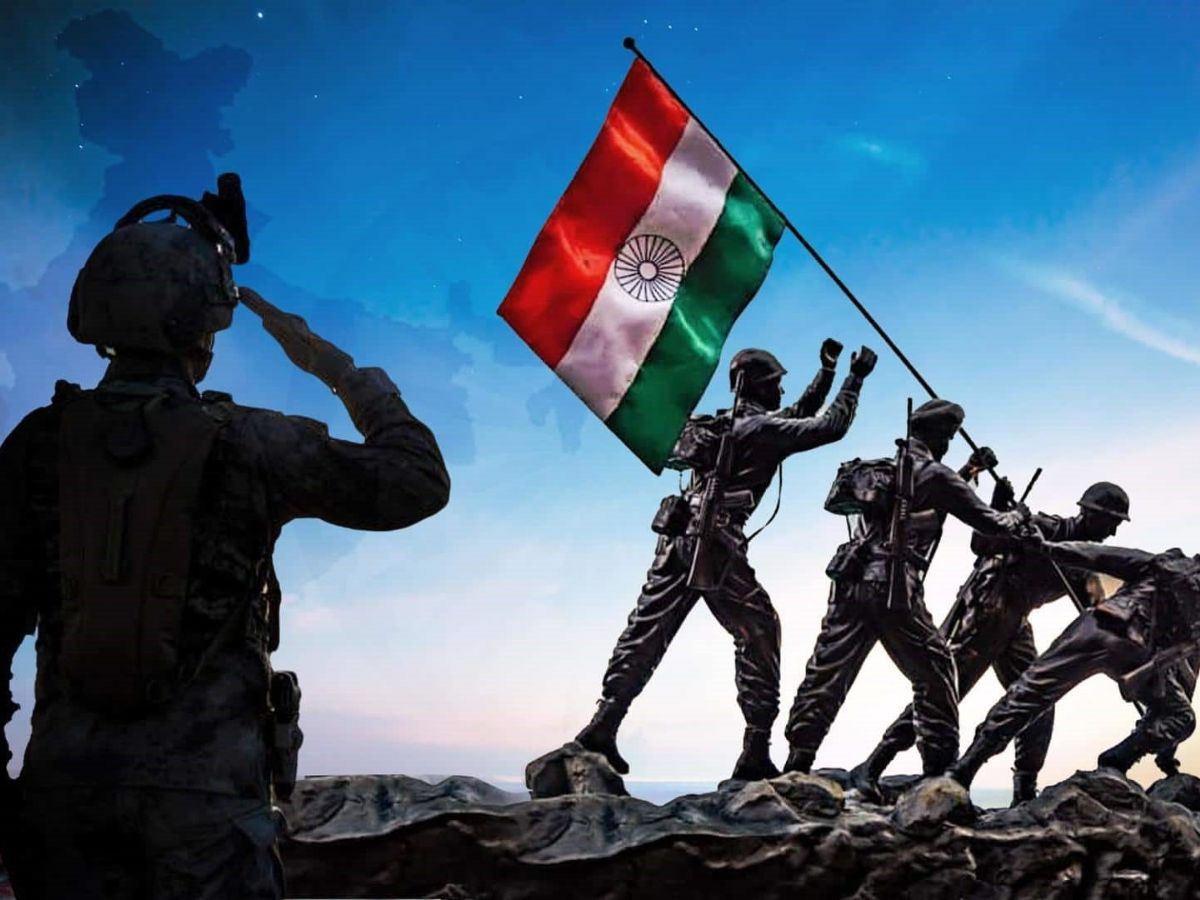
The Government of India has issued a gazette notification, officially awarding the extraordinary courge which had been displayed by Indian Army during performing their duties, including the ‘Operation Sindoor’. The purpose for these gallantry awards, primarily conferred upon the Indian Army and Indian Air Force personnel and to show reality to the nation, how the exceptional courage demonstrated by the awardees.
Six officers who have been awarded the Vir Chakra for their roles in Operation Sindoor:
Colonel Koshank Lamba
Colonel Koshank Lamba was awarded the Vir Chakra for displaying “exceptional bravery”. Col Lamba successfully performed his first ever air mobilisation of a specialised equipment battery on short notice. His actions was perfect and timely for the operation, reflecting the highest martial ethos of the Indian Army.
Lieutenant Colonel Sushil Bisht
Lieutenant Colonel Bisht was main instrumental in the mission’s success. His exceptional courage, leadership and operational guidance led his tead to the success. Indian army compeletly destroyed terrorist camps. He is rewarded for his exceptional bravery and unique leadership during Operation Sindoor.
Group Captain Ranjeet Singh Sidhu
The Group Captain’s squadron Ranjeet Singh Sidhu equipped with fighter aircraft. He was selected for the critical strike missions. He was awarded the Vir Chakra for successfully organising strikes over the pre-determined targets and achieving all desired objectives with exceptional courage.
Group Captain Animesh Patni
His Commanding a strategic Surface to Air Missile (SAM) squadron from a forward airbase, Group Captain Patni showcased “exceptional leadership”. His precise guidance led to a “decisive blow to the capabilities of adversaries”, inflicting significant losses without the squadron suffering any damage.
Squadron Leader Rizwan Malik
Squadron Leader Rizwan Malik is currently serving as Deputy Mission Leader. Squadron Leader Rizwan Malik accomplished midnight strike mission successfully against targets fortified with state-of-the-art air defence systems. The operation demanded low-level, night-time tactical navigation and highly precise weapon delivery within a narrow launch window, successfully evading seamless radar coverage and long-range missile threats.
Squadron Leader Siddhant Singh
Squadron Leader Siddhant Singh led a three-aircraft team that was assigned the job of a stand-off precision attack on a pre-selected target. His achievement involved careful planning, accurate coordination, superb flying, and the best level of airmanship to successfully penetrate a strongly networked and integrated air defence system armed with medium- and long-range Surface-to-Air Guided Weapons (SAGWs) and Air Defence aircraft.
What was Operation Sindoor?
India initiated Operation Sindoor as a retaliatory operation against the Pahalgam terror attack in Jammu and Kashmir on May 7, 2025, in which 26 innocent lives were lost. Operation Sindoor made India switch its strategy from defensive operations.
This multi-domain, highly classified military operation was aimed at heavily entrenched and fortified terrorist camps and infrastructure that had been used for exporting violence into Indian soil. Code-named “Sindoor” to honor the widows of Pahalgam martyrs, the operation commenced at 1:05 am and was successful in its goals within a span of 22 minutes, having destroyed nine terror hideouts in Pakistan and Pakistan-occupied Jammu and Kashmir, including major hubs at Muridke and Bahawalpur.
The mission’s success depended on indigenous weapons, cutting-edge fighter aircraft such as Rafale and Su-30MKI with BrahMos missiles, drones for real-time observation, and essential assistance from ISRO satellites.
Indian Defence Response and Successes
India’s multi-layer air defence system comprising S-400 and Akash systems neutralized the attacks despite Pakistani counter-attacks with drones, artillery, and missiles. Throughout the four-day war, the Indian Air Force destroyed:
- Six Pakistan Air Force (PAF) fighter aircraft
- Two high-value aircraft
- More than 10 Unmanned Combat Air Vehicles (UCAVs)
- One transport C-130 aircraft
- Several cruise missiles
Besides, over 100 terrorists were killed. The fighting ended on the afternoon of May 10, when Pakistan asked for a ceasefire after suffering heavy casualties at the hands of the Indian Air Force.
Also Read: How Has Virginia Giuffre’s Memoir Renewed Focus on the Epstein Scandal?