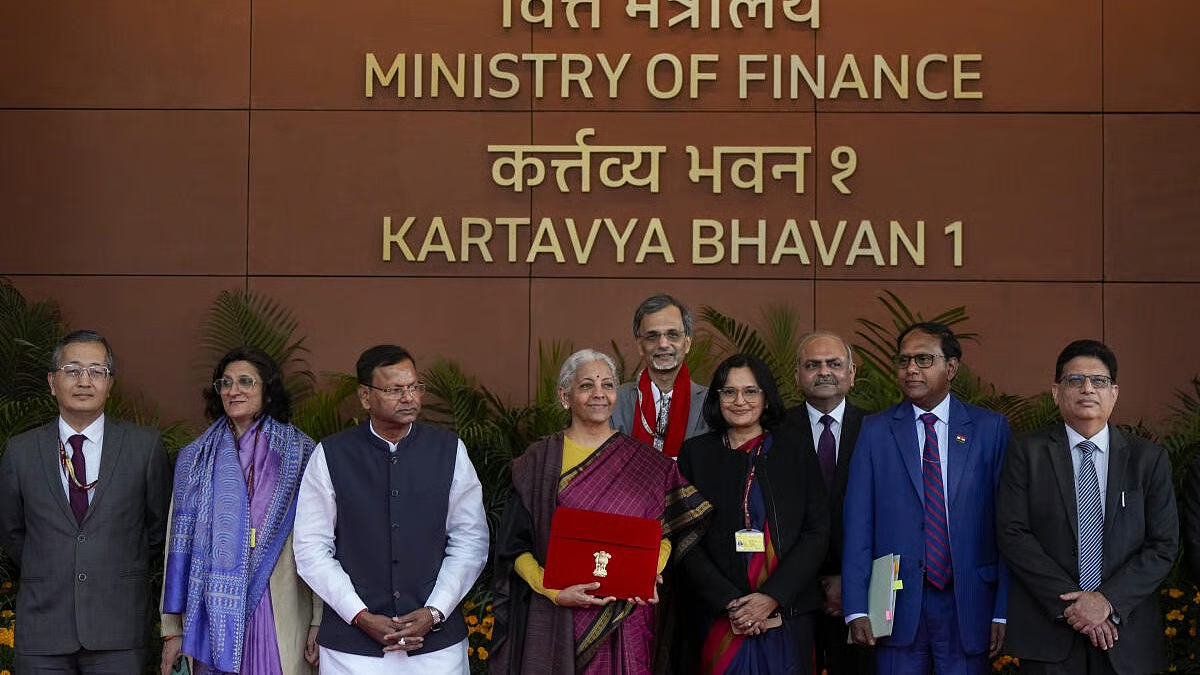
NEW DELHI: When Finance Minister Nirmala Sitharaman rose to present the Union Budget 2026-27, India’s middle class listened with cautious optimism. After years of high inflation, stagnant real wages and rising household costs, salaried taxpayers and students alike were hoping for at least some acknowledgment of their financial stress. A tweak in income tax slabs, an increase in the standard deduction, or targeted relief for education and young earners would have signalled that the government was listening.
NONE OF THAT CAME
Instead, Budget 2026 doubled down on fiscal consolidation, long-term growth and plugging tax arbitrage—leaving the middle class with no direct tax relief and several policy changes that could quietly but decisively squeeze household finances from April 1, 2026.
For students and young professionals, the Budget’s emphasis on skilling, innovation and entrepreneurship sounds promising on paper, but offers little immediate respite from rising tuition fees, education loans, and the high cost of entering India’s urban job markets. Budget 2026 reinforces an uncomfortable truth: the middle class continues to remain India’s most taxed, least protected constituency.
A FAMILIAR DISAPPOINTMENT FOR SALARIED TAXPAYERS
The most glaring omission in Budget 2026 is the absence of any relief on income tax slabs or rates. The standard deduction—one of the few tangible benefits for salaried employees—has also been left unchanged.
In real terms, this amounts to a tax increase. With inflation eating into purchasing power, an unchanged tax structure means middle-class families are effectively paying more tax every year while taking home the same—or less—real income. Housing rents, school fees, healthcare expenses and EMIs have surged over the past few years, but tax policy has not moved in tandem.
For millions of salaried employees, Budget 2026 feels like another reminder that they are expected to shoulder the burden of nation-building quietly and compliantly.
STUDENTS: BIG PROMISES, SMALL RELIEF
Students and young Indians featured prominently in the government’s narrative, with repeated references to “future-ready skills,” startups, research and innovation. Yet, the Budget offers little in terms of direct financial relief for students or first-time earners.
There is no meaningful intervention on:
-
Rising college and university fees
-
Coaching and competitive exam expenses
-
Interest rates on education loans
-
Living costs in metro cities
For students graduating into the workforce, the unchanged tax regime and higher investment-related taxes make wealth creation harder at the very start of their careers.
SEVEN BUDGET 2026 PAINS THAT WILL HIT THE MIDDLE CLASS HARD
1. No Tax Slab Revision: Inflation Does the Damage Perhaps the biggest blow is psychological as much as financial. With no change in tax slabs or rates, the middle class sees its disposable income shrink year after year. As salaries struggle to keep pace with inflation, a static tax structure pushes more income into higher tax brackets in real terms. This phenomenon—often described as “bracket creep”—hits salaried employees particularly hard, as tax is deducted at source with little flexibility.
2. HIGHER STT MAKES TRADING COSTLIER Retail investors, including young professionals and middle-class savers looking to supplement income, will feel the pinch of higher Securities Transaction Tax (STT). Budget 2026 raises STT on derivatives across the board:
-
Futures: 0.02% to 0.03%
-
Options premium: 0.1% to 0.15%
-
Options exercise: 0.125% to 0.15% While these numbers may look small, they significantly increase transaction costs for frequent traders. For retail participants operating on thin margins, this could make derivatives trading less viable and discourage market participation.
3. SOVEREIGN GOLD BONDS LOSE THEIR SIMPLICITY Sovereign Gold Bonds (SGBs) have long been a favourite among middle-class investors seeking safety, tax efficiency and exposure to gold. Budget 2026 alters that equation. Tax exemption on redemption at maturity will now apply only to bonds bought in the primary issuance. Investors who purchase SGBs from the secondary market will have to pay capital gains tax on redemption:
-
Long-term gains at 12.5%
-
Short-term gains at slab rates This change adds complexity and reduces post-tax returns, undermining the attractiveness of what was once considered a straightforward, low-risk investment.
4. DISABILITY PENSION TAX RELIEF ROLLED BACK In a move that has drawn quiet but significant concern, Budget 2026 withdraws income tax exemption on disability pension for defence personnel who retire on superannuation. Only those invalidated out of service due to bodily disability attributable to military service will continue to enjoy the exemption. While the immediate impact is limited to a specific group, the broader signal is unsettling: long-standing exemptions are no longer sacrosanct. For middle-class taxpayers, this raises fears of future rollbacks in other exemption-heavy areas.
5. SHARE BUYBACKS NOW ATTRACT CAPITAL GAINS TAX The government has also tightened taxation around share buybacks, aiming to curb tax arbitrage. Under the new regime:
-
Corporate promoters face an effective tax of about 23%
-
Non-corporate promoters face an effective tax of about 30% While aimed primarily at promoters, this shift affects retail investors too. Buybacks were often seen as a tax-efficient way to realise value from equity holdings. With capital gains tax now applicable, post-tax returns may decline, making equity investments marginally less attractive for middle-class savers.
6. INTEREST DEDUCTION ON DIVIDEND AND MF INCOME REMOVED One of the least discussed—but most consequential—changes is the removal of interest deduction against dividend and mutual fund income. Earlier, investors could deduct interest costs incurred to earn such income, subject to limits. Budget 2026 eliminates this benefit entirely. This disproportionately affects:
-
Investors using borrowed funds
-
Margin traders
-
Middle-class investors experimenting with leveraged strategies The move reduces post-tax returns and discourages leveraged investing, potentially shrinking retail participation in capital markets.
7. EVERYDAY COSTS CREEP UP QUIETLY Not all Budget impacts come through tax filings. Some changes will be felt in everyday life. The Tax Collected at Source (TCS) on alcoholic liquor has been raised from 1% to 2%, increasing costs across the supply chain. Meanwhile, the withdrawal of customs duty concessions on imported coffee vending and brewing machines could raise prices at offices, cafés and commercial spaces. These incremental increases may seem minor individually, but collectively they add to the cost-of-living burden for urban middle-class households.
WHAT BUDGET 2026 ULTIMATELY SIGNALS
Budget 2026 is not openly hostile to the middle class or students—but it is unmistakably indifferent to their immediate concerns. The government’s focus remains on long-term growth, fiscal prudence and closing tax loopholes, even if that means postponing relief for those already under pressure.
For students, the promise of future opportunities contrasts sharply with the present reality of high costs and limited financial support. For the middle class, the message is familiar: adopt, adjust, and wait. Whether this patience can be sustained—as aspirations rise but disposable incomes stagnate—may well define the political and economic conversations leading up to the next Budget.