
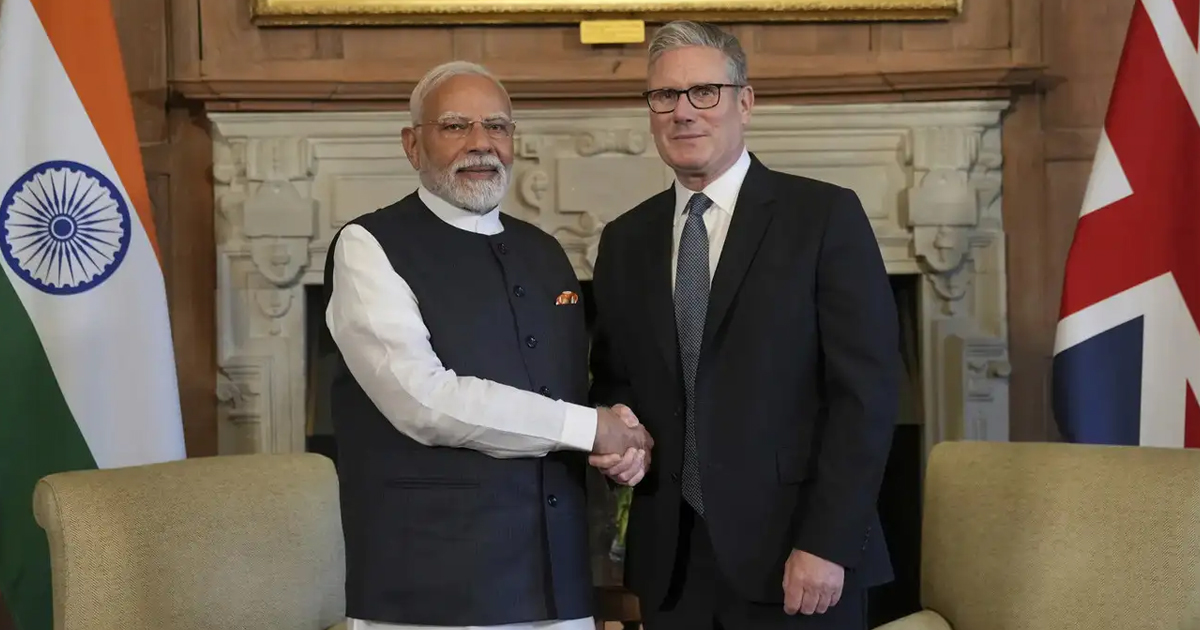
In a historic decision that will change the export landscape of India, India and the United Kingdom sealed the Comprehensive Economic and Trade Agreement (FTA) on Thursday. The agreement guarantees duty-free access for almost 99% of Indian exports, heavily favoring labor-intensive and traditional industries of India.
The FTA is expected to increase bilateral trade by two times, from $56 billion to $120 billion by the year 2030, and it is being termed as a significant chance for Indian manufacturing, agriculture, and handmade products to grow in the British market.
Major Sectors to Gain from the FTA
Commerce and Industry Minister Piyush Goyal, in a tweet on X, termed the agreement a “game-changer” for Indian exports. He added that the FTA would open up close to $23 billion of new opportunities for Indian industry, especially for labour-intensive industries such as textiles, footwear, and leather.
Some of the products to be able to enter duty-free include:
- Leather products and Kolhapuri chappals
- Electric machinery and chemical items
- Basmati rice, spices, fruits, and vegetables
- Ancient drinks such as Goa’s feni and Kerala’s toddy
India’s Agriculture Industry Is Given a Boost
The FTA enables more than 95% of Indian agri-and processed food exports into the UK to be duty-free. Items such as pepper, cardamom, mango pulp, turmeric, and pulses will find direct routes to British markets, giving India’s agri-export capacity a boost.
Besides, new markets will be opened for such products as jackfruit, millets, and organic herbs to suit India’s emphasis on traditional and healthy food alternatives.
State-Level Gains and Women’s Empowerment
Several Indian states will have direct economic gains from the deal:
- Maharashtra can increase exports of grapes and onions.
- Gujarat will increase exports of groundnut and cotton.
- Punjab and Haryana will benefit from basmati rice exports.
Kerala, Andhra Pradesh, and Tamil Nadu would gain through the fisheries and spices sectors.
Yet, the FTA promises to give a boost to women producers, particularly in handloom, clean manufacturing, and heritage crafts. Women-led businesses will now have access to the UK’s $23 billion textiles and other handmade goods market.
Cultural and Traditional Products Get a Global Stage
The FTA also provides a significant boost to family-operated and artisanal groups. The legendary Kolhapuri chappals, which are made by women, will now find duty-free access in UK retail outlets. Not only does this help safeguard cultural identity, but it also promotes brand recall and sustainable exports.
From the looms of Varanasi to artisan clusters in Rajasthan and digital labs in Hyderabad, India’s diverse production hubs are poised to benefit from increased exports and international recognition.