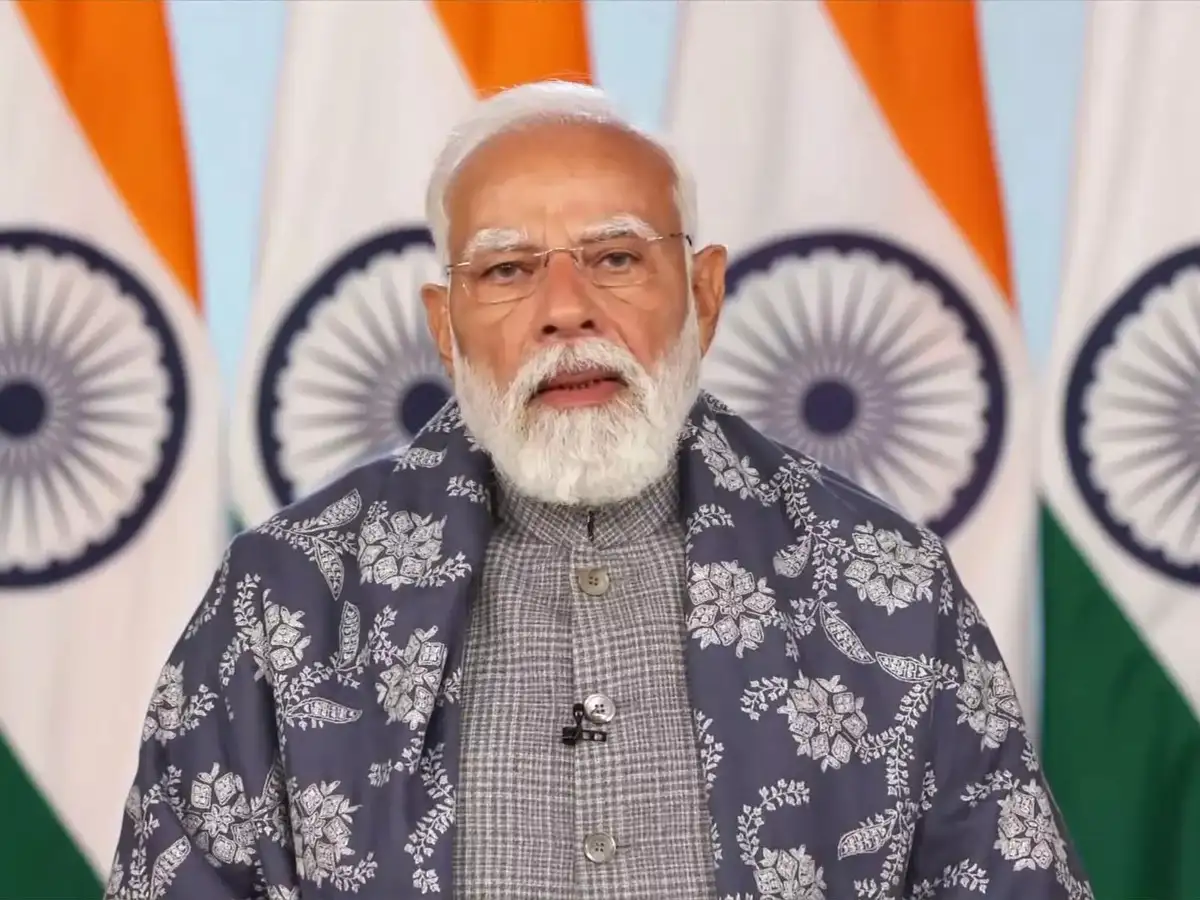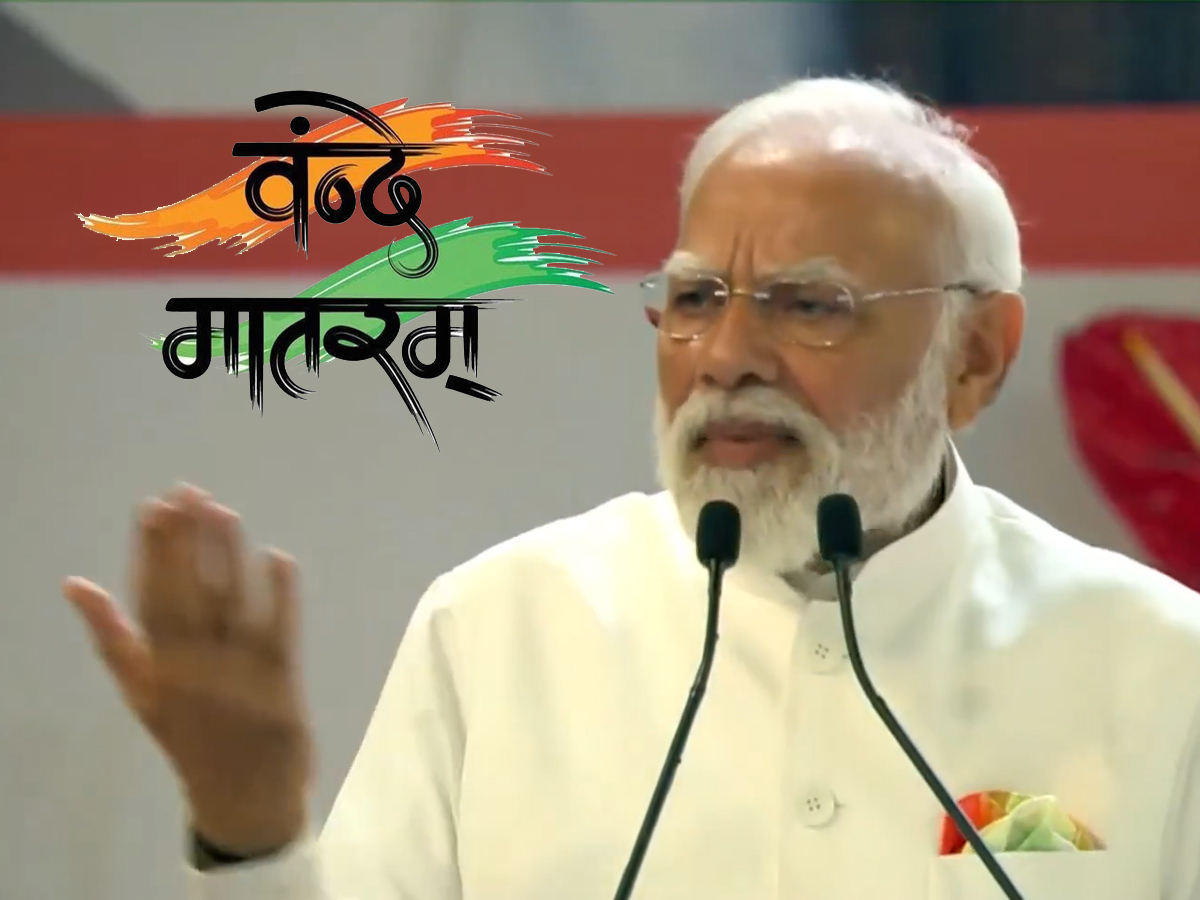
Prime Minister Narendra Modi has reignited a historical debate around Vande Mataram, saying that the Congress’ 1937 decision to remove some stanzas from the song led to a divided mindset that eventually contributed to India’s Partition.
Speaking at the 150th-anniversary celebrations of the national song, Modi said, “Vande Mataram became the voice of India’s freedom struggle, it expressed the feelings of every Indian. Unfortunately, in 1937, important stanzas of Vande Mataram..its soul was removed. The division of Vande Mataram also sowed the seeds of partition.”
He added that today’s generation should know “why this injustice was done with this ‘maha mantra’ of nation building.”
What Was the Issue With Vande Mataram?
The National song Vande Mataram, meaning “I bow to thee, Mother”, was written by Bankim Chandra Chatterjee in 1875 and first published in his 1882 novel Anandamath. It quickly became a rallying cry for India’s freedom fighters. The British banned its public recitation at several times because of its nationalistic power.
However, a controversy arose in the 1930s when some Muslim leaders felt that parts of the song were not inclusive of all faiths. Many believed that the song equated India with Hindu goddesses, making it difficult for Muslims to sing it without contradicting their belief in tawheed, the oneness of God in Islam.
What Was the Deleted Stanza of Vande Mataram
Originally, Vande Mataram had six verses, but In October 1937, the Indian National Congress decided to adopt only the first two verses as the national song. These lines described the beauty and abundance of the motherland, her water, fruits, and wind, without religious references.
Deleted version of Vande Mataram:
कोटि-कण्ठ कलकल-निनाद कराले
कोटि-भुजैर्धृतखरकरवाले,
अबला केनो मा एतो बले
बहुबलधारिणीं नमामि तारिणीम्,
रिपुदलवारिणीं मातरम्।
त्वं हि दुर्गा दशप्रहरणधारिणी,
कमला कमलदलविहारिणी,
वाणी विद्यादायिनी,
नमामि त्वं, नमामि कमलाम्,
अमलाम् अतुलाम्,
सुजलां सुफलां मातरम्।
श्यामलां सरलां सुस्मितां भूषितां,
धरणीं भरणीं मातरम्।
वन्दे मातरम्।
आनन्दमत रिपुलंघिनीम् मातरम्।
वन्दे मातरम्।
What is the Meaning of Deleted Part of Vande Mataram?
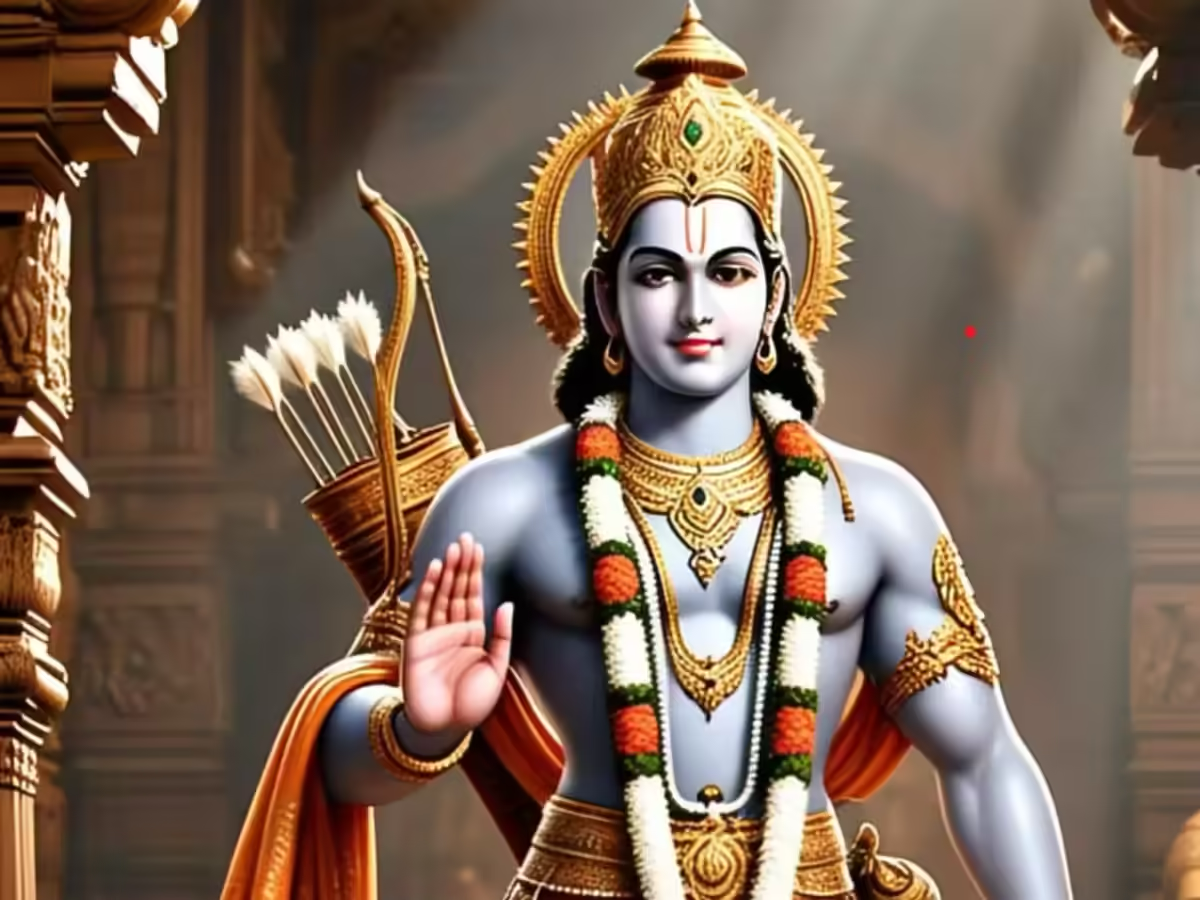
The deleted verses invoked Hindu goddesses Durga, Lakshmi, and Saraswati, symbolizing strength, prosperity, and knowledge. In those verses, India was portrayed as a divine mother protecting her children and destroying evil.
Congress leaders felt that keeping such imagery might alienate non-Hindu citizens in a religiously diverse India.
Meaning of Vande Mataram
O Mother! I bow to you —
You are the land filled with pure water, rich fruits,
and cooled by the gentle, fragrant breeze of the Malaya mountains.
Your fields are lush with green crops.
O Mother, I salute you.
O Mother! Your nights are bright and joyful, bathed in moonlight.
Your trees and plants are adorned with blooming flowers.
Your face shines with a sweet smile,
and your speech is gentle and loving.
You bless us with happiness and grace.
O Mother! Millions of voices rise together in your praise,
and millions of strong arms hold weapons in your defense.
Who says you are weak?
You are filled with immense power,
the savior who destroys the enemy forces.
O Mother! You are Durga, the warrior goddess with ten weapons.
You are Lakshmi, who dwells upon the lotus and brings wealth.
You are Saraswati, who grants knowledge and speech.
You are pure, incomparable,
and full of water and fruits — O Motherland, I bow to you.
O Mother! You are dark-hued, simple, and adorned with a gentle smile.
You are the Earth who nurtures and sustains all beings.
I bow to you, O Mother.
O Mother! You fill us with boundless joy,
and you give us the power to overcome our enemies.
I salute you, O Mother.
Why Was the Part Cut Off From Vande Mataram?
The 1937 Congress session decided to limit the song to its first two verses after heated debates between leaders Jawaharlal Nehru and Subhas Chandra Bose. BJP spokesperson C.R. Kesavan shared that Nehru wrote to Bose in 1937, saying the background of Vande Mataram was “likely to irritate Muslims.”
Kesavan called it a “historic blunder,” arguing that it weakened the song’s unifying power.
“In a letter dated Sep 1, 1937, Nehru spitefully writes that anybody considering the words in Vande Mataram as anything to do with a Goddess was absurd. He also derisively opines that Vande Mataram is not suitable as a national song,” Kesavan said.
He added that Netaji Subhas Chandra Bose strongly supported the full version of the song.
A Song That Still Inspires
Despite the debates, Vande Mataram remains one of India’s most powerful patriotic symbols. Its words continue to evoke pride, unity, and reverence for the land.
For many Indians, the song is not just a melody — it is a reminder of the country’s struggle for freedom and the spirit of sacrifice that built the nation.