
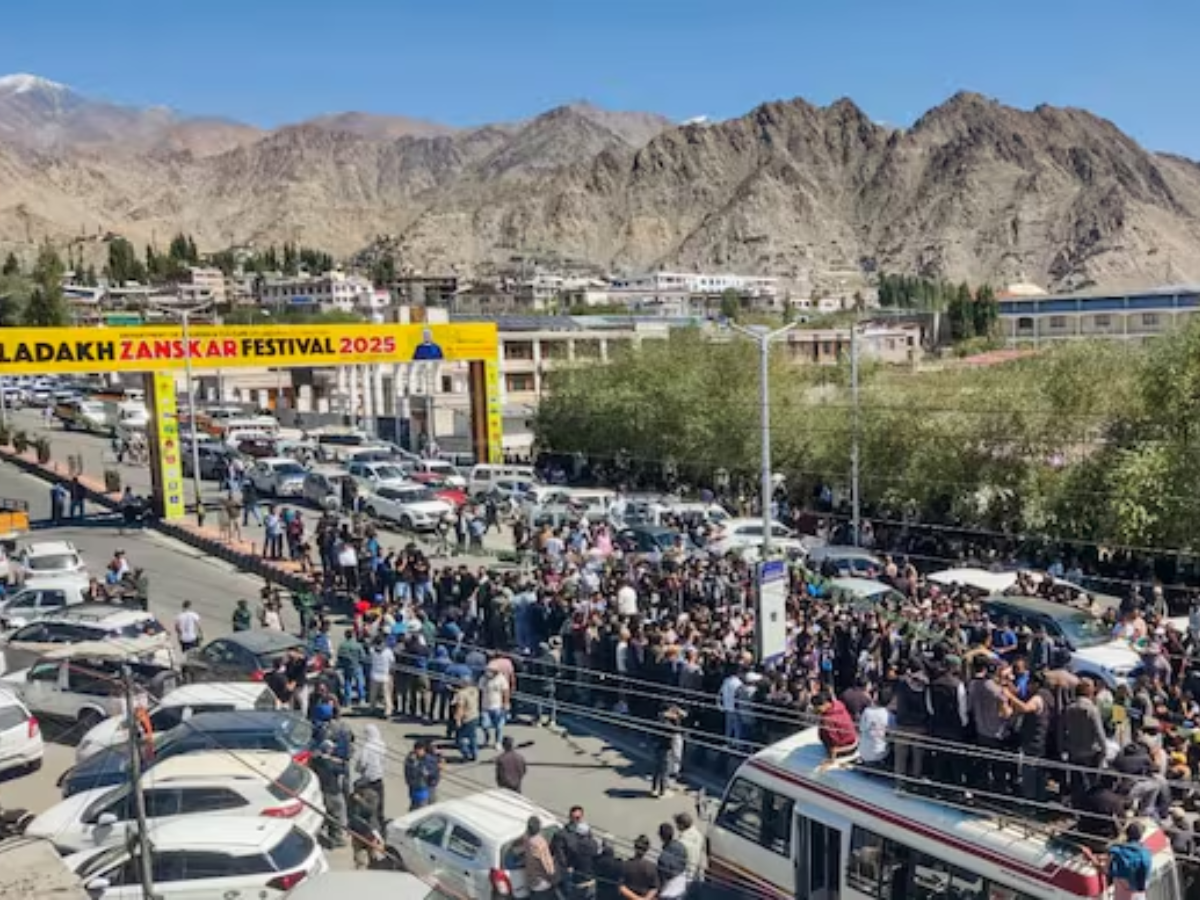
On Wednesday violence erupted in Leh, capital of Ladakh when protesters burnt a BJP office and a CRPF van. This constitutes the latest major step in an extended conflict over statehood and autonomy what began as a peaceful hunger strike spearheaded by climate activist Sonam Wangchuk quickly escalated into violent confrontation, as boiling tensions culminated after weeks of frustration over unmet demands where four were dead and many injured.
Why Were People Protesting in Ladakh?
Ladakh is carved out for itself a Union Territory in 2019 along with the abrogation of Article 370 and separation of Jammu and Kashmir whereas others had Legislative Assemblies, Ladakh was singular in being made a Union Territory directly under the Central government. The decision continues to be displeasing to the indigenous tribal populations those who have asked for increased autonomy to really safeguard their identity and ecosystem.
The protest was spear headed by Wangchuk with other community leaders and it was demanding that Ladakh be included in the Sixth schedule of Indian Constitution provides for the administration of tribal areas in Assam, Meghalaya, Tripura and Mizoram which provides for autonomy to tribes.
ALSO READ: What Is the Sixth Schedule & Why Is Ladakh Fighting for It? | All You Need to Know
This would equip the region to make laws on land, local governance and cultural preservation issues critical for the indigenous population which constituted almost 97% of the total population of Schedule Tribe and comprising 66.8% in Leh, 73.35% in Nubra, 97.05% in Khalsti, 83.49% in Kargil, 89.96% in Sanku and 99.16% in Zanskar, according to the Ministry of Tribal Affairs data.
From Quiet Protests to Volatile Explosions
The biggest turning point from silent hunger protest to violent Turbulence, is still Wangchuk himself who called the violence an outburst of a young generation which had pent up frustration through unemployment and disillusion with waiting their turn for improvement. On the day of the violence that Wednesday morning and many of the hunger strikers were moved to the hospital when they felt ill because of their fast. It was becoming very tense indeed though Wangchuk fasted for 15 days and exhorted his supporters to avoid violence, rising pressures and anger in the younger generation had the result of provoking what was now uncontrollable fury.
Protesters found themselves confronted by police and security forces with tear gas was unleashed and baton charges were used to disperse a crowd that was already too late to be damaged and amid the swirling chaos, four people lay dead and more than 70 injured. The authorities-imposed curfew upon miscreants to restore order with additional security forces.
Why is BJP blaming Congress for protest?
Political parties would rush to seize the day for the violence images and videos of the BJP leader Amit Malviya hurling lightly from the Congress party that this violence was orchestrated by Congress as if pointing at Congress councilor Phuntsog Stanzin Tsepag. It is linking the unrest to Rahul Gandhi’s calls for youth involvement in saving democracy and the post made the political divide more critical.
ALSO READ: BJP accuses Congress councilor of “instigating violence” during protests in Ladakh
The violence, as many Congress supporters said resulted from years of neglect and unfulfilled promises. Some saw resemblance about what has happened to the protests in Nepal where young demonstrators have brought a change in the scene setting political drama in Ladakh, that is. It was not a question of BJP or Congress’s but a long march for statehood and autonomy.
What is the Young Generation of Protest?
Describing the protests as a Gen-Z revolution, Wangchuk noted that many of those leading the unrest were young, frustrated people who could not find jobs and were now pessimistic about the future. They felt their voices had been ignored for far too long by the political establishment while Wangchuk urged them to return to peaceful methods, the power of youth activism was evident in the violent flare up that ensued.
The majority length of the population that makes up the region is made up of tribal communities that is what the aggregated fear being raised by centralization in the future will take away their original rights. They have mobilized under different groups where the Leh Apex Body (LAB) and the Kargil Democratic Alliance (KDA) play a pivotal role in organizing protests turned into calls for a wider solidarity across all of Ladakh.
What Lies Ahead for Ladakh?
The protests that happened on Wednesday in Leh calorific image of hut large they reveal the sense of disappointment and anger that is building up among the youth of Ladakh as their demands for recognition and autonomy have remained unheeded for far too long. The next round of talks between the government and representatives from Ladakh is scheduled for October 6 but people are worried that with increasing tensions and urgency, this date may just be too far too far away for the youth and for whom desperation seems to grow ever more acute with each passing day.
There has been a pattern of waiting for peaceful resolutions over a long period by Sonam Wangchuk and the violence erupted in Leh recently is symptomatic of a generation’s surging frustration because, at the end of the day, the future promises seem bleak. The government will have a hard task of acting quickly and effectively to address the concerns of the region and bring stability to this strategically important and culturally rich part of India.
ALSO READ: Why Leh Protest Turns Violent? Ladakh Youth Demand Statehood & Sixth Schedule Protection
Disclaimer: The situation in Leh remains fluid; all information is based on reports as of the latest available updates. Please refer to official sources for developments.