
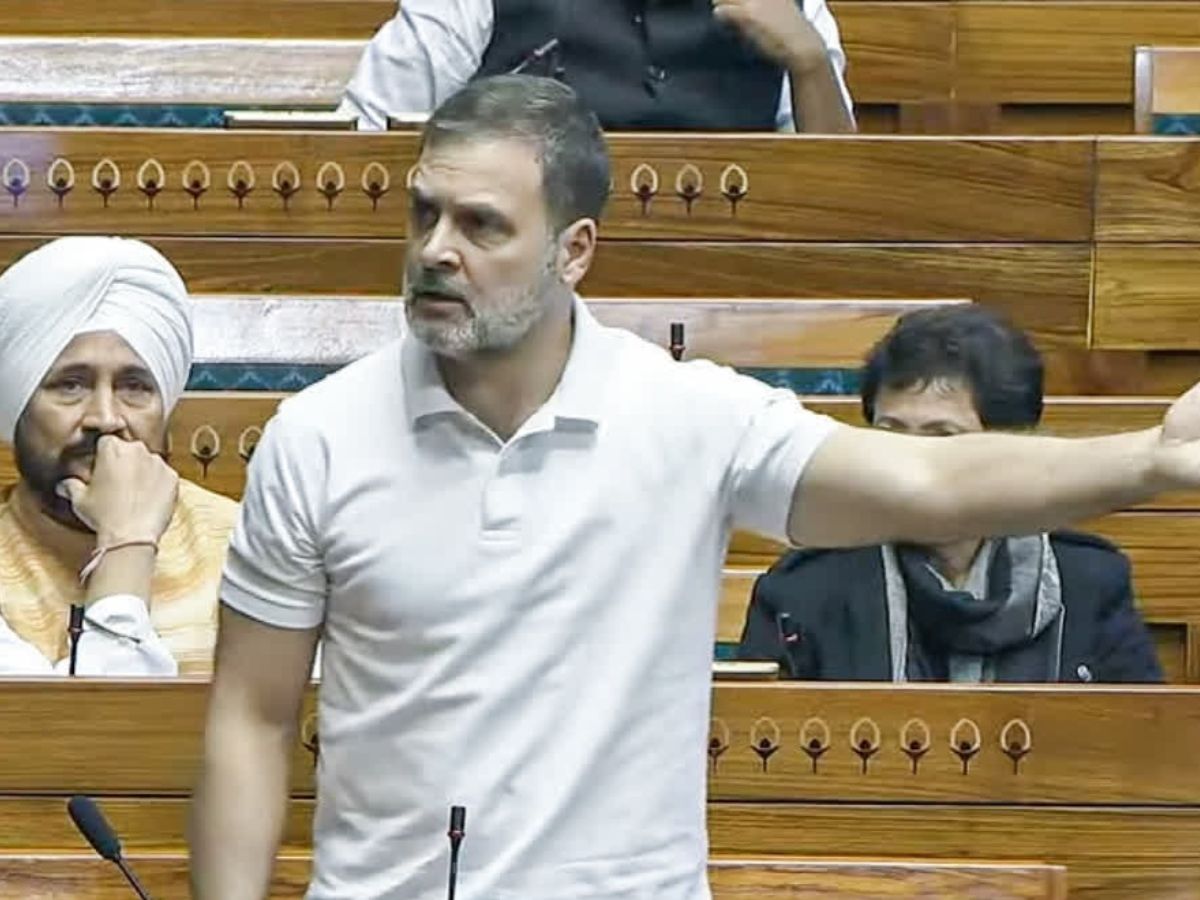
Leader of the Opposition Rahul Gandhi strongly criticised the Viksit Bharat Guarantee for Employment and Livelihood Mission (Rural) Bill, popularly known as the G RAM G Bill, after it was passed by Parliament amid intense protests from the Opposition. The Bill is expected to replace the UPA-era MGNREGA once it receives the President’s assent.
What is G RAM G Bill?
The Viksit Bharat Guarantee for Rozgar and Ajeevika Mission (Gramin) Bill, 2025, also known as the VB-G RAM G Bill, is a new law passed by Parliament to replace MGNREGA, aiming to reshape rural employment in line with the “Viksit Bharat 2047” vision by linking jobs with durable infrastructure creation. The Bill raises the annual work guarantee from 100 to 125 days, introduces a cost-sharing funding model where the Centre bears 60% and states 40% of expenses (90:10 for North-Eastern and Himalayan states), and replaces demand-driven funding with state-wise normative allocations set by the Centre. It also allows states to declare up to 60 days of pause in public works during peak farming seasons, prioritises long-term assets in areas such as water security, rural infrastructure, livelihoods, and climate resilience, ensures weekly or fortnightly wage payments with compensation for delays, and mandates the use of digital attendance, biometric authentication, GPS monitoring, and AI-based fraud detection to improve transparency and accountability.
Rahul Gandhi Objects to G RAM G Bill
Rahul Gandhi objected to the manner in which the Bill was cleared, saying it was rushed through Parliament without proper examination. He pointed out that the Opposition had demanded the Bill be sent to a Standing Committee for detailed scrutiny, but the request was rejected.
“This law was bulldozed through Parliament without proper scrutiny. The opposition demand to send the bill to a Standing Committee was rejected. A law that rewires the rural social contract, affecting crores of workers, should never be rammed through without serious committee scrutiny, expert consultation, and public hearings,” Gandhi said.
“Not a Reform, But Demolition of MGNREGA,” Says Rahul Gandhi
Targeting the Modi government, Gandhi said the new law weakens the core principles of MGNREGA. He argued that the Bill moves away from a rights-based, demand-driven system and replaces it with a centrally controlled and rationed model.
“Last night, the Modi government demolished twenty years of MGNREGA in one day. VB-G RAM G isn’t a ‘revamp’ of MGNREGA. It demolishes the rights-based, demand-driven guarantee and turns it into a rationed scheme which is controlled from Delhi. It is anti-state and anti-village by design,” he said.
Rahul Gandhi Accuses Modi Government of Centralising Power and Weakening States
Gandhi further alleged that the government’s agenda was to centralise power while reducing the influence of states and local bodies.
“Targets are clear: weaken labour, weaken the leverage of rural India, especially Dalits, OBCs and Adivasis, centralise power, and then sell slogans as ‘reform’,” he added.
G RAM G Bill Will Reduce Bargaining Power of Rural Workers: Congress
According to Gandhi, MGNREGA had empowered rural workers by giving them bargaining power and real employment choices. He claimed the new Bill weakens this protection for the rural poor.
MGNREGA Improved Wages, Jobs and Rural Infrastructure, Says Rahul Gandhi
Praising the UPA-era scheme, Gandhi said MGNREGA reduced exploitation and distress migration while improving wages and working conditions.
“With real options (under MGNREGA), exploitation and distress migration fell, wages increased, working conditions improved, all while building and reviving rural infrastructure,” he said. He accused the government of trying to break this leverage by limiting employment under the new Bill.
New Employment Law Will Hurt Women, Dalits and Adivasis First: Gandhi
Recalling the Covid-19 period, Gandhi said MGNREGA saved crores of people from hunger and debt. He warned that rationing a job guarantee scheme would impact the most vulnerable sections first, including women, Dalits, Adivasis, landless workers, and the poorest OBC communities.
Congress Vows Nationwide Fight Against G RAM G Bill
Calling MGNREGA one of the world’s most successful poverty alleviation programmes, Gandhi vowed to resist the new law.
“MGNREGA is among the most successful poverty alleviation and empowerment programmes in the world. We will not let this government destroy the rural poor’s last line of defence. We will stand with workers, panchayats, and states to defeat this move and build a nationwide front to ensure this law is withdrawn,” he said.
G RAM G Bill vs MGNREGA: What Changes in Rural Job Guarantee Scheme?
Under MGNREGA, rural households were guaranteed 100 days of work and an unemployment allowance if work was not provided. The G RAM G Bill increases the work guarantee to 125 days while keeping other provisions unchanged. However, critics say employment under the new law will depend on a pre-approved plan, rather than worker demand.
Congress Protests Removal of Mahatma Gandhi’s Name From MGNREGA
The Congress also objected to removing Mahatma Gandhi’s name from the scheme. Party leaders accused the government of trying to erase the legacy of the Father of the Nation. Opposition MPs staged dharnas in Parliament, claiming the Bill removes the “soul and spirit” of the programme launched in 2005.
G RAM G Bill Passed After Midnight Voice Vote in Rajya Sabha
The G RAM G Bill was passed in the Rajya Sabha after a late-night debate, with a voice vote held around 12.15 am. It had earlier cleared the Lok Sabha amid walkouts and protests. The Bill will become law once it receives the President’s approval.
Also Read: Fact Check: Why Does Politician Rahul Gandhi’s Name Appear in Dhurandhar End Credits?