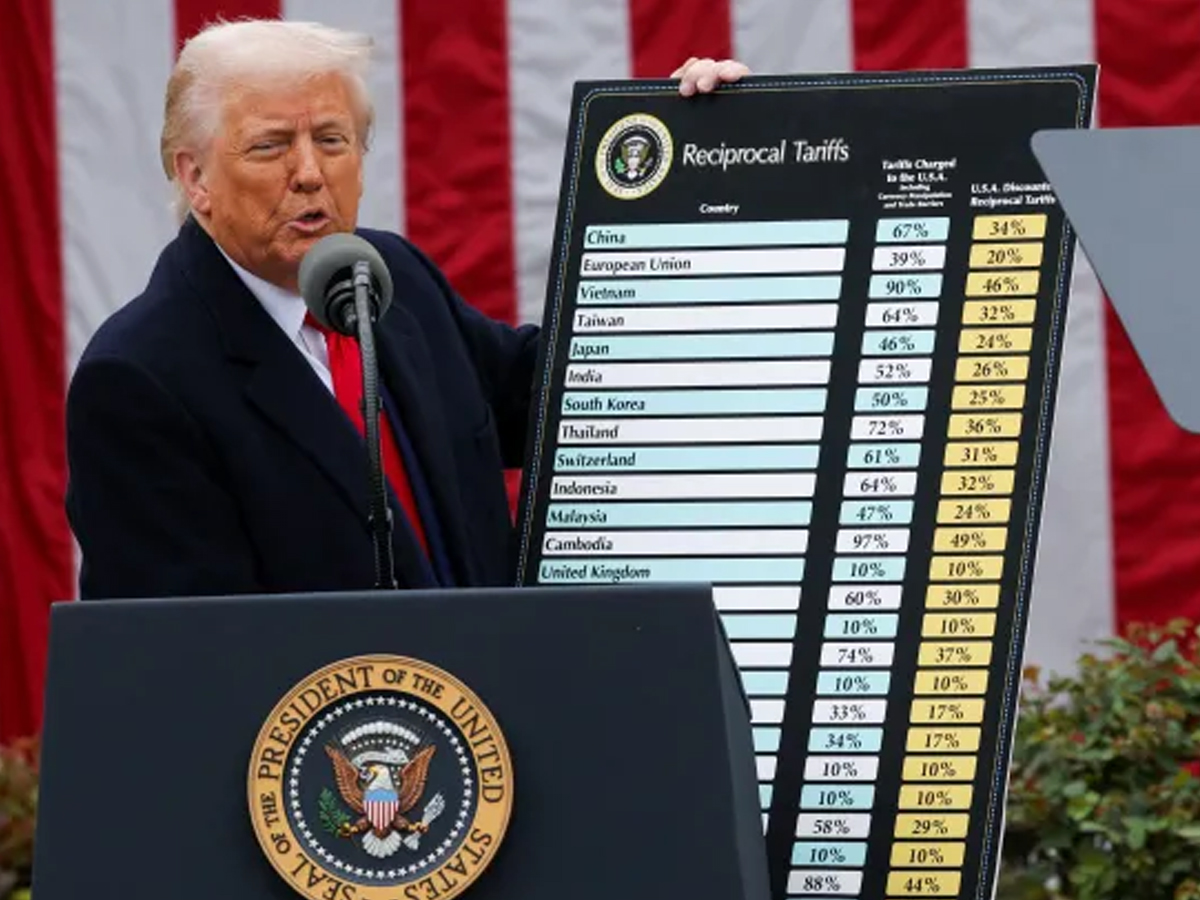
The realities of international trade are drastically shifting, and India is preparing to face hefty retaliatory tariffs from the US for the first time. The recent announcement by the Trump administration regarding retaliatory tariffs aimed at imitating the charges imposed by other nations on US exports in sectors like electronics, jewelry, & textiles, which may pose serious challenges for Indian exporters.
Citing unfair pricing and foreign subsidies as major concerns, the U.S. announced this policy change after previously deciding to slap a 25% tariff on all imports of steel and aluminum. This tariff took effect on March 12, 2025. Soon after, on March 4, 2025, broader reciprocal tariffs were unveiled, scheduled to be enforced from April 2, 2025. India, China, Mexico, Canada, and the European Union are among the nations targeted by the latest wave of duties, which cover industries like consumer electronics, autos, and agriculture.
What Are Reciprocal Tariffs?
A reciprocal tariff is a levy that one nation imposes in retaliation for another nation’s import taxes on its commodities. Country B may impose a 10% tariff on Country A’s exports in retaliation if Country A imposes a 10% tariff on goods from Country B. By treating each nation’s commodities equally, the goal is to guarantee trade fairness.
ALSO READ: Shashi Tharoor Slams US Tariffs on Indian Goods, Calls for Retaliation
This strategy differs from conventional trade agreements or diplomatic discussions that seek to gradually lower tariffs. Instead, by replicating the same restrictions, it actively opposes what one nation views as unfair trade practices.
Why India Is Concerned
In the past, India has resolved tariff issues through multilateral trade agreements or bilateral discussions. However, this is the first time a major trading partner like the United States will impose reciprocal tariffs on it. Reciprocal tariffs are quick and replicate current charges with no room for compromise, in contrast to earlier policies that gave time for resolution.
Indian exporters are currently in a precarious situation. Particularly small and medium-sized enterprises are susceptible to the repercussions of this action.
Effects on Exporters in India
1. Higher Costs for U.S. Buyers
American consumers may look for less expensive options elsewhere, such as in Bangladesh, Vietnam, or Thailand, if they are required to pay higher duties on Indian goods. This would have a direct negative impact on Indian companies.
2. Decline in Export Demand
Demand for Indian goods may decline since they are now more costly in American markets. India’s market share in important export categories may be eroded by decreased competitiveness.
3. Trade Uncertainty
Exporters benefit from predictable trade agreements, but long-term planning is hampered by reciprocal tariffs. Indian businesses may be reluctant to invest in new markets or expand their operations due to shifting regulations.
4. Pressure on Small Businesses
Small-scale manufacturers and artisans in India may be the most negatively affected. If tariffs raise the price of their products, a local jeweler in Jaipur who sells handcrafted silver jewelry to American customers may lose those customers. Similarly, price hikes result in contract loss for Surat’s textile exporters, who rely significantly on the US market.
A Crucial Point Regarding Indian Trade Policy
India may need to reconsider its export strategies because reciprocal tariffs are a weapon in disputes over international trade. This means diversifying export markets, establishing new trade agreements, and reducing reliance on well-established markets like the US.
Indian officials may also need to lower internal tariff walls to stop such retaliations in the future. Enhancing product quality, expediting export processes, and offering subsidies to vulnerable exporters could mitigate the harm.
MUST READ: Kharge Slams Modi Over Trump’s Tariffs, Calls It a Foreign Policy Failure