
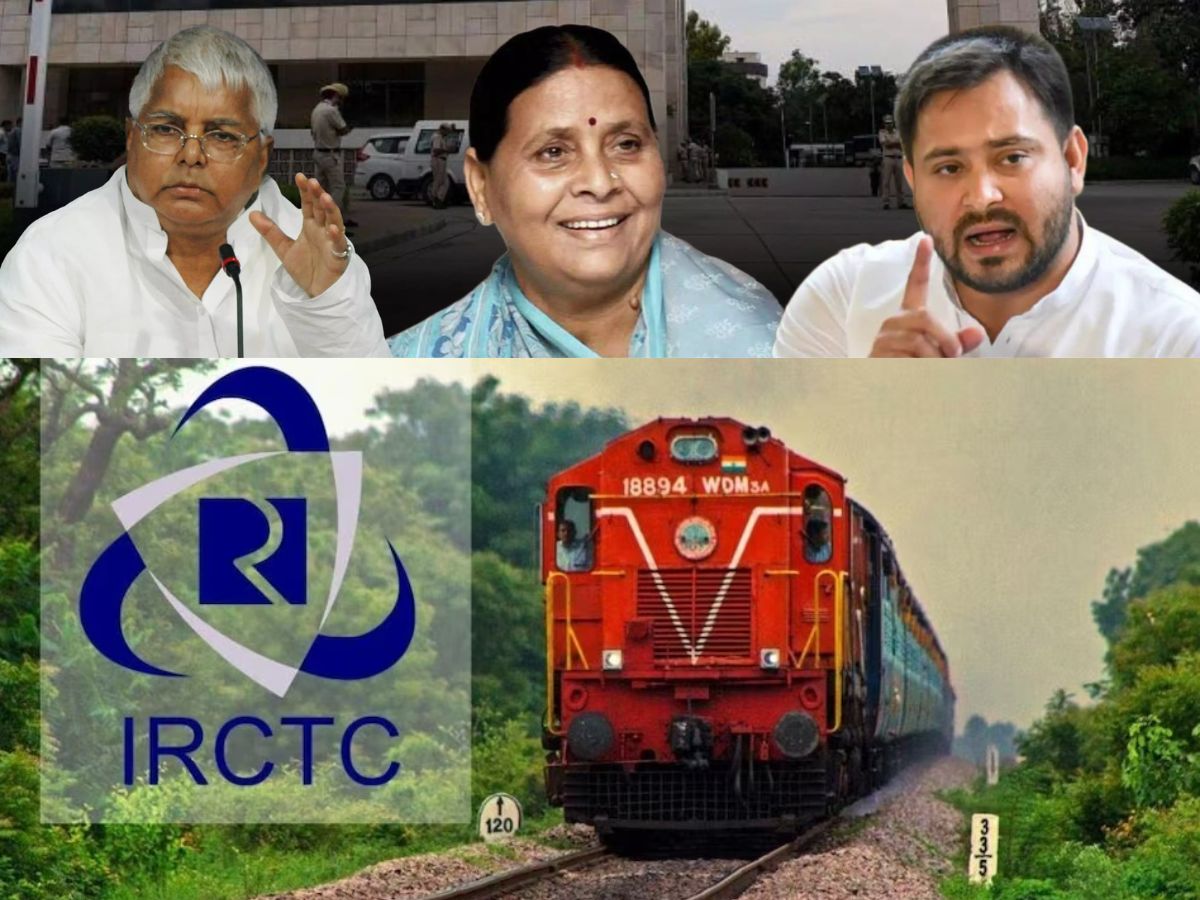
The IRCTC hotel scam is a significant corruption case in Indian politics, involving former Railway Minister Lalu Prasad Yadav, his wife Rabri Devi, and their son Tejashwi Yadav. The case centres around alleged irregularities in awarding maintenance contracts for IRCTC hotels and the subsequent acquisition of land in Patna, leading to charges of quid pro quo.
What Was the IRCTC Hotel Scam Case?
Between 2004 and 2009, during Lalu Prasad Yadav’s tenure as Railway Minister, the Indian Railway Catering and Tourism Corporation (IRCTC) allegedly awarded maintenance contracts for two of its hotels—one in Ranchi and the other in Puri—to a private company named Sujata Hotels.
In return, a three-acre plot of prime land in Patna was allegedly transferred to a shell company named Delight Marketing Company, later renamed Lara Projects LLP, which was purportedly controlled by associates of the Yadav family.
This land was subsequently registered under the names of Rabri Devi and Tejashwi Yadav at a price significantly below its market value.
IRCTC Hotel Scam: What Happened in the Case?
The Central Bureau of Investigation (CBI) initiated an inquiry into the matter, suspecting a quid pro quo arrangement. The agency alleged that the awarding of the hotel contracts was influenced by the promise of land, constituting a misuse of public office for private gain.
In July 2017, the CBI registered a First Information Report (FIR) naming Lalu Prasad Yadav, Rabri Devi, Tejashwi Yadav, and several others, including former IRCTC Managing Director P.K. Goel and the Kochhar brothers, who were associated with Sujata Hotels.
Investigations led to raids at multiple locations linked to the Yadav family in Patna, Delhi, Ranchi, and Gurugram.
Background of the Controversy
The IRCTC hotel scam surfaced amidst growing concerns over corruption in public office. The alleged misuse of authority to benefit private entities raised questions about transparency and accountability in government dealings.
The case attracted significant media attention and public scrutiny, especially given the political stature of the individuals involved.
Timeline of the Case
- 2004–2009: Alleged scam period during Lalu Prasad Yadav’s tenure as Railway Minister.
- July 2017: CBI registered an FIR against Lalu Prasad Yadav, Rabri Devi, Tejashwi Yadav, former IRCTC MD P.K. Goel, and the Kochhar brothers.
- 2017–2025: Investigators conducted raids in Patna, Delhi, Ranchi, and Gurugram to gather evidence.
- October 13, 2025: Delhi’s Rouse Avenue Court framed charges of corruption, criminal conspiracy, and cheating against Lalu Prasad Yadav, Rabri Devi, Tejashwi Yadav, and others, signalling the commencement of the trial.
Who All Were Accused?
The FIR named several individuals, including:
- Lalu Prasad Yadav – Former Railway Minister
- Rabri Devi – Former Bihar Chief Minister
- Tejashwi Yadav – Former Deputy Chief Minister of Bihar
- P.K. Goel – Former IRCTC Managing Director
- Kochhar Brothers – Directors of Sujata Hotels
The Quid Pro Quo Arrangement
The CBI alleges that the Yadav family exchanged political favors for land:
- Hotel contracts were awarded to companies linked to the Yadavs.
- Patna land was sold at a fraction of its market value.
- The property was eventually registered under Rabri Devi and Tejashwi Yadav.
- This arrangement illustrates the alleged misuse of public office for private benefits.
Investigation and Current Status
The CBI has conducted multiple raids and gathered evidence at various locations. With charges now framed by a Delhi court, the case is heading toward trial. It promises to reveal more details about the alleged irregularities and the people involved.
Impact and Implications of the IRCTC Scam
The IRCTC hotel scam highlights the dangerous intersection of politics and business. It stresses the importance of transparency, accountability, and strict enforcement of anti-corruption laws. As the trial unfolds, the public and authorities await justice in one of Bihar’s most notable corruption cases.
How will it impact the Bihar Assembly Elections?
The IRCTC hotel scam could play a crucial role in shaping voter sentiment in the upcoming Bihar elections. With charges now framed against Lalu Prasad Yadav, Rabri Devi, and Tejashwi Yadav, opposition parties are likely to highlight the case to question the RJD’s integrity and governance record.
Voters may see the case as evidence of corruption, potentially affecting the party’s image, especially among first-time and swing voters seeking transparency and accountability.
At the same time, the scandal could energize RJD’s loyal supporters to rally behind their leaders, turning the case into a polarizing issue. Media coverage and public debate around the scam are expected to dominate the political narrative, making it a significant factor in campaign strategies and voter decision-making.