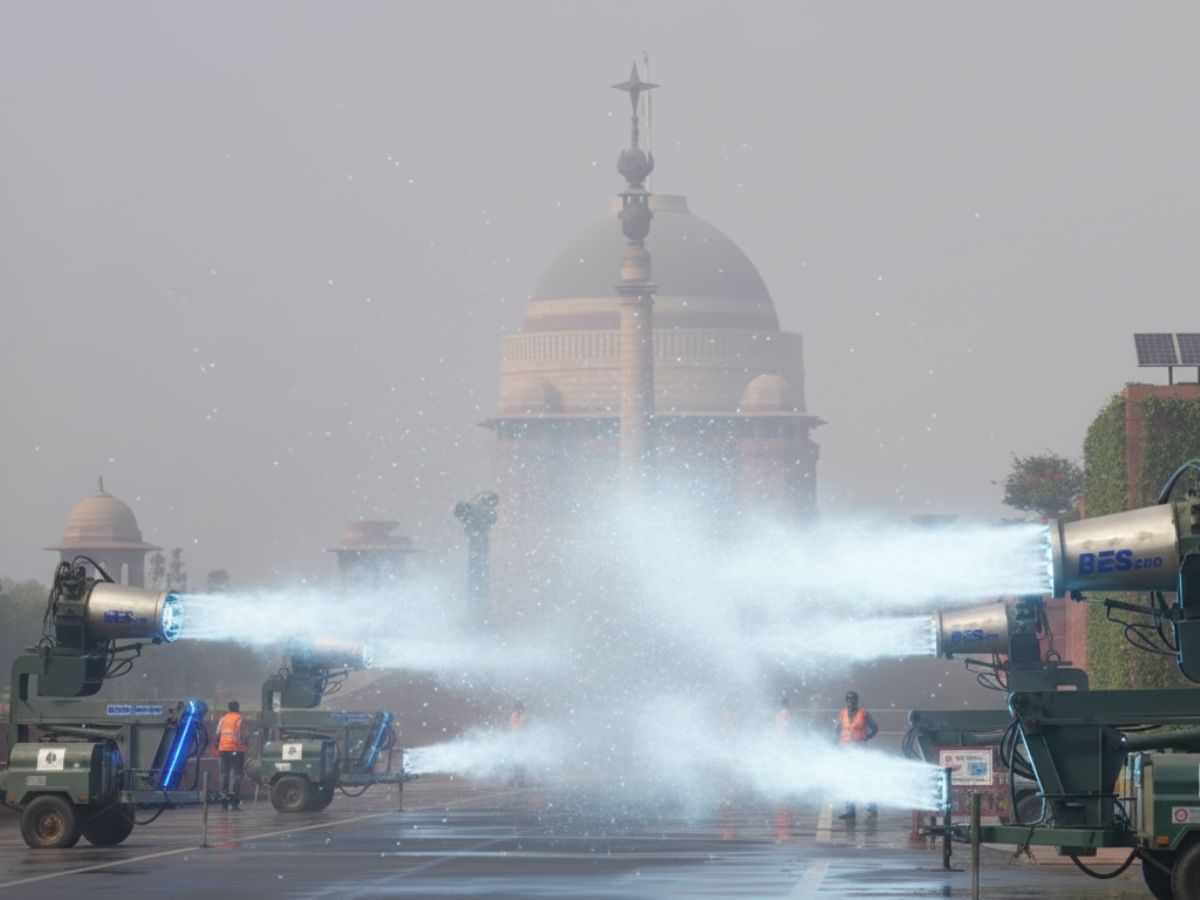
Delhi is preparing for its first-ever cloud seeding trial in early September to induce artificial rainfall and clear the city’s toxic air. Environment Minister Manjinder Singh Sirsa confirmed the trial will take place in the first two weeks of September.
The project is being led by IIT-Kanpur and was delayed earlier from July due to inputs from the India Meteorological Department (IMD) and IITM, Pune. The new timeline aligns with retreating monsoon clouds, which provide better conditions for seeding.
What Is Cloud Seeding?
Cloud seeding is a weather modification technique. It involves releasing tiny particles (like silver iodide or salts) into clouds to help water droplets or ice crystals coalesce and fall as rain.
In Delhi’s case, the aim is to wash pollutants out of the air and temporarily lower ambient pollution levels after the monsoon. While it doesn’t create clouds, cloud seeding can sometimes convert moisture already in clouds into rainfall if conditions are favourable.
ALSO READ: Artificial Rain in Delhi: Cloud Seeding Plan Ready, Trials May Begin After Diwali | How It Works
Negative Effects of Cloud Seeding
- Environmental & ecosystem disruption: Altering rainfall patterns could hurt ecosystems or shift moisture distribution.
- Downwind impacts: Rainfall changes in one area might reduce precipitation elsewhere.
- Unpredictability: Seeding often affects clouds beyond target zones, making control hard.
Cloud Seeding Chemicals & Risks
Silver iodide (AgI): The most common seeding agent. It is considered somewhat toxic and regulated in some countries as a hazardous substance.
In many studies, the concentrations are very low, and experts argue that the ecological or health risks are minimal. Still, excessive or repeated use may lead to bioaccumulation and pose risks to aquatic life.
Is Cloud Seeding Harmful to Humans?
Short-term exposure to fine particles like silver iodide can cause lung irritation, especially in people with asthma or respiratory issues. There is limited evidence of skin problems from long-term exposure, but it is not well studied. In general, the amounts released in controlled trials tend to be very small, making direct harm unlikely under normal conditions.
Cloud Seeding Cost
Delhi has earmarked ₹3.21 crore for the pilot project. Earlier government sources noted ₹66 lakh for setup and ₹55 lakh per trial. Cloud seeding tends to be expensive, especially for repeated operations, due to aircraft costs, instrumentation, and monitoring.
Delhi’s ₹3.21 Crore Project Aims to Induce Artificial Rain
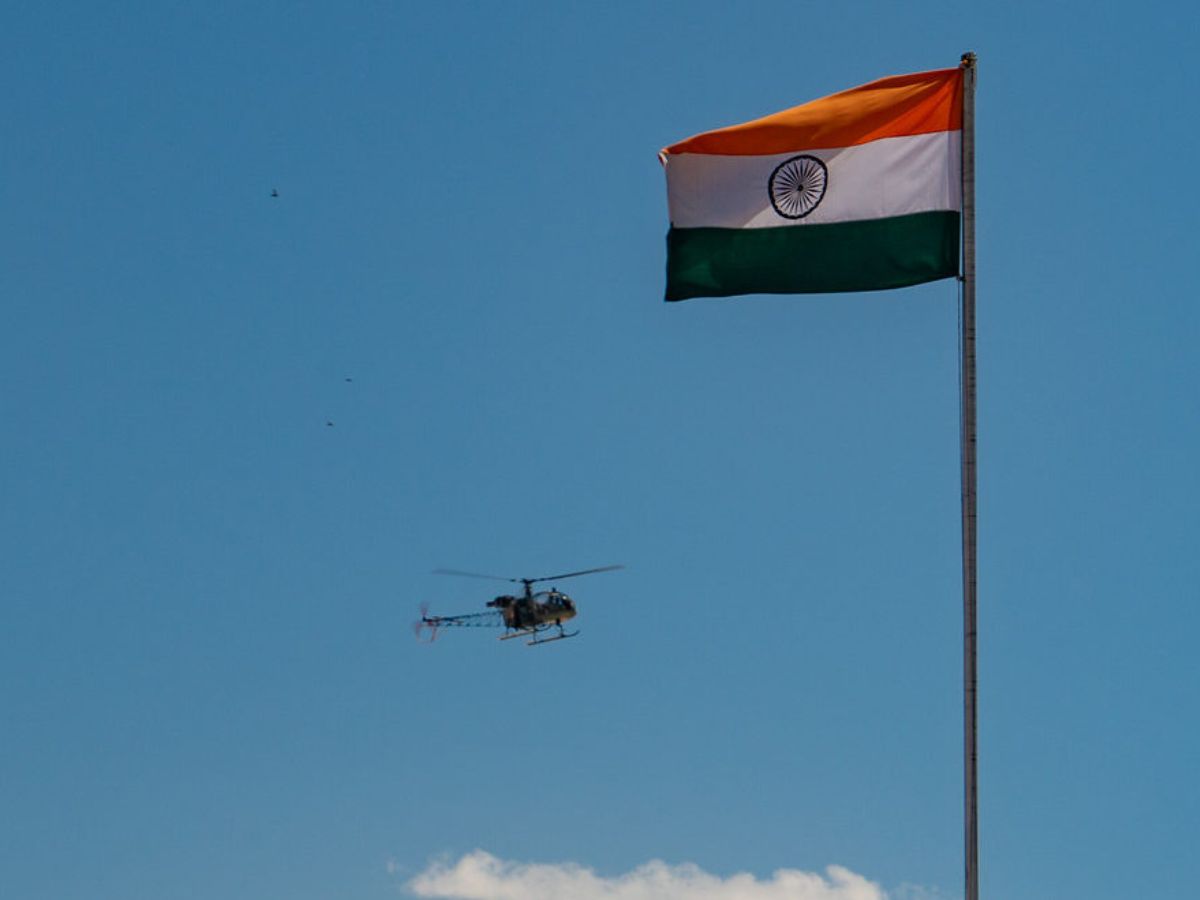
The Delhi government has allocated ₹3.21 crore for the pilot. The Department of Aerospace Engineering at IIT Kanpur will conduct the operations. The DGCA has approved the plan. A modified Cessna 206-H (VT-IIT) fitted with cloud-seeding instruments will conduct flights over north Delhi and neighbouring UP areas such as Loni and Baghpat.
Each sortie will cover high-pollution areas like Rohini, Bawana, Alipur, and Burari. The aircraft will release particles such as sodium chloride or silver iodide below clouds to trigger rain. Sirsa said all permissions and preparations are complete, and the flights will follow DGCA rules without aerial photography.
ALSO READ: 25 Transgender Hospitalized in Indore After Allegedly Consuming Phenyl
How Cloud Seeding Can Help Control Air Pollution?
Rain washes out fine particulates (PM2.5 and PM10) from the atmosphere. Artificial rain can reduce airborne pollutant concentration temporarily. Especially useful when the weather traps pollutants with calm winds and inversion layers after the monsoon.
However, cloud seeding is not a permanent solution. It does not address root sources like vehicular emissions, industries, or construction dust.
ALSO READ: Who Is Amanneet P. Kumar? FIR Filed Against Wife of Late IPS Puran Singh in ASI Sandeep Kumar