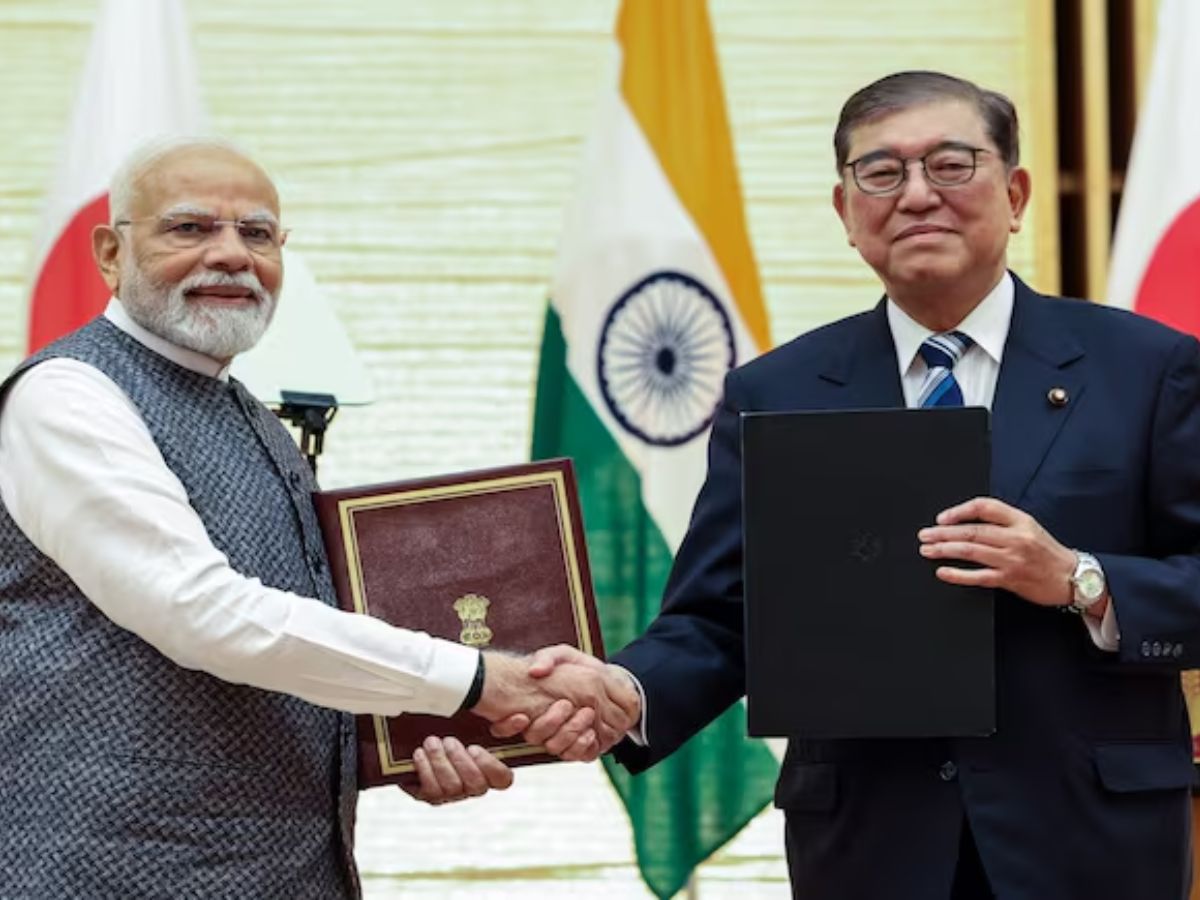
India and Japan have officially signed the implementing arrangement for the Chandrayaan-5 mission (LUPEX) during Prime Minister Narendra Modi’s recent visit to Tokyo. The agreement between the Indian Space Research Organisation (ISRO) and the Japan Aerospace Exploration Agency (JAXA) sets the stage for a joint mission to the Moon’s south pole, a region believed to hold significant amounts of water ice.
Mission Goals and Technical Plan
The Chandrayaan-5 mission will focus on exploring permanently shadowed regions (PSRs) near the lunar south pole. These areas never receive sunlight and are considered prime candidates for water ice deposits. JAXA will launch the mission aboard its H3-24L rocket, carrying an Indian-built lander and a 350-kg Japanese rover. The rover will trace, drill, and analyze lunar water and other volatiles over an initial 100-day mission, with the potential to extend operations for up to a year.
Ongoing Coordination Between ISRO and JAXA
Preparations for Chandrayaan-5 are already progressing, with the two agencies completing their third in-person Technical Interface Meeting (TIM-3) in Bengaluru. The meeting, which also involved Mitsubishi Heavy Industries, discussed key aspects such as landing site selection, payload design, and implementation milestones. Both countries have agreed to jointly develop scientific instruments that will allow in-situ analysis of lunar volatiles.
Benefits for India and Japan
Prime Minister Modi described the collaboration as a “landmark moment,” highlighting that it will deepen scientific understanding of the Moon’s shadowed craters and foster innovation across industries and startups in both countries. He added, “Our partnership in space will not only expand horizons above us, but also improve lives around us.”
For India, Chandrayaan-5 strengthens its position as a leader in low-cost lunar exploration and builds on the success of Chandrayaan-3’s historic landing at the lunar south pole. For Japan, the mission offers crucial experience in rover development and deep-space robotics. Together, the project enhances both nations’ standing in the global space race while promoting applications in agriculture, disaster management, and communications back on Earth.
Chandrayaan Missions So Far
-
Chandrayaan-1 (2008): India’s first lunar mission, which confirmed the presence of water molecules on the Moon.
-
Chandrayaan-2 (2019): Successfully orbited the Moon, though the lander failed to make a soft landing.
-
Chandrayaan-3 (2023): Made history by becoming the first mission to land on the Moon’s south pole.
-
Chandrayaan-5 (LUPEX, upcoming): A joint India-Japan mission targeting water ice exploration at the lunar south pole.
The Road Ahead
With Chandrayaan-5, India and Japan aim to push the boundaries of space science by unraveling the mysteries of the Moon’s south pole. Beyond exploration, the mission underscores the growing importance of international collaboration in space research, paving the way for future joint missions to Mars and even deeper into the solar system.
Also Read: ‘Modi-San Welcome’ in Japan: What San Means and Why It Matters?