
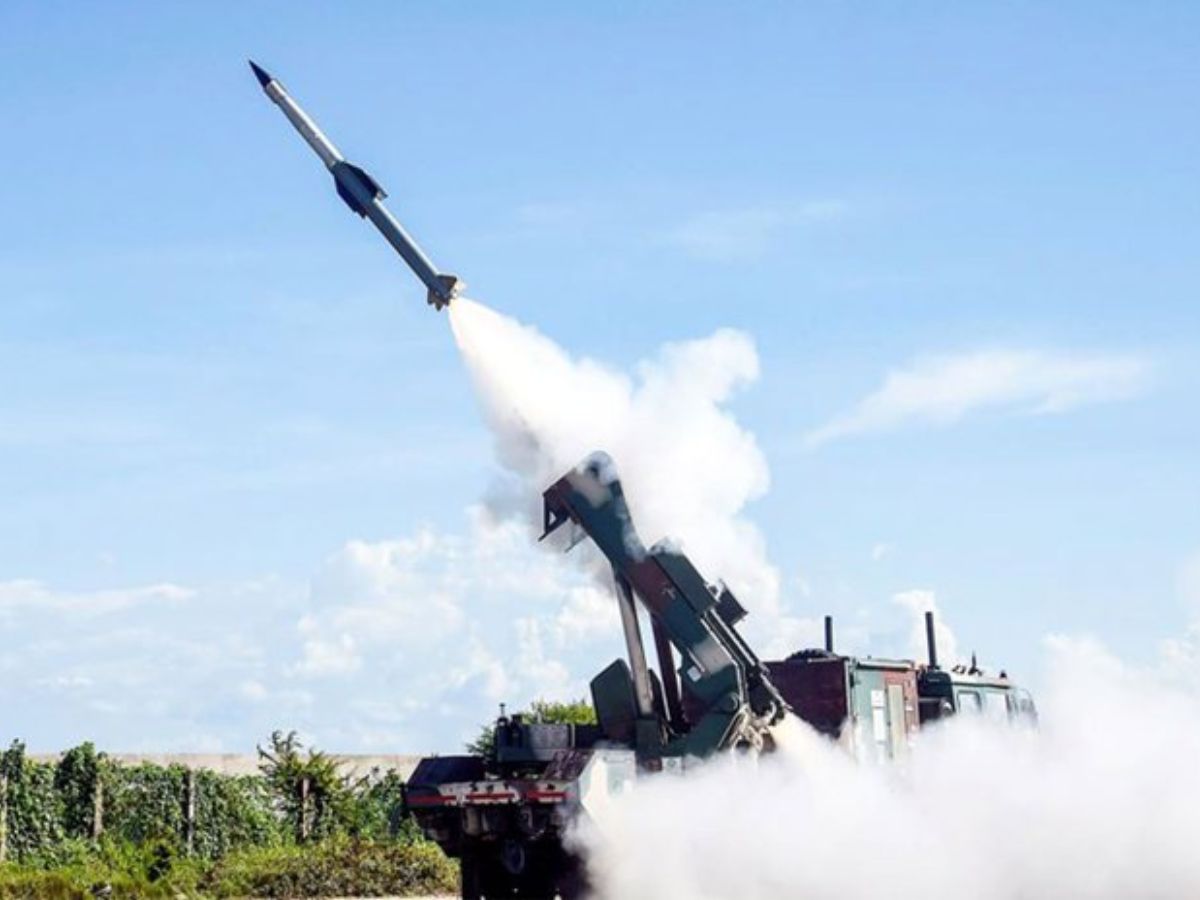
In a significant move to enhance battlefield air defence, the Indian Army has initiated the procurement of the Anant Shastra, an indigenously developed Quick Reaction Surface-to-Air Missile (QRSAM) system. The Army has issued a Request for Proposal (RFP) to Bharat Electronics Limited (BEL) for multiple regiments, with an estimated total cost of ₹30,000 crore. The system is designed to protect mobile mechanised formations, including tanks, infantry fighting vehicles, and artillery, from modern aerial threats such as fighter jets, helicopters, drones, and cruise missiles.
What is Anant Shastra ?
The Anant Shastra provides low- to medium-altitude protection, covering 6–10 km in altitude and engagement ranges of 30–40 km. Mounted on high-mobility 8×8 vehicles, the system can move alongside armoured and mechanised units, ensuring continuous protection in plains, deserts, and mountainous terrain. This mobility enables frontline forces to advance without fear of aerial attacks, significantly enhancing operational flexibility and battlefield survivability.
Cutting-Edge Technology
Anant Shastra is equipped with 360-degree multifunction radars, automated command-and-control systems, and advanced tracking sensors capable of engaging multiple targets simultaneously. Its missile employs Inertial Navigation System (INS) for mid-course guidance and Active Radar Homing (ARH) for terminal guidance, ensuring precise interception even in electronically contested environments. The system is also resistant to electronic jamming, allowing it to maintain high accuracy under challenging conditions.
Strategic Deployment
The Army plans to deploy three regiments along strategic western and northern borders to protect vital mechanised formations. These regiments will form a mobile defensive umbrella over troops and assets, creating a secure “air-littoral zone” up to 10 km above ground where most aerial threats operate. This deployment ensures that mechanised forces, which form the backbone of India’s dynamic warfighting capability, remain protected against both conventional aircraft and unconventional threats like drone swarms.
Indigenous Development and Self-Reliance
Developed indigenously by DRDO in collaboration with BEL and BDL, Anant Shastra embodies the spirit of Make in India and Atmanirbhar Bharat. The system’s design caters to India’s operational requirements, providing mobile, rapid-response air defence for mechanised units while strengthening domestic defence technology capabilities.
What is Next?
Once inducted, Anant Shastra will complement India’s layered air defence network, including Akash and MR-SAM, providing frontline troops with robust protection and confidence on the battlefield. The nine planned units, each with multiple missiles and radars, will ensure India’s mechanised forces are shielded from evolving aerial threats, marking a major leap in operational readiness and self-reliance.
Also Read: Who Is the ‘10 Wala Biscuit’ Guy? Rinku Singh Joins the Viral Craze
Disclaimer: This article is based on publicly available information and media reports. Details regarding final procurement, deployment, and operational specifications are subject to confirmation by the Indian Ministry of Defence and the Indian Army.