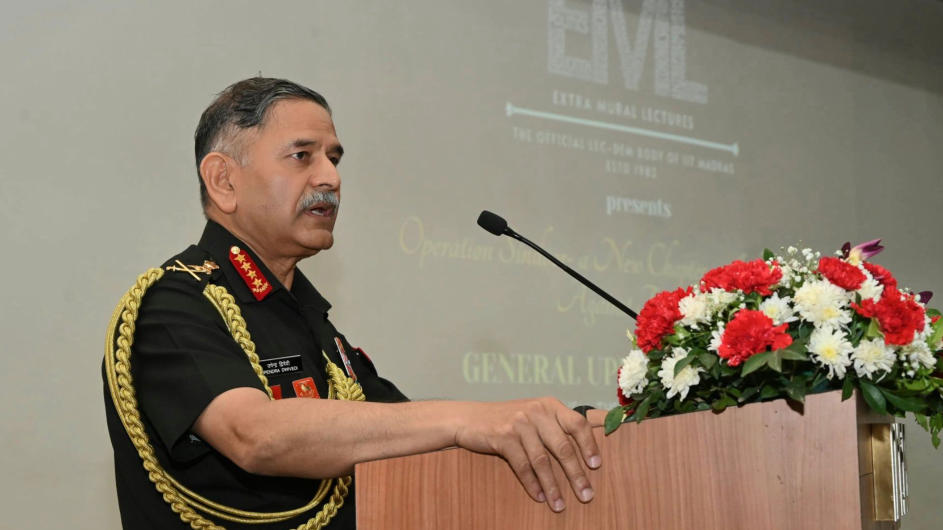
Chief of Army Staff General Upendra Dwivedi ridiculed Pakistan’s narrative management, pointing to Pakistani Army Chief General Asim Munir’s promotion to Field Marshal earlier this year. “Victory is in mind… it’s always in mind,” he remarked on August 4, adding, “If you ask them whether they lost or won, he will say my chief has become field marshal so we must have won only.”
Importance of Narrative Management
General Dwivedi said that “narrative management system is something which we realise in a big way,” emphasising its role in influencing domestic, adversary, and neutral populations. He posed a strategic question: “Can rising powers be accommodated? That’s the question you have to ask and you will get the answer yourself.”
India’s Messaging Success in Operation Sindoor
Highlighting India’s efforts in information warfare, he said the country had made significant gains through social media. “The strategic messaging was very important, so the first messaging we did ‘Justice done: Op Sindoor’, that hit the maximum… in the world today, the number of hits which it received,” he noted.
Pakistan’s Habit of Claiming Victory
Pakistan announced Munir’s promotion in May, claiming he had “ensured the security of the country and defeated the enemy.” India, however, insists Pakistan sought a ceasefire because of the heavy damage during Operation Sindoor. Ministry of External Affairs spokesperson Randhir Jaiswal had commented, “Claiming victory is an old habit. They did the same in 1971, 1975 and 1999 Kargil War as well.”
Air Strikes Crippled Pakistan’s Air Defence
Air Chief Marshal Amar Preet Singh revealed that India’s strikes had severely damaged Pakistan’s air defence systems. “In 80 to 90 hours of war, we were able to achieve so much of damage to air system that it was clear to them that if they continue, they are going to pay for it more and more,” he said, adding that five Pakistani fighter jets were shot down.