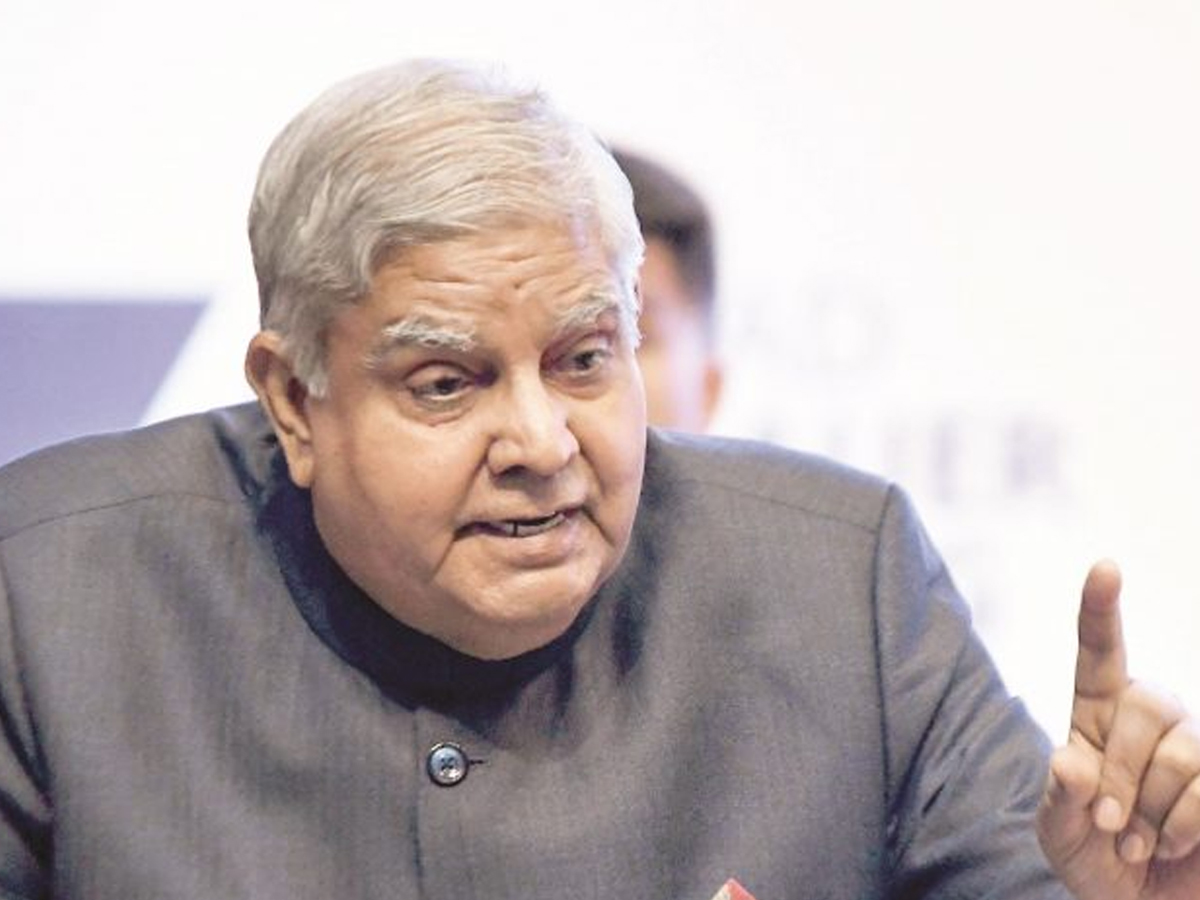
The Election Commission of India (ECI) has announced the schedule for the election to the next Vice President of India after Jagdeep Dhankhar’s mid-term resignation on July 21. The rare mid-term vacancy in the nation’s second-highest constitutional position has sparked political interest on all sides.
As per the ECI notification, the process of nomination will start on August 7 and will end on August 21, 2025. In case of necessity, polling will be held on September 9, with the counting of votes taking place on the same day.
The election will be held under Article 324 of the Constitution, which requires the ECI to conduct the process of filling the Vice-President’s office.
Election Commission of India announces schedule for the election of Vice President of India
Last date for nominations-August 21, 2025
Date of poll (if necessary)- September 9, 2025 pic.twitter.com/Ct6u3A9KpR— ANI (@ANI) August 1, 2025
Electoral College List Finalised
The ECI, in its 31 July 2025 statement, assured that it has finalized the electoral college list for the Vice-Presidential election.
“Accordingly, the Commission has finalized the electoral college list for the Vice-Presidential Election, 2025. These members are stated in a continuous serial order, alphabetically arranged according to the State/Union Territory of their respective Houses,” the ECI stated in a release on Thursday (July 31, 2025).
The list comprises 788 members of both Lok Sabha and Rajya Sabha. This list can be bought at a special counter to be established in the office of the Election Commission after publishing the official notification.
“The Electoral College list will be available for purchase at a counter set up in the Election Commission of India from the date of notification, which is likely to be announced soon,” the ECI added.
ALSO READ: Ex-VP Jagdeep Dhankhar and Centre – A Quiet Tussle?
How the Vice-President Is Elected
The Vice President of India is chosen by an electoral college consisting of elected and nominated members of the Rajya Sabha and elected members of the Lok Sabha. The election takes place under the single transferable vote system, providing proportional representation.
The Vice Presidency holds an important position in India’s constitutional structure as the Chairperson of the Rajya Sabha and, indeed, as a representative of India in diplomatic and ceremonial positions when the President is not present.
Political Consequences of the Election
This election comes at a politically charged moment. Major political alignments, changing coalitions, and regional interests could become a decisive factor in determining the result.
The resignation of Jagdeep Dhankhar, a well-known political personality, has left a gap, which the ruling party as well as the opposition are anxious to fill with carefully chosen candidates.
Legal and Procedural Backdrop
According to Rule 40 of the Presidential and Vice-Presidential Elections Rules, 1974, the ECI is required to prepare and update a list of all eligible members to be voted for. The list contains their recent addresses and parliamentary affiliations, and it is, therefore, an important document to be secured for the preservation of the purity of the election process.
The ECI reaffirmed that it will adhere strictly to constitutional and procedural rules so that the election can be transparent and just.
This Vice-Presidential election is not only a constitutional requirement but a political arena too, with different groups preparing to move their desired candidate ahead. With elections, if needed, to be held on September 9, everyone’s attention is now on the nomination announcement and the political shenanigans that will ensue.