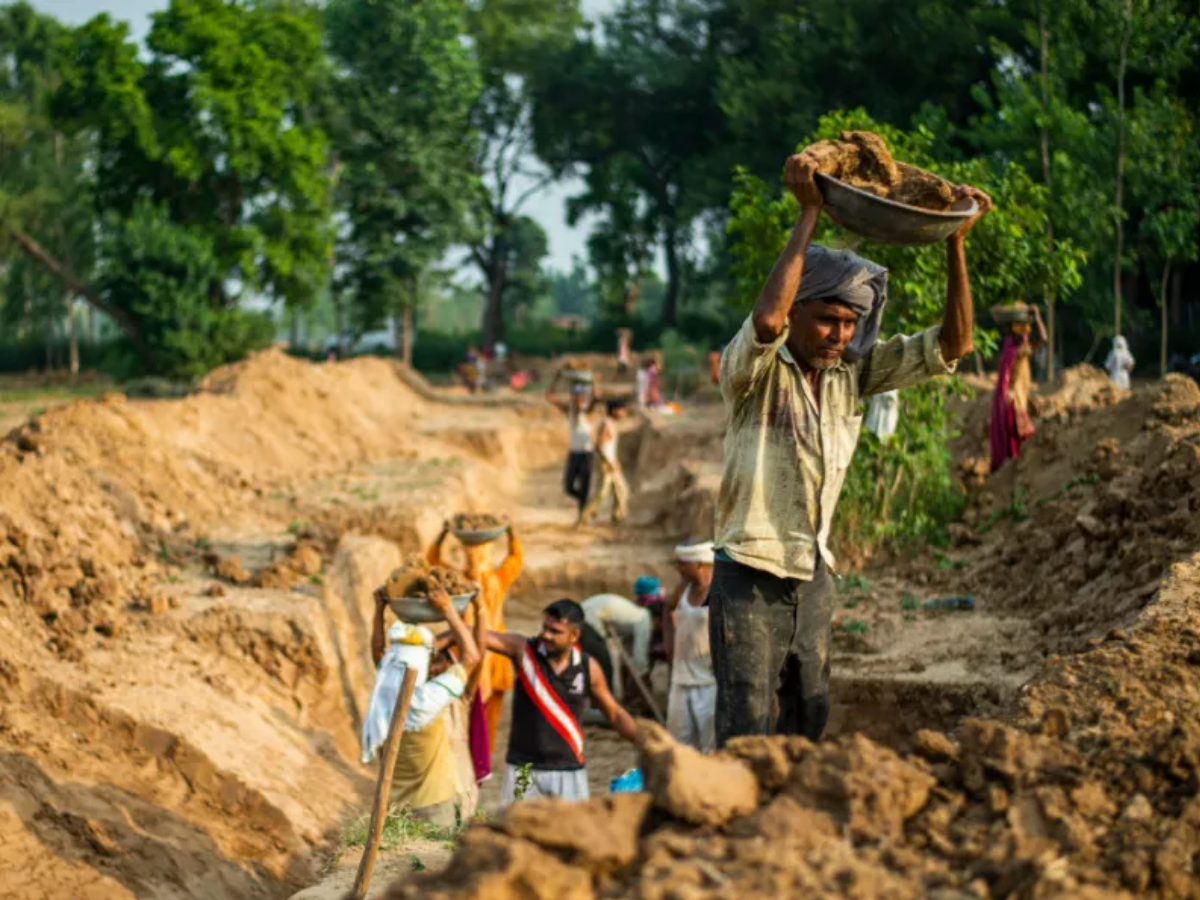
VB-G RAM G Bill: This move by the government is replacing the Mahatma Gandhi National Rural Employment Guarantee Act by the name Viksit Bharat – Guarantee for Rozgar and Ajeevika Mission (Gramin), brings a major change in the rural sector of the Indian state’s policy.
With the presidential ascent, the debate has already shifted, not only in the Parliament but has entered the masses. Critics look at it as the wiping out, while their counterparts view it as opportunities.
What the New Law Offers
However, what lies at the core of the new Act is the increased employment guarantee. It is now a legal right for rural families to get employment for no less than 125 days of wages every year, up from the previous guarantee of 100 days of employment.
For rural families with income sources tied to seasons and seasons of uncertainty, this might bring some stability to the situation. It is what the Indian government claims to bring about a Vikshit Bharat 2047 for rural employment, where employment would be secured, productive and proactive.
Moving from Welfare to Development Partner
The Rural Development Ministry states that the Act transcends the confines of a welfare measure on its own. With a focus on assets, convergence of the project with other initiatives and accountability implemented with new governance, the Draft Bill sets out to activate wage labor as a rural developmental stimulator.
The roads, water infrastructure and rural resources developed in the program are expected to be used for agriculture and rural enterprise, not merely for the sake of relief.
Political Fault Lines & Protesting
“The way this Bill has been brought has increased political polarization. The opposition parties are blaming the ruling party for rushing through the Bill without proper discussions and Congress president Mallikarjun Kharge has been quite outspoken on this issue and said that MGNREGA is a lifeline for poor farmers and that watering down the spirit of this Act will further make farm workers vulnerable,” said Chandan Sinha, an Indian politics observer. For opponents, stripping Mahatma Gandhi’s name is more than a gesture; it comes with a meaning.
ALSO READ:Indian Railways Announces Fare Hike from Dec 26: Check New Ticket Prices & Per-Km Rates | All You Need to Know
What is the Future
If VB-G RAM G is allowed to transform the rural sector with new ambitions or becomes contentious legislation rewritten once again, only time will tell. It makes no difference if the number of workdays in rural areas increases if the payment is delayed.
The promise of empowerment through legislation has to deal with the realities on the ground in rural areas. The new reforms are welcomed in the changed framework of employment in rural areas of India.
ALSO READ: India Suspends Visa Services Indefinitely in Chittagong Amid Rising Protests in Bangladesh
Disclaimer: This article is analysis based on publicly available information & statements and does not represent the views of any political party or authority.