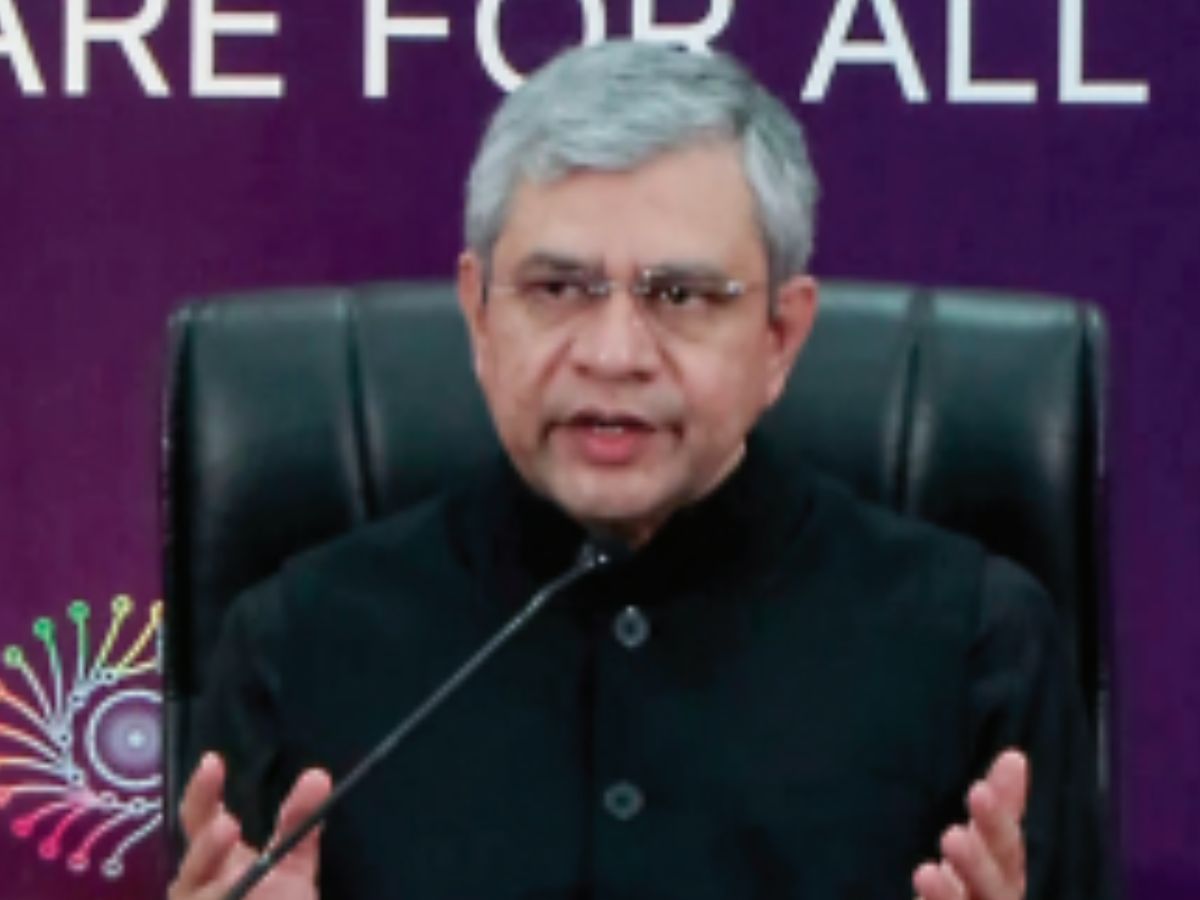
Union Minister for Railways, Information & Broadcasting, and Electronics & IT Ashwini Vaishnaw on Tuesday assured delegates of a smooth and well-managed experience at the India AI Impact Summit, while apologising for difficulties some attendees encountered on the first day.
Speaking at the event, Vaishnaw said a dedicated “war room” had been activated to resolve logistical and operational issues promptly. “We have had a war room functioning since yesterday. If there are any issues, please bring them to our notice. We will make every effort to ensure the experience is smoother and enjoyable for everyone,” he said. He expressed regret over any inconvenience caused on Monday, adding that the organising team was working tirelessly to streamline arrangements.
Calling the turnout “phenomenal,” the Minister noted that close to 70,000 people attended the summit on Tuesday. The event, hosted at Bharat Mandapam in New Delhi, has drawn global tech leaders, policymakers, entrepreneurs and industry stakeholders as India strengthens its position in the global artificial intelligence landscape.
Vaishnaw projected that India could attract more than $200 billion in investments related to artificial intelligence and data infrastructure over the next two years. He said around $70 billion has already been committed, while an additional $90 billion has been announced. He highlighted tax incentives introduced by Finance Minister Nirmala Sitharaman — including an extended tax holiday for companies establishing data centres and offering cloud services in India — as a significant catalyst for future investments.
Emphasising India’s strong IT foundation, the Minister said the government is collaborating with industry players to upskill and reskill professionals. Academic programmes are also being revised to ensure students are prepared for rapidly changing technological trends.
He further stated that the summit has secured nearly $17 billion in global venture capital commitments, underlining robust international confidence in India’s AI ecosystem. He attributed this momentum to the strategic policy direction provided by Prime Minister Narendra Modi, which he said has helped position India as a leader in emerging technologies.
The summit also serves as a platform for India to showcase its deep reservoir of engineering talent while advocating wider access to AI technologies for the Global South. India is expected to champion the idea of a “global AI commons” — a shared repository of AI applications across key sectors that countries worldwide can utilise.
During the summit, Vaishnaw engaged with over 3,000 participants of the YuvAI hackathon, where students from across the country presented innovative, vernacular, and sector-specific AI solutions. He described AI as a transformative tool capable of helping individuals and communities address everyday challenges effectively.
On regulatory matters, Vaishnaw reiterated that multinational digital platforms operating in India — including Netflix, YouTube, Meta and X — must comply with the country’s Constitution and legal framework. He stressed that adherence to local laws and cultural sensitivities is an established global norm for responsible corporate conduct.
Addressing the growing threat of deepfakes, the Minister called for stronger regulatory measures, noting that the issue is escalating. He underscored the need to protect children and society from potential misuse and said the government has initiated consultations with industry stakeholders. Parliamentary committees have also examined the matter and proposed recommendations.
“We require much stricter regulation on deepfakes,” Vaishnaw said, adding that achieving political consensus will be essential to implement tougher safeguards.
With record participation, major investment commitments and a strong push for inclusive and responsible AI development, the India AI Impact Summit reflects India’s ambition to become a leading global force in artificial intelligence.