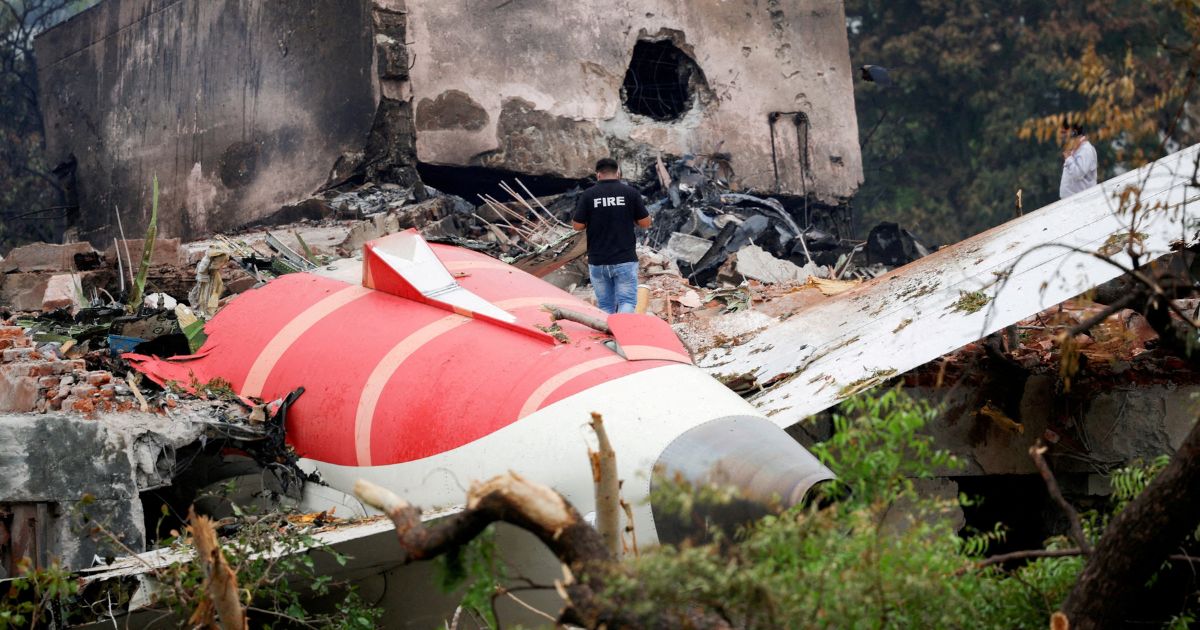
US National Transportation Safety Board (NTSB) has eliminated mechanical failure in the disastrous June 12 Air India Flight 171 crash that took 260 lives, including 19 on the ground. The Boeing 787 Dreamliner involved in the crash was not due to a defect in the fuel control unit or switches, the agency confirmed.
Instead, officials believe a cockpit misunderstanding caused both engines to lose power after the fuel switches were inadvertently placed in the “cutoff” position moments before takeoff. The revelation shifts attention away from hardware failure towards potential human error in the cockpit, as joint probes by Indian and US agencies are ongoing.
NTSB Clears Boeing’s Fuel Control Unit
Commenting on July 24, Bryan Bedford, the Federal Aviation Administration (FAA) administrator, said he has no evidence of a mechanical flaw in Boeing’s fuel control unit.
“We can say with a very high degree of confidence it doesn’t seem to be a mechanical problem,” Bedford said to reporters while attending an air show in Wisconsin. He emphasized, “We feel very confident that this isn’t a problem of inadvertent fuel control manipulation.”
This supports Boeing’s position that its systems operated normally. The NTSB’s statement essentially eliminates equipment failure as a reason behind the engine shutdown.
Fuel Cutoff Before Takeoff Triggered Crash
India’s Aircraft Accident Investigation Bureau (AAIB) earlier this week issued a preliminary report that identified concerning actions in the cockpit.
The AAIB said that the aircraft’s two fuel control switches had been placed in the “cutoff” position before takeoff, shutting off fuel to the engines. The switches were restored shortly after some 10 seconds had passed, but by then the engines had lost power. The plane did not ascend and crashed, killing all those on board as well as 19 on the ground.
Cockpit Voice Suggests Possible Mistake
The cockpit voice recorder captures a tense conversation. First Officer Clive Kunder is said to have asked Captain Sumeet Sabharwal, “Why did you cut off?” Sabharwal told him he had not.
The conversation reflects uncertainty or confusion in the cockpit. Captain Sabharwal had more than 15,600 flying hours, whereas First Officer Kunder had flown more than 3,400 hours.
India Reviews Boeing 787 Fleet for Precautions
After the crash, India’s aviation regulator, DGCA, instructed all airlines flying Boeing 787 and 737 planes to inspect the locking mechanism on fuel switches. Air India checked the locking mechanism of all its Boeing 787 planes and found nothing wrong with it.
Human Error Now Under Scrutiny
With mechanical faults eliminated, investigators are looking into procedural failure or pilot mistake. The AAIB-NTSB joint investigation is still looking into how cockpit decisions resulted in a lethal sequence of events. The accident has created new worries over pre-flight procedures and switch layouts in contemporary cockpits.