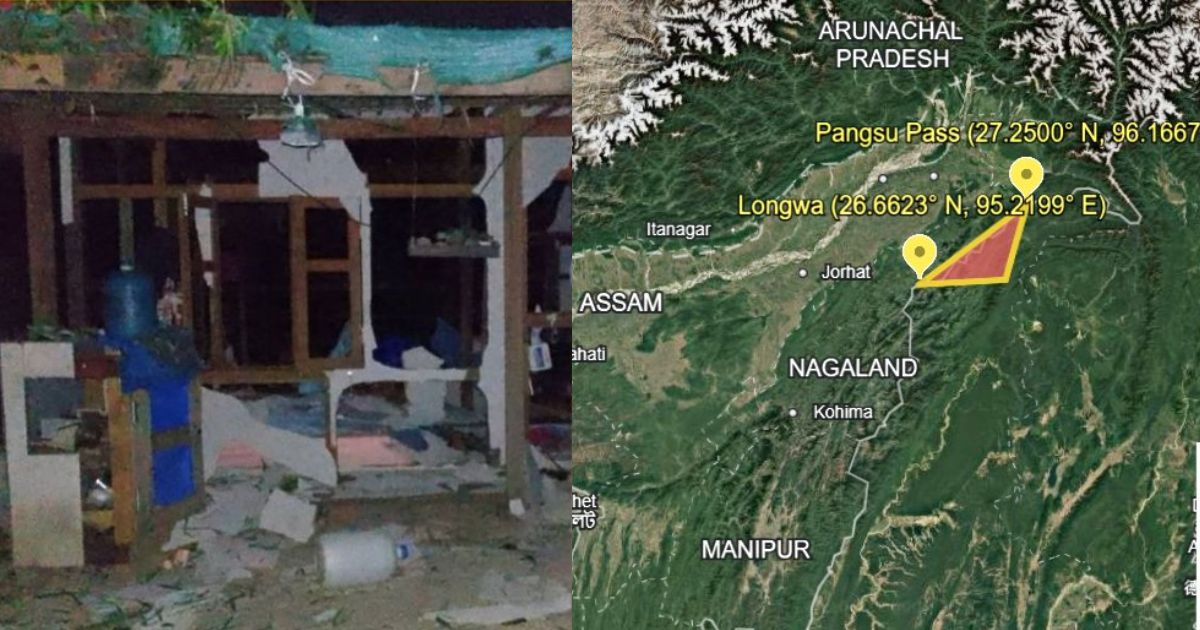
Tensions erupted in India’s Northeast following reports by the proscribed militant group ULFA-I that drone attacks struck its eastern headquarters in Myanmar, killing and wounding 19 cadres. The group had accused the Indian Army of carrying out the operation, but the Army has staunchly denied any such role.
The reported strike has caused grave concern because of increasing volatility on the India-Myanmar border, where insurgent groups continue to keep armed camps.
ULFA-I Claims Strike, Reports Heavy Losses
On Sunday, the United Liberation Front of Asom-Independent (ULFA-I) issued a statement saying that its camp within Myanmar was attacked with drone strikes by the Indian Army. The group reported 19 cadres killed and an equal number injured. The group also claimed that Commander Nayan Medhi had been killed in the strike.
ULFA-I’s press note further hinted that members of other insurgent groups, such as the Revolutionary People’s Front (RPF) and People’s Liberation Army (PLA) of Manipur, were also hit in the attack.
Army Denies All Involvement
Lieutenant Colonel Mahendra Rawat, PRO Defence Guwahati, denied the report. In a conversation with news agency IANS, he informed, “There are no inputs with the Indian Army on such an operation.” This official denial indicates a likely attempt at disinformation or a power struggle within insurgent forces based in Myanmar.
Internal Infighting or Crossfire?
Those familiar with the area speculate that internal conflict between various banned groups may have caused the attack rather than an external one. Tensions between groups like ULFA-I and PLA have reportedly increased recently, particularly as they compete for influence and resources in Myanmar’s lawless border regions.
ULFA-I’s Shrinking Influence
The latest episode comes as ULFA-I’s operational structure faces increasing pressure. Reports confirm that the outfit is now left with only one senior functionary, Arunodoy Dohotiya, still active inside Myanmar. Another commander, Rupom Asom, was arrested by Assam Police in May.
Moreover, ULFA-I leader Paresh Baruah, known for his links to Pakistan’s Inter-Services Intelligence (ISI), is believed to be hiding in the China-Myanmar-India border area near Arunachal Pradesh.
Militancy Along the India-Myanmar Border
Myanmar’s domestic conflict, fueled by its ruling military junta (Tatmadaw) and offensive actions taken by rebel groups, has seen the India-Myanmar border become a sanctuary for groups such as ULFA-I.
Ten militants were killed in a shootout near Manipur’s Chandel district in May 2025, showcasing the heightening militant action close to Indian borders. This permeable and precarious border is still an area of concern for Indian authorities since cross-border migration and camp establishment keep increasing.
Since ULFA-I accuses the Indian Army of conducting the Myanmar drone strike, and the Army says it had no role in it, doubts linger. Whether a foreign operation, inter-group confrontation, or disinformation led to the explosion, the incident serves as an indicator of the inflammable nature of India’s eastern border. With active networks of insurgency and outside actors, this area continues to be among India’s most problematic security issues.