
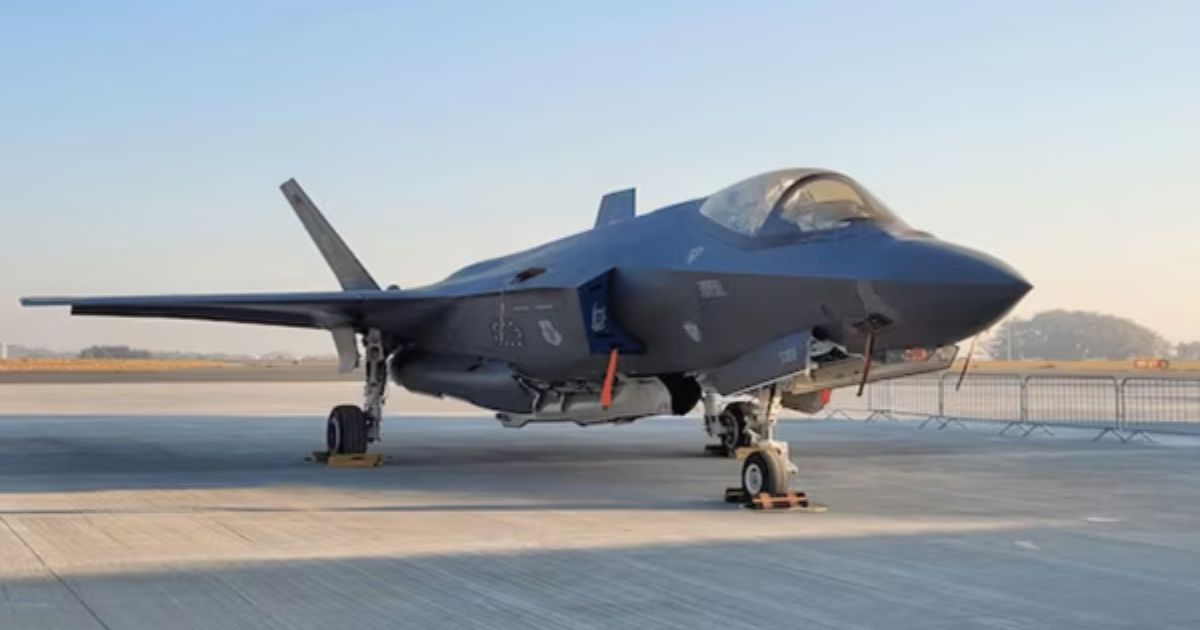
After spending close to a month on Indian soil, the Royal Navy’s F-35B Lightning II fighter aircraft finally left Kerala’s Thiruvananthapuram airport on Tuesday. The plane had made an emergency landing on 14 June due to technical issues and low fuel.
Ever since, attempts to fix it repeatedly kept the £85 million warplane stuck on the ground, making it both a social media sensation as well as a weird local landmark. Now that it has finally flown away, the web has gone crazy with memes celebrating its belated goodbye.
Emergency Landing Turned Long Layover
On 14 June, the Royal Navy’s crown jewel, the F-35B aircraft, made an unscheduled emergency landing at Thiruvananthapuram International Airport. Low fuel and technical problems compelled the pilot to land the plane. Although the F-35B boasts advanced technology, the jet sat idle on Indian runways for weeks, proving its exposure to bugs.
A number of repair attempts did not succeed in correcting the problem at first. Years later, the grounded plane attracted visits from curious locals and aviation buffs. Airport personnel maintained it under tight surveillance, but its presence soon turned into much more than a security issue—it turned into a social media phenomenon.
British Engineers Fly In
The breakthrough occurred on July 6, when a group of British army engineers landed in Kerala. They had with them specialized equipment to detect and fix the faults besetting the jet. After working hard for several days, they finally accomplished it.
A British High Commission spokesperson verified all “repairs and safety checks” were finished. The jet was cleared to return to active duty and departed without incident on Tuesday.
Memes Take Flight Online
As soon as the F-35B took off, the internet laughed. On X, people poured into the site with clever memes, snarky goodbyes, and jokes sending up the jet’s unusually lengthy Indian sojourn. Popular mood: “Finally, goodbye!”
Most joked that the plane had now become a resident of Kerala by courtesy. Others saw the jet as a tourist who was overstaying its visa. Comic relief brought a lighthearted conclusion to what was first a tense technical problem.
UK Thanks India
In a statement, the British High Commission expressed gratitude to the authorities and airport officials of India for their cooperation during the ordeal. “The UK remains deeply grateful for the co-operation and assistance of the Indian authorities and airport staff,” the spokesperson said.
The official also hoped that this would help “strengthen our defence partnership with India further.” What started as a defence emergency ended as a public spectacle—and, for many online, an unforgettable chapter in India-UK aviation relations.