
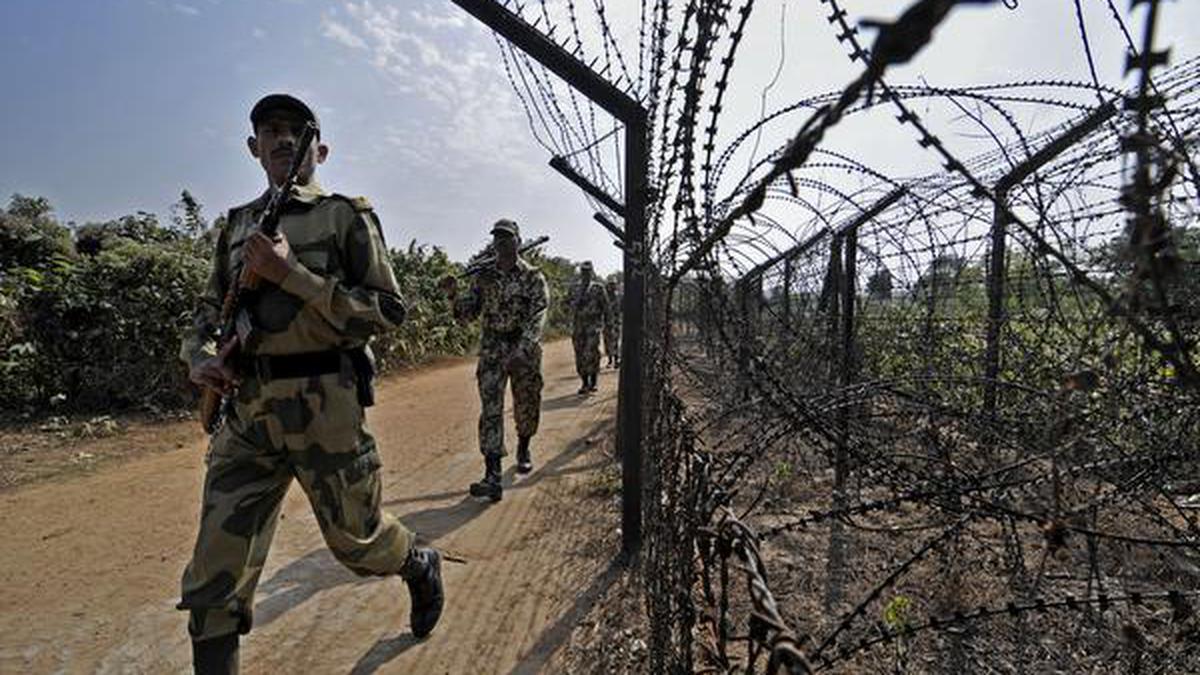
In a recent administrative move, the Tripura Government has set up a Special Investigation Team (SIT) that will identify and facilitate the deportation of illegal entrants from Bangladesh. Chief Minister Dr. Manik Saha confirmed during a public briefing on Friday that this was being done despite a marked decline in infiltration activities over the past few months.
District-Level Enforcement to Lead Implementation
Under the aegis of West Tripura district, which has seen a high incidence of infiltration-related arrests, the newly formed task force will consist of officers-in-charge from all the 15 police stations in the district, which will be headed by Deputy Superintendent Debasish Saha of the District Intelligence Branch.
According to senior government officials, enhanced applications have been made to ensure stiff border vigilance and facilitate deportation under the guidelines of the Centre.
Being around 856 kilometers long on the international boundary with Bangladesh, Tripura happens to be one of the sensitive Indian states in terms of irregular migration. This geographical and historical permeability has always required state-level intervention from time to time whenever concerns about national security and demographics arise.
Political Pressure and Indigenous Advocacy
The SIT results because of the increasing demand from regional political partners. The Tipra Motha Party (TMP), one of the major constituents of the ruling Bharatiya Janata Party (BJP) coalition in Tripura, has also constantly impressed on the central government to take the initiative to set up mechanism to identify, detain, and throw out illegal immigrants.
TMP president Pradyot Debbarma openly accused unauthorized migration of having adverse long-term consequences for indigenous tribal communities in Tripura on socio-cultural and economic levels. “If we want to preserve traditional customs and develop native communities, then unauthorized settlements have to be stopped,” he had said earlier.
Central Policy Alignment and Future Directions
The augmentation of the setup for the task force is apparently along the lines of some prescribed directives by the Ministry of Home Affairs; if true, such alignment would show coordination at the levels of state and central agencies. While the instances of infiltration may have come down, the very mandate given to the SIT speaks of a larger, preventive strategy that attempts to mitigate threats before they firm up into something disastrous.
This decision shows a proactive approach to border governance by trying to balance humanitarian concerns with national security imperatives and the rights of the indigenous people.