
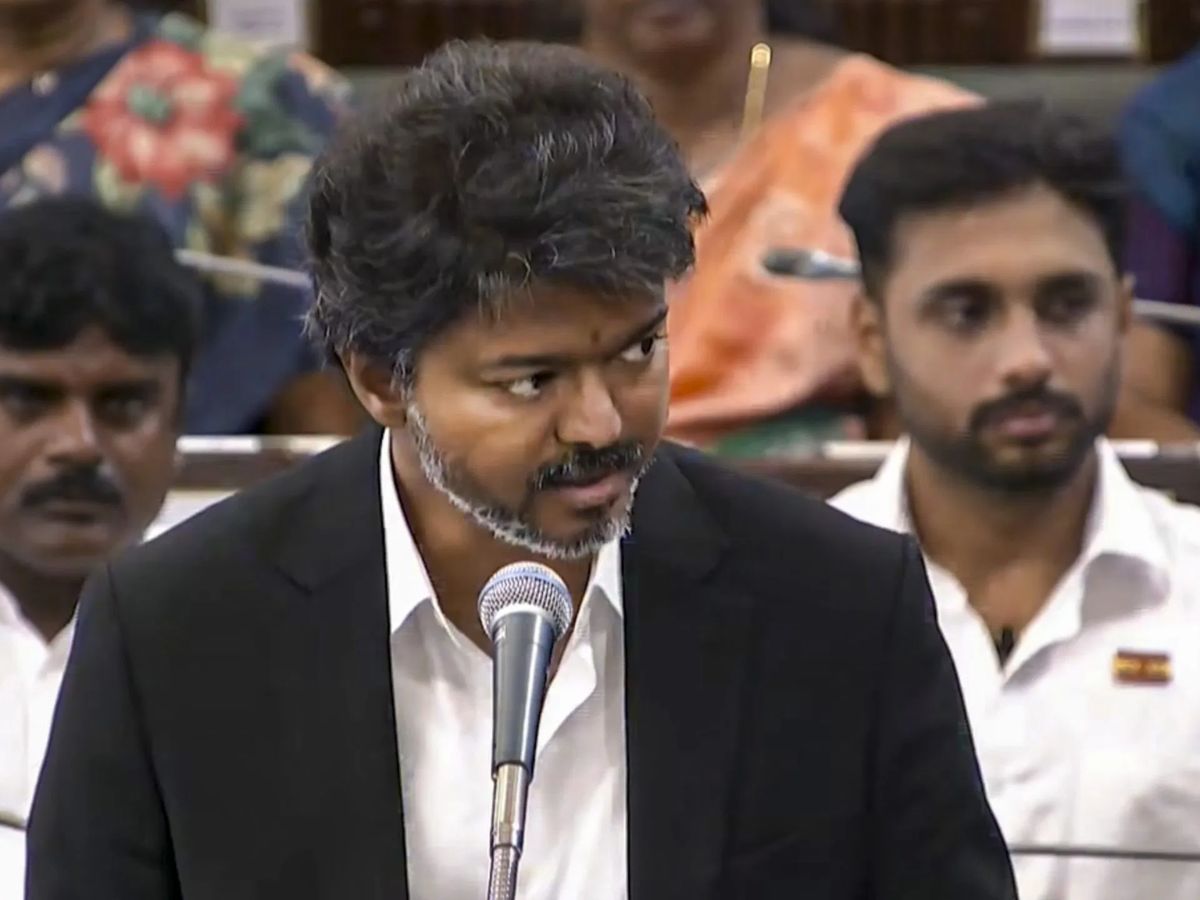
Chennai: Tamil Nadu Chief Minister C. Joseph Vijay, on Wednesday, comfortably won the trust votes in the State Assembly – securing the support of 144 MLAs and stabilising his party Tamilaga Vettri Kazhagam (TVK) and the government amid intense political drama and shifting alliances across the state.
The floor test, held in the 234-member Assembly, became a defining moment not only for Vijay’s government but also for Tamil Nadu’s traditional Dravidian political order. While the DMK staged a walkout during the proceedings, rebel legislators from the AIADMK camp emerged as unexpected kingmakers, helping the actor-turned-politician consolidate power barely three days after taking office.
House Speaker JCD Prabhakar announced that the confidence motion had been carried with 144 votes in favour, and 22 against, while a handful of 4 members abstained to vote. Congress, IUML, VCK and Left parties backed the TVK-led coalition, underlining Vijay’s success in building a broad anti-DMK platform.
The most dramatic developments, however, unfolded inside the AIADMK. A sizeable faction led by senior AIADMK leaders including SP Velumani and C V Shanmugam broke ranks with party general secretary Edappadi K Palaniswami and extended support to Vijay ahead of the trust vote. The rebels accused the AIADMK leadership of political confusion and questioned Palaniswami’s strategy after the party’s disappointing electoral performance.
Within hours of the vote, Palaniswami retaliated by removing several rebel leaders from party posts, deepening speculation of a possible split within the AIADMK. Political observers believe the rebellion could reshape the opposition landscape in Tamil Nadu and weaken the AIADMK’s ability to challenge the TVK government in the immediate future.
The DMK, led by M K Stalin, attempted to portray the trust vote as a made-up majority – alleging horse trading. Yet the party’s decision to walk out during the proceedings allowed the effective majority mark to drop sharply, making Vijay’s victory easier.
In a strongly worded statement issued after the vote, Vijay accused the DMK of attempting to destabilise his government and declared that the result reflected the “will of the people.” He also thanked supporting MLAs and reiterated that his administration would pursue a governance model centred on welfare, transparency and “people-first politics.”
The PMK, meanwhile, maintained a cautious distance during the trust vote proceedings. While sections within the party reportedly explored tactical cooperation with the ruling coalition, the leadership stopped short of formally joining the TVK camp.
The BJP too remained on the sidelines as developments within the AIADMK alliance created uncertainty over the future of the opposition bloc.
Attention is also turning toward the DMDK and other smaller regional parties, many of whom are expected to reassess their political alignments after Vijay’s successful show of strength.
Political analysts believe the collapse of rigid alliance structures could produce a more fragmented and personality-driven political environment ahead of future local body and parliamentary contests.
In the days leading up to the vote, Vijay intensified outreach efforts, meeting leaders from Congress, IUML and several community-based organisations in Chennai. His attempts to position the TVK government as inclusive and secular appear to have reassured allies wary of instability in the post-election phase.
For now, Vijay has crossed his first major constitutional hurdle. But Wednesday’s dramatic floor test has also revealed the volatility of Tamil Nadu politics, where old loyalties are fraying and new centres of power are rapidly emerging.