
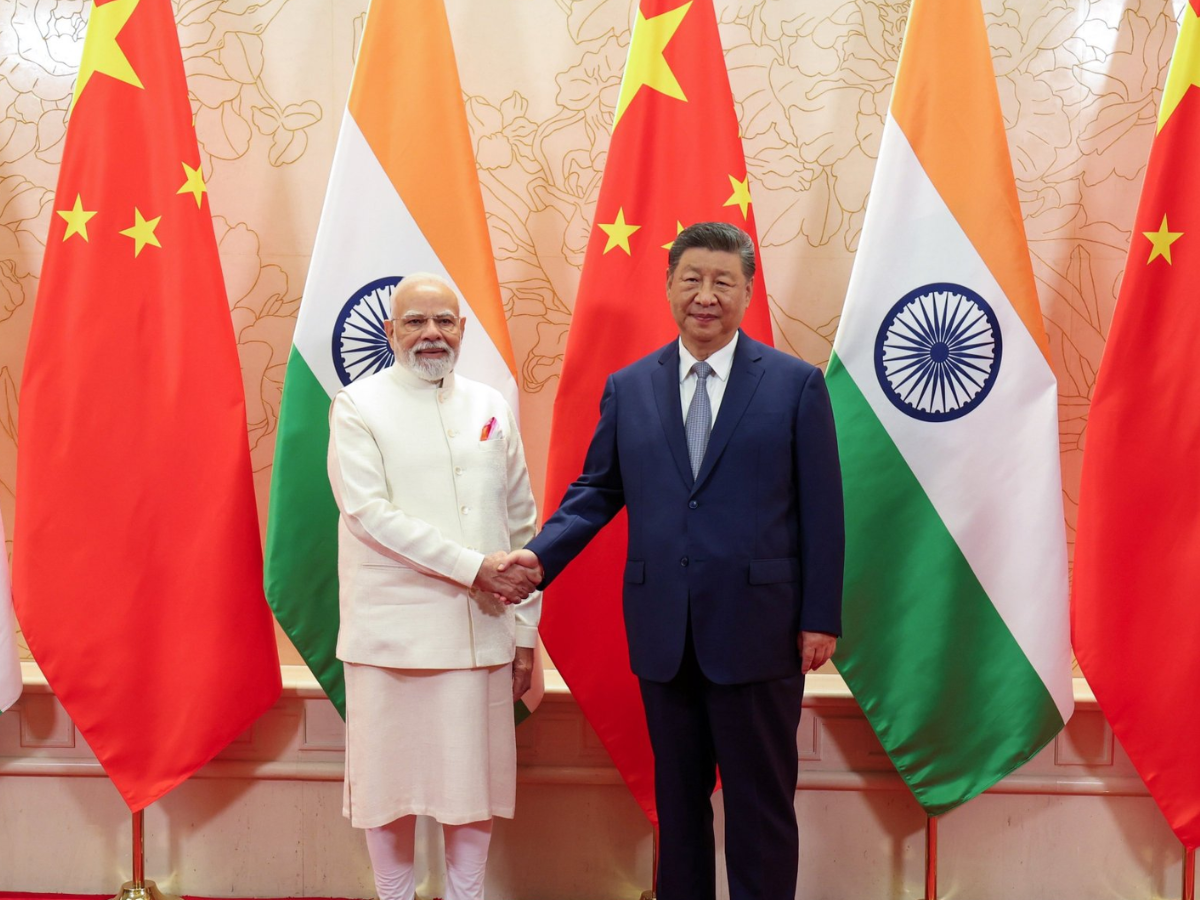
PM Modi’s meeting with President Xi Jinping on 31 August, on the sidelines of the Shanghai Cooperation Organisation (SCO) Summit in Tianjin, marks an important phase in bilateral engagement between New Delhi and Beijing. The two countries are now attempting to restore bilateralism and symmetry in some semblance of stability amidst disruption in international trade due to U.S. tariffs levied under President Donald Trump’s watch.
PM Modi’s First Visit Since Border Tensions
PM Modi’s first trip to China since April-May of 2020, when relations soured post the deadly clashes in Galwan Valley, Ladakh. The talks came following some earlier interactions in Kazakhstan at the BRICS summit, the leaders had a short meeting last year and which effectively halted a four-year direct dialogue. Both sides seem to now have an interest in rebuilding trust and resolving tensions that persist along the Line of Actual Control (LAC).
ALSO READ: SCO Summit 2025: Global Leaders Make a Statement with Fashion
Historical Roots of Engagement
India and China have a long and complex relationship of engagement through cooperation or conflict. Diplomatic relations were formally established back in 1950 and the set framework for basic coexistence was provided under the Panchsheel principles signed in 1954.
However, after the 1962 border war, the relations soured over the years until the 1970s, when high level visits resumed. Rajiv Gandhi’s visit in 1988 was very essential for boundary negotiations, while that by Vajpayee in 2003 created a decisive turning point with the two countries having virtually reached some form of agreement in the areas of Tibet and Sikkim. With the passage of years, trade and multilateral cooperation have increased however, border disputes continue to plague engagements.
Ladakh and Beyond Setbacks
The June Galwan Valley clashes, which resulted in military casualties on both sides, were the nadir of bilateral relations for several decades. In the years following Galwan, India has ramped up its scrutiny of Chinese investments, curtailed their access to advanced technologies and suspended air connectivity.
ALSO READ: Tianjin: The SCO Summit City Choice Likely a Message to the West
To add to the complications in re-establishing trust, further tensions played out on the ground in Arunachal Pradesh in 2022. However, other meetings during BRICS summits and keeping open diplomatic channels have allowed for the possibility of gradual de-escalation.
Recent Steps Toward Normalcy
In the last two years, a number of signals have been sent by both sides showing readiness to reset ties. Defence and engagement protocols for patrolling, gradual disengagement in confrontational areas and discussion on trade have been at the forefront of that since with the recent agreement on the patrolling protocols. The restoration of direct flights resumed ministerial contacts, and renewed emphasis on economic cooperation demonstrate cautious but steady steps towards normalization.
Tianjin meeting emphasizes a more strategic need to cooperate rather than compete. With trade tensions looming on the global horizon and with geopolitical alignments oscillating, India and China will both share those challenges. Building upon dialogue and easing tensions along the border may free up opportunities for both to work on tapping into the full economic and strategic potential of working together. For Asia’s two giants, cooperation may be hard, but it will be a necessity in equitable restructuring of the regional and global order.
ALSO READ: PM Modi’s China Visit SCO Summit 2025 to Shape India’s Global Strategy: What’s the Agenda