A Night of Destiny
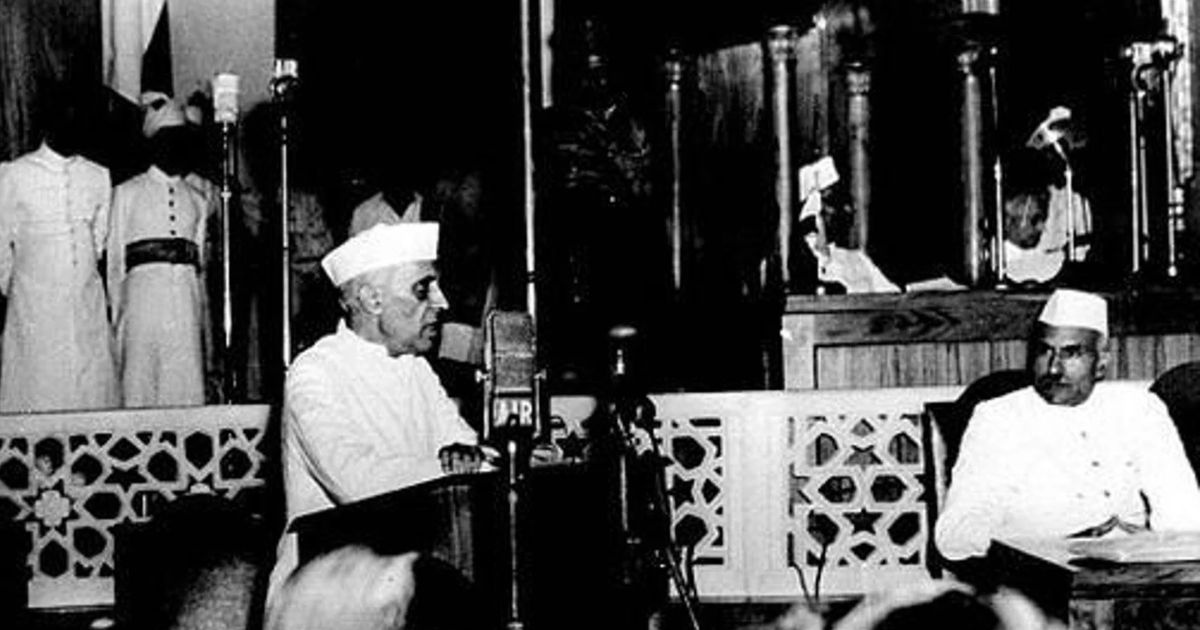
At the stroke of midnight on August 14, 1947, while the world slumbered, a newly born free India awakened to the dawn of its freedom. In the venerable corridors of the Constituent Assembly, Jawaharlal Nehru, India’s first Prime Minister, stood up to address the gathering. His words, now etched in history as the “Tryst with Destiny” speech, were not mere political oratory words of promise made to a nation awakening from centuries of colonial domination.
The air within the chamber was thick with history. Leaders who had battled and sacrificed for generations sat together, their gaze intent on Nehru. As he started “At the stroke of the midnight hour, when the world sleeps, India will awake to life and freedom” the moment became eternally timeless. The speech wasn’t just a declaration of independence but the beating of a nation’s heart.
Words That Built a Vision
Nehru’s speech was not only poetic it was political. He envisioned a democratic, secular, progressive India that was free of poverty and injustice. It was a clarion call urging citizens to take charge of the country’s destiny.
He acknowledged the monumental sacrifices that made independence possible, paying tribute to Mahatma Gandhi’s moral leadership, the countless freedom fighters, and the silent struggles of millions of ordinary Indians. Nehru’s emphasis on unity was deliberate, as the country was reeling from the trauma of Partition, communal violence, and mass migration.
His oratory was both proud and circumspect. He reminded Indians that independence was not the end but rather the start of a far more difficult work nation-building. To him, “The service of India means the service of the millions who suffer. It means the ending of poverty and ignorance and disease and inequality of opportunity.”
The Enduring Echo of Midnight
Seventy-eight years have passed, yet the Tryst with Destiny speech continues to echo. Its timelessness is because it is universal each generation finds relevance in its appeal for unity, justice, and progress. History classes in schools reproduce the midnight hour; in political orations, its words make an appearance as a reminder of the ideals on which India was founded.
The evening of that night the Assembly lit by flame-lit oil lamps, the reverent chime of the hour has entered into the nation’s shared memory. Few speeches ever entered history with such longevity of impact in both politics and emotional resonance.
Now, as India rides the currents of being a world power, Nehru’s words are a moral guide. They compel us to ask ourselves: Have we realized the promises at midnight? Are we still working towards the “noble mansion of free India” that he saw?