NEW DELHI: In the early hours of February 22, 2026, Mexican Army special forces engaged in a meticulously planned operation that culminated in the death of Nemesio Rubén Oseguera Cervantes, known globally by his nom de guerre El Mencho — the long-shadowed leader of the Jalisco New Generation Cartel (CJNG). His death marks a dramatic turning point in the country’s decades-long struggle with organized crime, setting off immediate explosions of violence, a widening security crisis, and urgent questions about the future of cartel power in Mexico.
WHO WAS EL MENCHO?
Born in Aguililla, Michoacán, Nemesio Oseguera Cervantes climbed the ranks from a small-town life into the leadership of the cartel that would become Mexico’s most powerful and feared criminal organization. Under his command, the CJNG expanded its operations across Mexico and into international markets, becoming especially notorious for distributing cocaine, heroin, methamphetamine and — in recent years — deadly fentanyl into the United States.
He was more than a trafficker to authorities in Mexico and the United States; he was an icon of narco-power, a master tactician who avoided capture for years while building a multi-armed criminal empire. The US government had offered up to $10 million for information leading to his arrest, and he had long been one of the most wanted fugitives on the continent.
THE OPERATION THAT FOUND HIM
Mexican Defense Minister Ricardo Trevilla Trejo later detailed how the operation unfolded; intelligence surveillance tracked movements linked to a trusted romantic partner of El Mencho to a rural property in Tapalpa, Jalisco — a mountainous retreat where he was believed to be hiding. The Mexican military moved to establish a perimeter with aerial reconnaissance, intending to capture him under federal law enforcement statutes.
When special forces approached the compound before dawn, gunmen guarding the property opened fire, escalating into a violent clash. According to official accounts, El Mencho and members of his inner circle fled into adjoining wooded terrain. Special forces pursued them, and a firefight ensued in which multiple cartel fighters were killed. Eventually, El Mencho and two of his guards were located wounded and evacuated by helicopter. He died en route to a medical facility.
A VIOLENT BACKLASH AND NATIONWIDE SHOCK
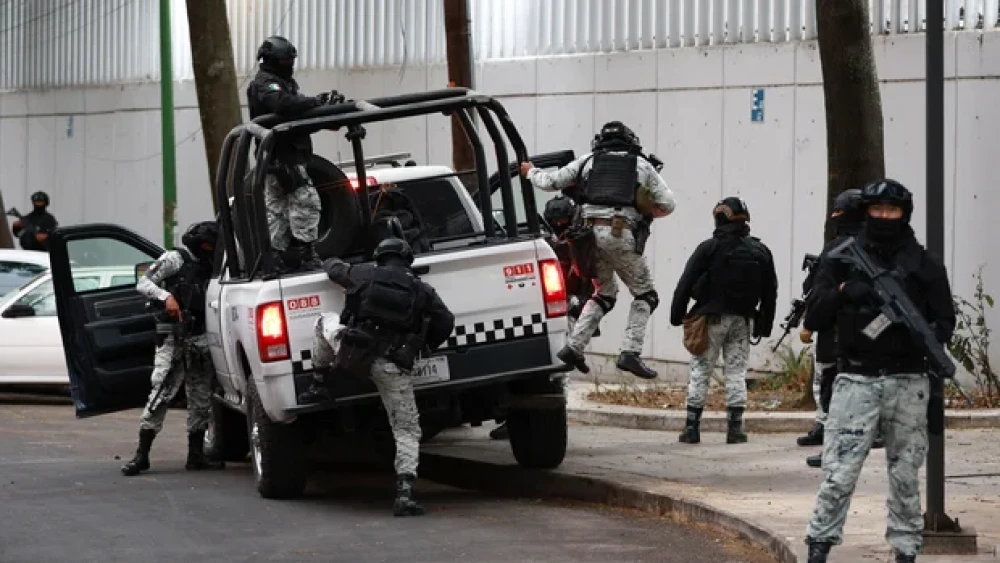
The killing did not bring immediate calm. Almost instantly, forces loyal to the CJNG retaliated with a wave of violence across Mexico. Within hours, cartel gunmen set fire to vehicles, established roadblocks on major highways, attacked security posts and sowed fear in cities from Jalisco to Tamaulipas. Over 70 deaths were confirmed in the operation and in the ensuing clashes, including members of the National Guard and suspected cartel members; dozens more were wounded.
In Guadalajara, the capital of Jalisco and a planned site for the upcoming FIFA World Cup, residents reported ghost-town conditions, with schools closed, transport suspended and people ordered to stay indoors amid rising fear. Foreign governments issued travel advisories urging caution particularly in hotspots of unrest.
The speed and scale of the violence underscored the CJNG’s reach. Armed cells acted quickly and with coordination rarely seen outside battlefield-level confrontations, torching buses, blocking roads and lashing out at state forces. For ordinary Mexicans, the rapid unraveling signified both the grip of narco-power and the immediate risks of a destabilized criminal hierarchy.
MISINFORMATION AND FEAR
The chaos was compounded by a flood of online disinformation. Hundreds of misleading social media posts, including AI-generated images and clips, exaggerated the scope of the violence — falsely suggesting airports had been seized, presidents had gone into hiding, and foreign tourists were held hostage. A study by the Tecnológico de Monterrey found that roughly 35-40% of viral posts lacked context, and many were manipulated to heighten public panic.
This blend of real violence and digital distortion amplified fear among citizens, making it difficult to separate fact from fiction as security forces worked to restore order. Officials suspect that cartel networks may have deliberately spread fake content as a form of psychological warfare to undermine trust in the government’s security achievements.
A VACUUM OF POWER: WHO’S NEXT?
With El Mencho gone, attention has turned to the difficult task of succession within the CJNG. Unlike cartels with established hierarchies, the CJNG’s power structure has long revolved around the charismatic authority of its leader. While some analysis have pointed to Juan Carlos Valencia González — his American-born stepson with alleged operational command — as a possible successor, questions remain about whether he possesses the rank or support necessary to lead.
Other potential leaders include regional commanders already embroiled in cartel operations, though analysts warn that a fragmented leadership battle could ignite internal conflict, leading to factional fights reminiscent of those that followed the capture of other cartel bosses in the past. Such internal rifts could produce a surge in homicide rates and ungoverned territorial disputes, threatening a broader escalation of violence.
THE BROADER CONTEXT: CARTELS, TECHNOLOGY, AND STRATEGY
Experts note that the CJNG’s organizational model differs from older cartels. It has diversified beyond pure drug trafficking into extortion, local market control, and paramilitary operations. The group has invested in advanced technologies — including drones and AI — to strengthen its territorial grip and innovate recruitment and intimidation tactics. The organisation’s reach stretches beyond Mexico, into European ports and networks, illustrating not just a national challenge but a global organised crime crisis.
The operation against El Mencho also reflects deepening security cooperation between Mexico and the United States. The US provided crucial intelligence that helped Mexican forces locate him, marking a notable instance of bilateral counter-narco collaboration. Senior Mexican officials confirmed exchanges of information and shared logistical support in the lead-up to the raid.
Yet analysts stress that targeting one kingpin — even as notorious as El Mencho — does not dismantle the infrastructure of cartel power. Weapons flow across borders, radicalised factions can reconstitute quickly, and fragmented cartels may become more unpredictable rather than weaker. Comprehensive strategies targeting supply chains, money laundering, local governance and drug demand reduction are critical to long-term stability.
POLITICAL AND SOCIETAL IMPLICATIONS
In Mexico’s turbulent political landscape, the death of El Mencho carries symbolic weight. President Claudia Sheinbaum called the operation a triumph for security forces and underscored national resolve against criminal organisations. She exchanged updates with global leaders, including discussions with the US president, reinforcing commitments to international cooperation on narcotics and law enforcement issues. Still, the immediate aftermath — with widespread violence and societal fear — poses a sharp challenge to her administration’s claims of improved security. Long-term stability hinges not only on suppressing cartel leadership but on strengthening civil institutions, addressing economic inequality, and reducing the systemic demand that fuels illegal markets.
For ordinary Mexicans caught in the crossfire, the message is mixed: the death of a drug lord represents a strike against entrenched criminal power, but the chaos that followed — roadblocks, arson attacks, cancelled flights and pervasive fear — reveals the fragility of peace in a nation still wrestling with decades of organised crime.
A TURNING POINT OR A NEW BEGINNING OF CONFLICT?
The killing of El Mencho is significant, perhaps unparalleled in recent years for its symbolic magnitude and immediate effects. But whether it marks a lasting reduction in cartel influence or simply fuels a new cycle of violence remains to be seen. History shows that removing a cartel leader can trigger fragmentation and internecine battles rather than national stability.
Analysts caution that Mexico must brace for continued unrest, possibly heightened by digital misinformation campaigns and opportunistic rival factions seeking power.
Without strategic, nationwide reforms and sustained international cooperation, the CJNG’s demise may be only the beginning of yet another volatile chapter in Mexico’s long war against organised crime.