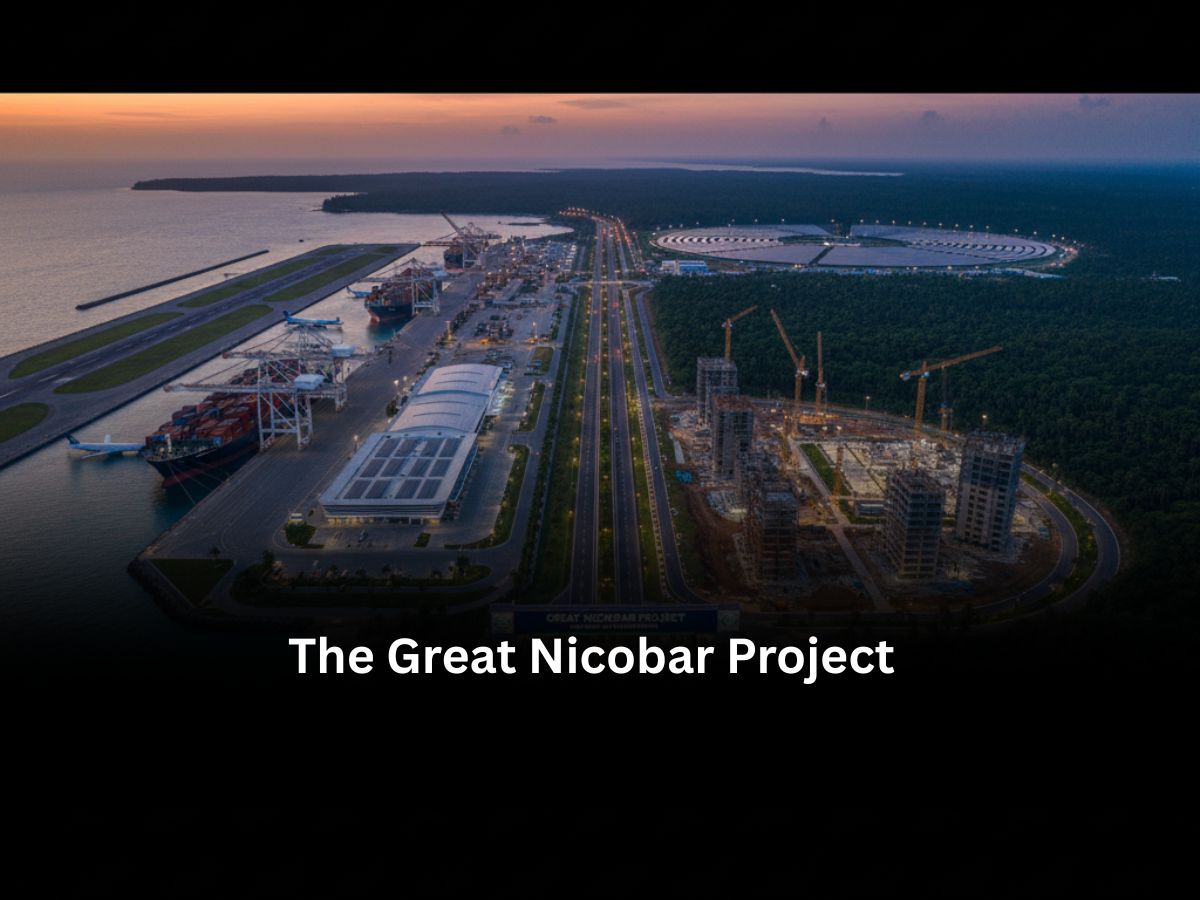
The Great Nicobar Island project, a state-run mega infrastructure project, has been a bone of contention between development aspirations from the union government and the cause of conservation pushed by the opposition. Estimated to be in the range of ₹72,000 to ₹81,800 crore, this project would aim to redevelop the southern end of the Andaman and Nicobar Islands with a new international container trans-shipment terminal, airport, township, and power plant. The government asserts that this development is crucial for strategic security, commercial purposes, and regional integration, as the island is strategically located near major international sea routes through the Malacca Strait.
Stand of the Government
The Indian government, headed by the Ministry of Environment and the administration of the Andaman and Nicobar Islands, maintains that it has implemented full mitigation and conservation measures to reduce ecological footprint. Substantial funds i.e. over ₹80 crore have reportedly been released for wildlife conservation plans including efforts for the endangered leatherback sea turtle, Nicobar megapode, macaque, and native flora.
If the most fragile of Lakshadweep Islands could survive the Mainos and Nehrus junketing there, rest assured the Great Nicobar Island will survive development work that will benefit the island residents, ensure resilience, and strengthen India’s presence in Indian Ocean. https://t.co/UCl9IMS2Bt
— Kanchan Gupta 🇮🇳 (@KanchanGupta) September 8, 2025
The administration highlights that project zones have been carefully selected to avoid tribal settlements wherever possible and asserts that legal and statutory compliances have been followed, as evidenced by environmental and coastal regulation zone clearances. The government also highlights that exclusion of sensitive CRZ(Coastal Regulation Zone)-1A coastal zones from the port is being considered, as instructed by authorities.
Position of National Green Tribunal
National Green Tribunal (NGT) has been actively examining the project. Due to various petitions by activists and tribal councils, NGT directed a reconsideration of clearances, pointing out inconsistencies in coral translocation, environmental baseline information, and CRZ boundaries. The Tribunal has insisted that project components within strictly protected areas be withheld and has demanded transparency, contesting the confidentiality of certain project reports and compelling justification of the adequacy of the environmental assessments, which critics hold used one-season data instead of multi-season studies. The recent hearings are centred on ensuring that amended layouts correct these ecological and procedural shortcomings, and compliance is still being followed up by the tribunal.
Opposition Criticism
Opposition parties, in particular the Sonia Gandhi and Rahul Gandhi-led Congress, have strongly condemned the Great Nicobar Island project. They argue that it encroaches upon tribal rights, mocks legal procedure, and threatens the very existence of indigenous Nicobarese and Shompen people already displaced by the 2004 tsunami.
“The Great Nicobar Island Project is a misadventure, trampling on tribal rights and making a mockery of legal and deliberative processes.”
Through this article, Congress Parliamentary Party Chairperson Smt. Sonia Gandhi highlights the injustices inflicted on Nicobar’s people and… pic.twitter.com/3mM4xHKq04
— Rahul Gandhi (@RahulGandhi) September 8, 2025
Congress leaders charge non-adherence to the Forest Rights Act, accusing tribal approval processes of being doctored or skirted, and threatening irreparable harm to one of the world’s most vulnerable ecosystems with widespread deforestation, seismic hazards, and threats to indigenous local fauna and flora. Global rights groups have backed calls for “genocide” of the Shompen and called on the UN and investors to drop the project.
Nutshell
The Great Nicobar Island project continues to be a highly ambitious project, with the government boasting of its strategic imperative and environmental protection measures, and opposition leaders, green activists, and tribal communities lamenting its people- and nature-destroying impact. NGT’s judicial oversight over the years has become crucial in harmonising national aspirations with environmental sustainability and indigenous rights.