
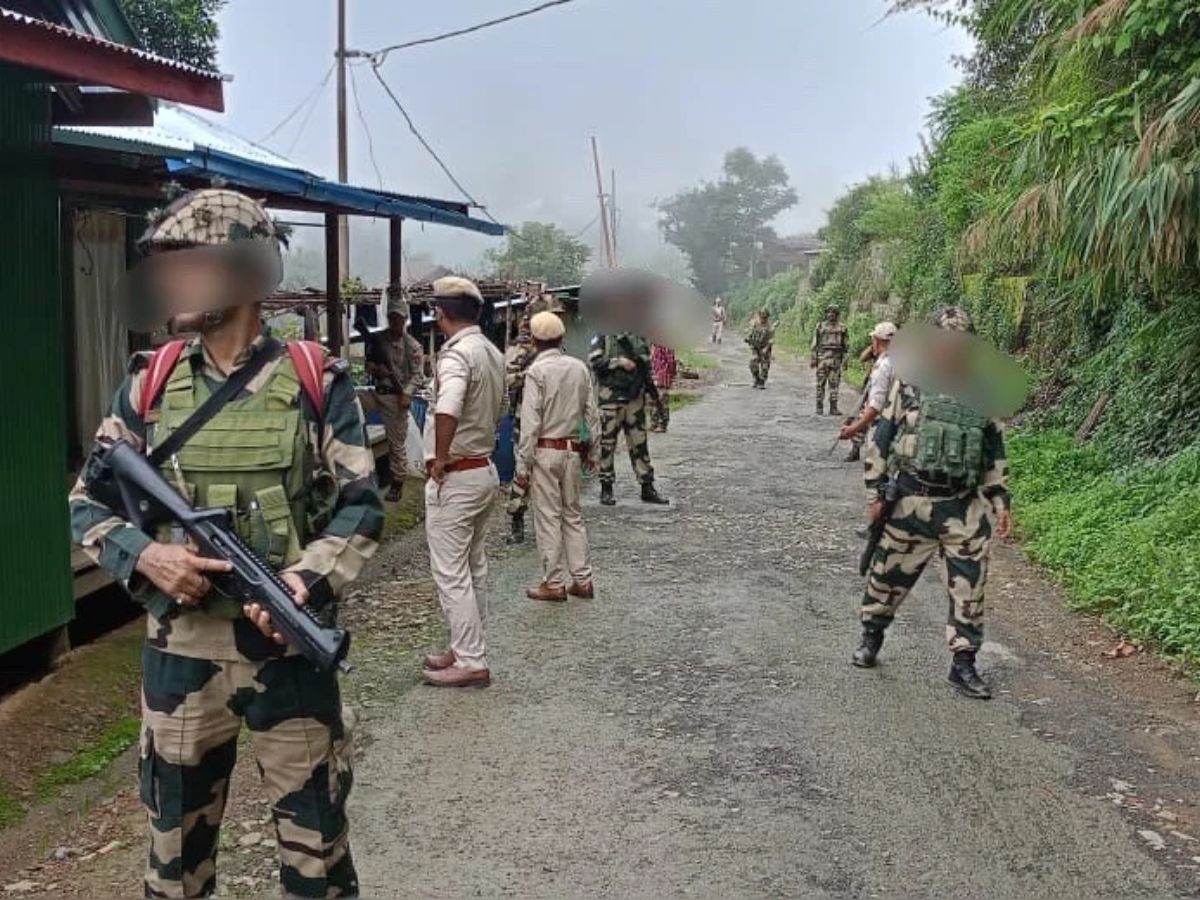
Tension briefly flared in Manipur’s Kangpokpi district May 21 after a group of Kuki-Zo women confronted a convoy of the Central Reserve Police Force (CRPF) at Saparmeina amid the ongoing hostage crisis linked to recent ethnic violence in the hill districts.
The situation was later brought under control through intervention by community mediators, and the convoy was allowed to move ahead. No injuries or arrests were reported.
The incident took place against the backdrop of the May 13 ambush near Kotlen in Kangpokpi district, where three Thadou Kuki Baptist church leaders were killed and several others were injured. The attack triggered retaliatory abductions and detentions by armed groups from both Kuki and Naga communities across Kangpokpi and Senapati districts.
Initial reports said around 38 civilians, including women and an infant, were taken hostage during the violence. According to released captives and community sources, 18 Naga civilians from Leilon Vaiphei village, including women and a one-month-old infant, were intercepted near Leimakhong Konsa Khul.
While 12 women and the infant were later released, six Naga men are still missing.
Released hostage Dingamliu Abonmai alleged that the group was surrounded by armed men, some in civilian clothes and others in camouflage uniforms, whom she identified as linked to the Kuki National Front (KNF). She claimed the men were separated, blindfolded, and taken into forested areas where they faced mental torture.
Kuki-Zo organisations, however, said they had already released all hostages in their custody and had no information about the whereabouts of the missing Naga men. At the same time, there are also claims that some Kuki civilians are still being held in Senapati district.
The United Naga Council (UNC) and Kuki organisations have traded accusations over the issue, while security forces have intensified search operations in the hill areas around Leilon Vaiphei, Songtun, and nearby villages. However, no official confirmation regarding the six missing men had been issued till May 21.
On Wednesday, several Kuki-Zo women gathered near Saparmeina, many of them relatives of people affected by the violence. A women’s leader said there was “no intention to obstruct” the CRPF convoy and described the gathering as an emotional appeal seeking intervention and the safe return of community members reportedly detained in Senapati district.
The convoy reportedly viewed the gathering as an attempt to block movement, resulting in a brief standoff before local mediators intervened.
“This is not about confrontation but about anguish,” a Kuki-Zo representative told reporters while urging restraint and calling for efforts to reduce tensions in sensitive areas.
Meanwhile, Naga families have staged protests in Kanglatongbi, Imphal, and other places demanding the immediate release of the six missing men. Some family members expressed fear that the men may no longer be alive.
Churches and civil society organisations from both communities had earlier helped secure the release of 28 hostages 14 from each side around May 15 in coordination with police and local authorities. However, the remaining cases continue to fuel tension, shutdown calls, and mistrust between the communities.
In another development, the Kuki-Zo Council (KZC) on May 20 lifted the social boycott imposed in February on Kuki-Zo MLAs who joined the state government led by Chief Minister Yumnam Khemchand Singh. The council said the decision was taken due to the “pressing need for all to work and stand together” after internal deliberations held on April 29.