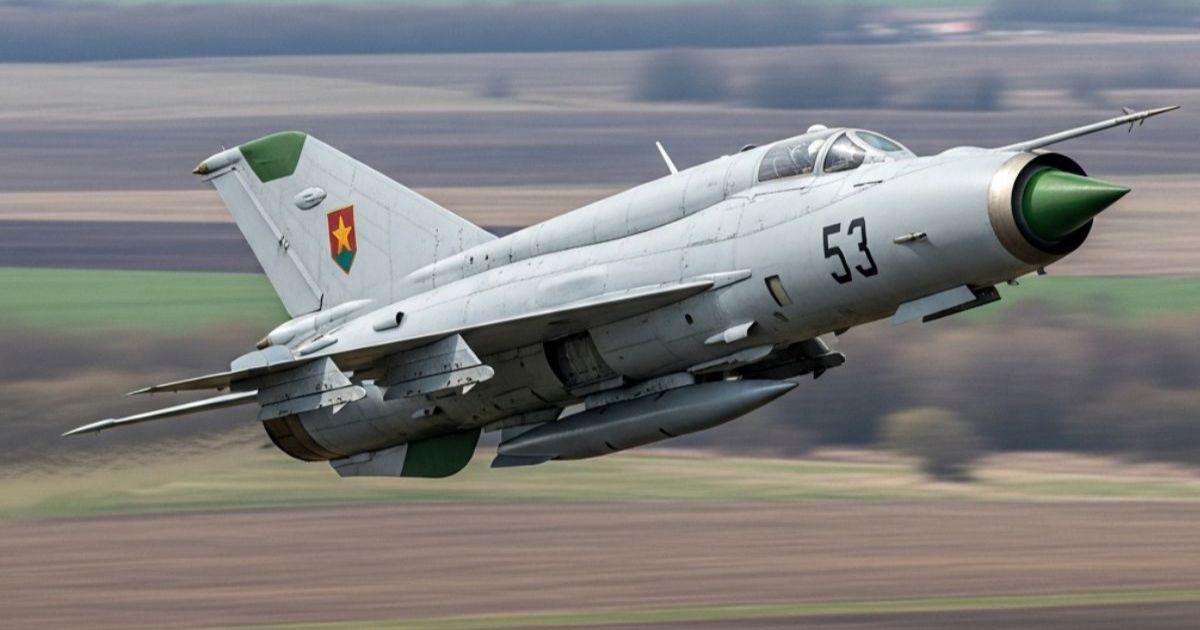
India will be retiring its longest-serving military plane, the MiG-21 fighter jet, by this September. They will be replaced by the domestically produced Tejas Light Combat Aircraft (LCA) Mk-1A. At present, there are two MiG-21 squadrons that fly from Rajasthan’s Nal Air Base. The Tejas Mk-1A aircraft will enhance India’s air defence during a period when the number of IAF fighter squadrons has fallen from the approved 42 to a mere 31.
While the IAF is eagerly awaiting the induction of Tejas, jet engine supply and aircraft rollout delays are worrying. Nevertheless, the Tejas Mk-1A offers a badly needed boost in technology, safety, and strike power.
The MiG-21’s Final Flight
The MiG-21 joined the IAF fleet in 1963. Designed by the Mikoyan-Gurevich bureau of the Soviet Union, it formed the backbone of Indian air power. The fighter aircraft played key roles during the 1965 and 1971 wars with Pakistan and the 1999 Kargil War.
It was again in the news in the 2019 Balakot air strikes, when a Pakistani F-16 was shot down by Wing Commander Abhinandan Varthaman, flying a MiG-21.
Yet, the plane also gained somber nicknames such as “flying coffin” and “widow-maker” because of frequent crashes. In the last six decades, over 500 MiG-21s have crashed and killed at least 170 pilots. Over 20 crashes have taken place just after 2010.
Tejas Mk-1A: India’s Indigenous Powerhouse
The Tejas Mk-1A is a 4.5-generation, multi-role, all-weather combat jet. It is produced by Hindustan Aeronautics Limited (HAL). The plane is designed for contemporary, high-threat air combat environments and boasts a number of upgrades over its predecessor.
These are the Israeli EL/M-2052 AESA Radar, Beyond Visual Range (BVR) missile capacity, and a sophisticated electronic warfare suite with jamming capability.
The Tejas Mk-1A also features an indigenously developed digital fly-by-wire flight control computer. This system controls the aerodynamic controls of the jet electronically, as opposed to conventional mechanical systems.
Ready to Strike and Defend
The aircraft is capable of carrying different types of weapons on its nine hard points. They are Israeli Derby missiles and India’s indigenous ASTRA missile. It is capable of performing air defence, maritime reconnaissance, and strike missions.
The Defence Ministry in February 2021 inked a ₹48,000 crore contract for 83 Tejas Mk-1A aircraft. Negotiations are underway for the second order of 97 aircraft worth almost ₹67,000 crore.
Delivery Delays Raise Concerns
Though the Tejas Mk-1A is strategically significant, its delivery has been delayed. In August 2021, HAL had ordered 99 F404 engines from GE Aerospace at ₹5,375 crore. The first lot arrived in April 2025—one year behind schedule.
GE is two years behind schedule. HAL plans to roll out 12 Tejas Mk-1A jets this year, with 10 more engines due towards the end of 2025.
Joining these engines entails several stages—fuselage construction, piping, installing landing gear, engine mounting, and extensive ground tests, which include high-speed tests.
IAF Pins Hopes on Tejas Fleet
The Indian Air Force is relying on the timely induction of Tejas Mk-1A fighter jets. With squadron numbers at 31, these aircraft are vital for India’s defence readiness. While the MiG-21s make their final preparations for flight, the Tejas Mk-1A takes over as the representative of India’s indigenous aerospace future.