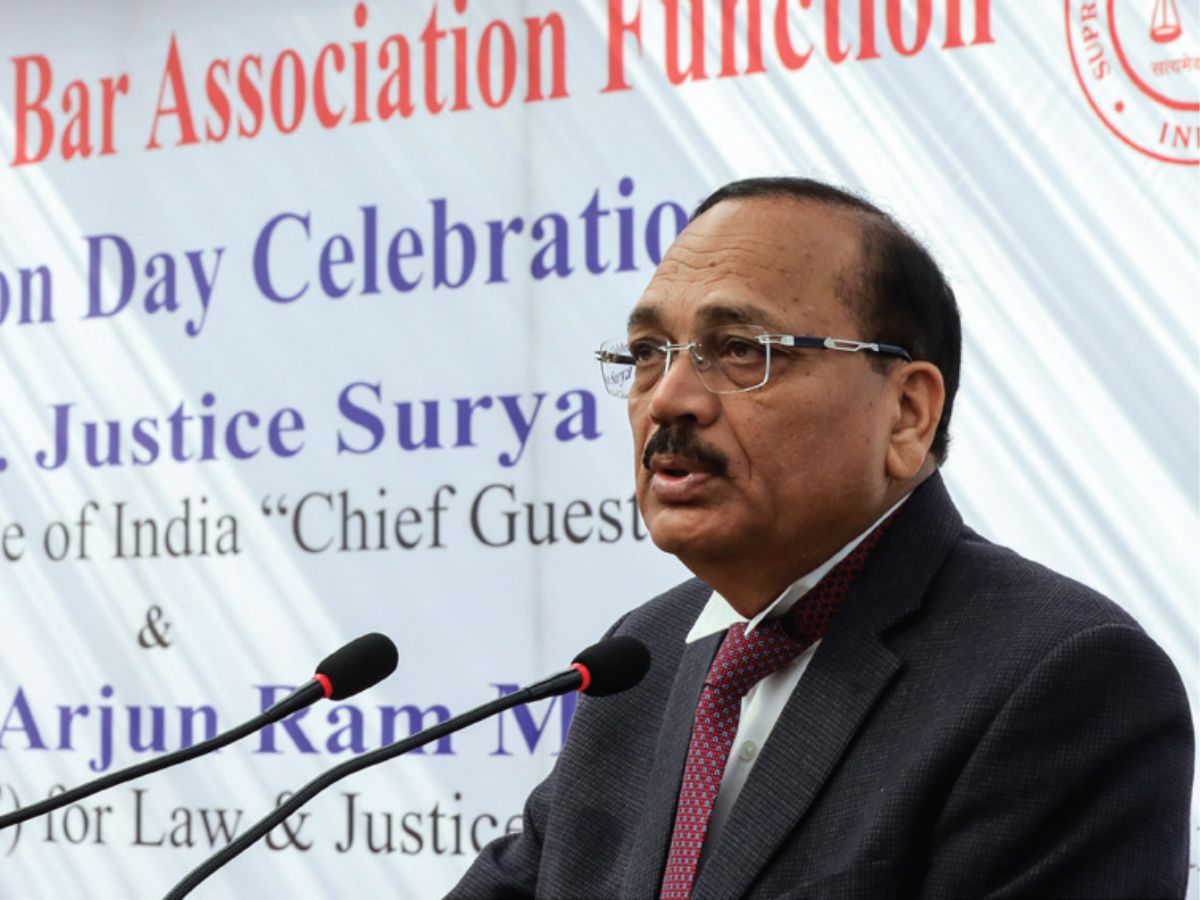
Technology should neither be resisted nor blindly accepted, Chief Justice of India Surya Kant said at the 2nd International Legal Conference organised by the Supreme Court Advocates-on-Record Association (SCAORA) in Goa.
The CJI said artificial intelligence would raise new questions of accountability, climate change would test ideas of intergenerational justice, and digital platforms would continue to blur the lines of free expression. He noted that none of these challenges has easy answers, but stressed that justice has never depended on certainty alone.
The CJI said the strength of the judiciary lies in acknowledging its limits, correcting course when required, and placing institutional integrity above personal acclaim.
Innovation, he said, must remain a servant of justice and not its master.
The conference was also attended by Supreme Court Judge of Sri Lanka Justice AHM Dilip Nawaz and Chief Justice of the Bombay High Court Justice Shree Chandrashekhar, along with judges and lawyers from India and abroad.
Speaking on mediation, the CJI said: ‘Not every dispute needs a verdict, and many require dialogue, understanding and closure.’
He observed that while globalisation brings opportunities for learning, local realities demand sensitivity. Describing modern challenges as ‘stress tests’, the CJI said they reveal the resilience of institutions willing to respond with imagination rather than knee-jerk reactions.
Referring to Goa, he said the state’s history of engaging confidently with the world was a fitting metaphor for legal institutions today.