
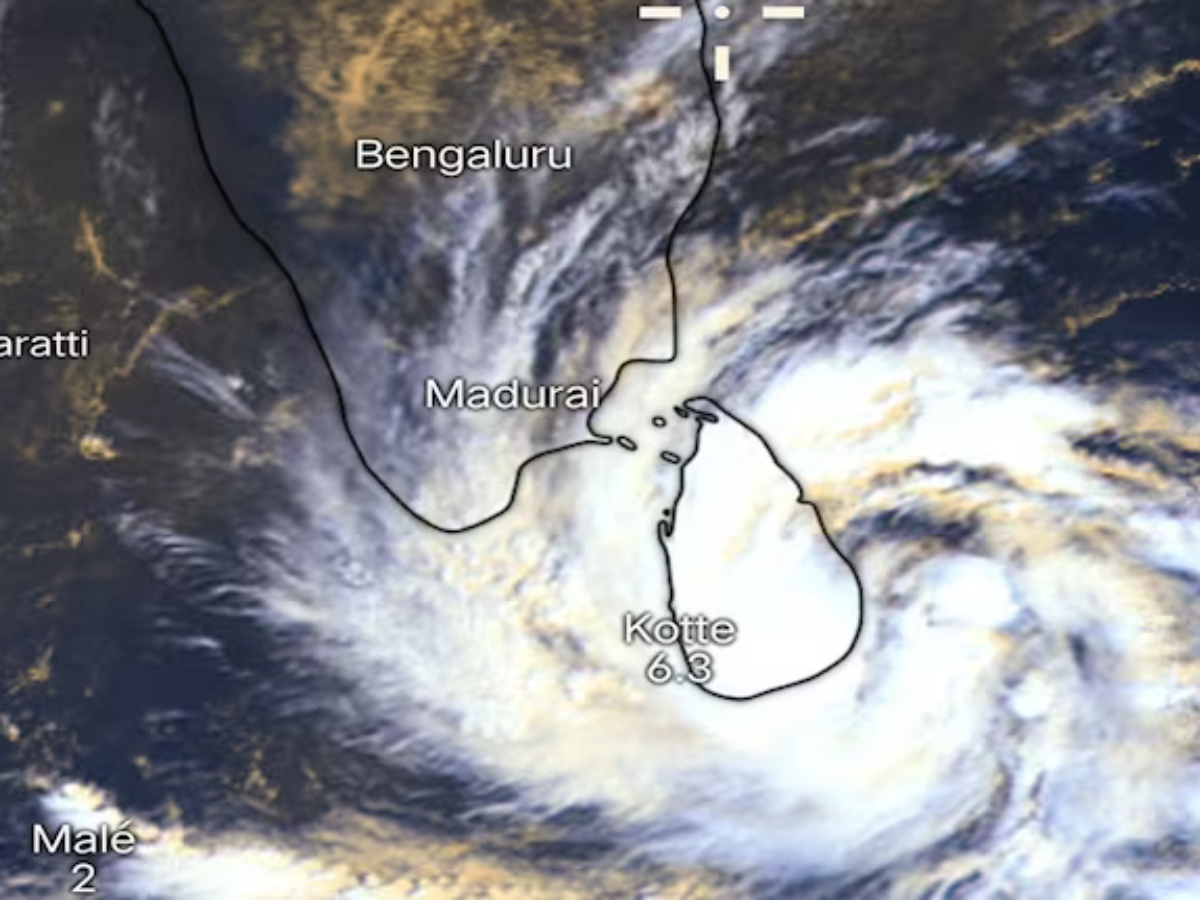
Tamil Nadu entered emergency mode as Cyclone Ditwah approached the southeastern shoreline, prompting the authorities to mobilize as many as 28 disaster response teams and prepare thousands of relief camps.
With Sri Lanka already counting a tragic loss of more than 150 lives and hundreds missing, India faced a fast-approaching storm system carrying heavy rain, rising tides and significant disruption. Chennai airport suspended dozens of flights, while railways activated a round-the-clock command room tracking real-time developments.
Forecasts Paint Serious Warning
The Indian Meteorological Department issued a red alert for several districts in Tamil Nadu and Puducherry as the cyclone hovered less than 100 kilometres from key coastal points. Meteorologists said winds of up to 80 kmph would continue into Sunday morning, strong enough to inundate low-lying areas and damage standing crops.
The storm was expected to skirt the coast rather than make landfall, but its proximity meant communities along Tamil Nadu, Puducherry and south Andhra Pradesh would feel its full force.
Sri Lanka’s Devastation Signals the Stakes
Sri Lanka, which directly faced Ditwah, received heavy flooding, landslides and nearly 20,000 homes destroyed. More than 100,000 people have sought refuge in government centres, with rescue operations being ramped up on the island.
The death toll mounted rapidly, while vast areas lost their power, road access, and communication. Large military deployments resumed rescue operations in isolation communities as the authorities issued a warning that indirect effects of the storm would persist.
India’s Dual Approach: Between Domestic & International
Even as Tamil Nadu mobilized for heavy weather, India also extended help to Sri Lanka. Two NDRF teams and multiple tonnes of relief material were flown under Operation Sagar Bandhu to support rescue and recovery efforts.
ALSO READ: Who is Rajendra Panchal, 38-Year Survivor of Rare Jaw Condition Mocked on Social Media? Crypto
In Colombo, India set up an emergency help desk for stranded citizens as air travel interruptions mounted. Meanwhile, NDRF units across Indian coastal districts stayed in constant coordination with meteorological and disaster management agencies to keep response efforts swift.
A Region Learning From Each Storm
Ditwah, once more, showed just how vulnerable the Bay of Bengal region continues to be to severe weather systems. Improved forecasts and timely preparation reduced casualties in India, while the widespread destruction in Sri Lanka was a grim reminder of the human toll when storms hit heavily populated areas. The cyclone’s near-miss may push Indian states to strengthen coastal planning, reinforce critical infrastructure, and refine evacuation protocols.
ALSO READ: Who Was Kanathil Jameela? Kerala MLA Passes Away At 59; Net Worth, Husband, Religion, Career & More
Disclaimer: This editorial offers general analysis of Cyclone Ditwah’s impact and should not be used as emergency or meteorological guidance.