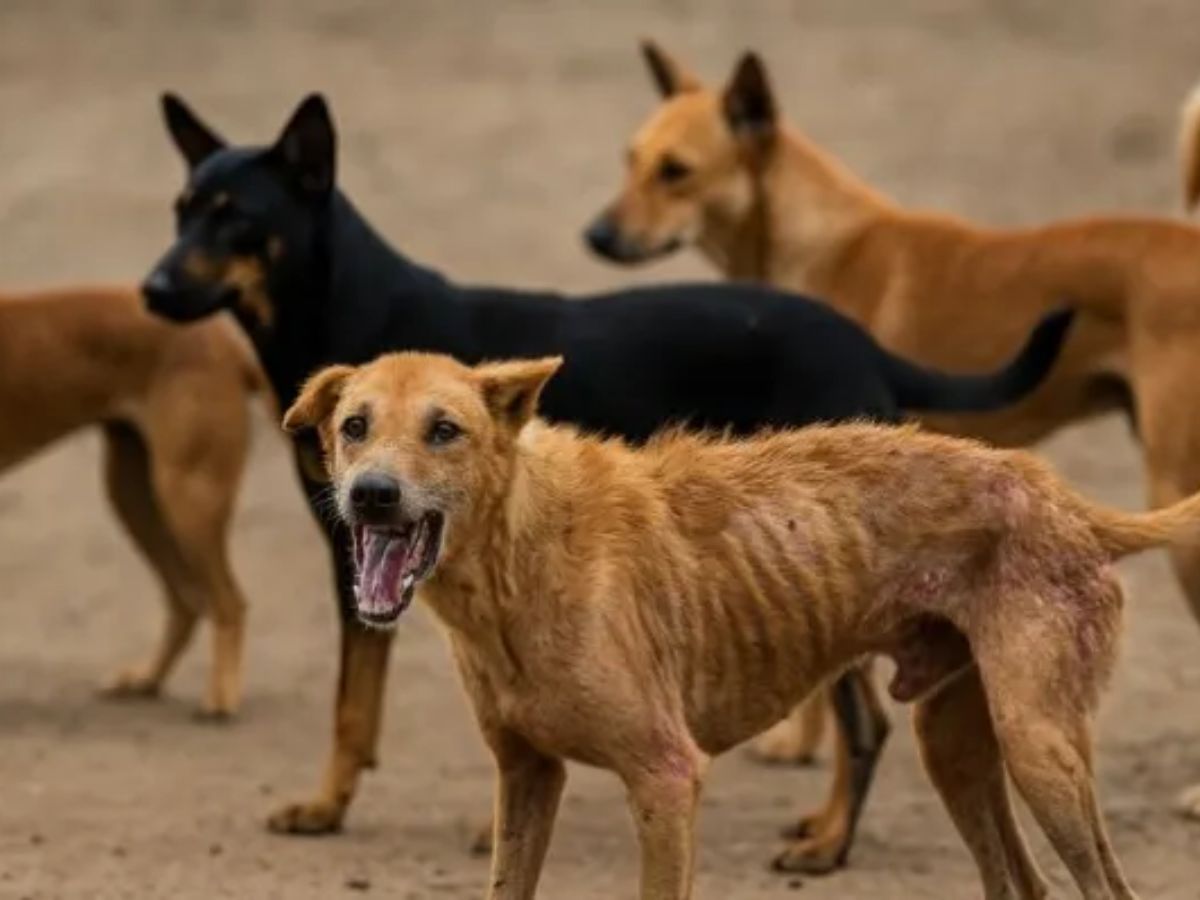
The Supreme Court on Monday (October 27, 2025) expressed anger over the failure of several States and Union Territories to follow its directions on managing stray dogs. The court had earlier ordered civic bodies to sterilise, deworm, and vaccinate stray dogs before releasing them back into the same localities.
A Bench of Justices Vikram Nath, Sandeep Mehta, and N.V. Anjaria summoned the Chief Secretaries of all States and UTs — except West Bengal, Telangana, and the Municipal Corporation of Delhi (MCD) — to appear before it on November 3. They must explain why they have not submitted compliance affidavits detailing steps taken under the Animal Birth Control (ABC) Rules, 2023.
“No Response, Nothing”: SC Expresses Strong Displeasure
The Bench noted that only three entities — West Bengal, Telangana, and the MCD — had filed affidavits. Justice Vikram Nath said, “Eight weeks was granted in August. Today it is 27th October, no response, nothing.”
The court was also unhappy that no officials from the remaining States or UTs attended the hearing.
Justice Nath questioned the Delhi government’s failure to file its report, saying, “Why has the government of the National Capital Territory of Delhi not filed its affidavit? Chief Secretary to come up with an explanation… otherwise cost may be imposed and coercive steps will be taken…”
Court Reiterates Humane Yet Regulated Approach
In its August 22 order, the Supreme Court had relaxed an earlier directive that asked authorities to confine all stray dogs in shelters. Calling that order “too harsh,” the court directed that dogs must be released after sterilisation, deworming, and vaccination.
However, the court clarified that rabid or aggressive dogs must not be released. “Such dogs shall be sterilised and immunised, but under no circumstances should they be released back on the streets,” the Bench had said. They must instead be kept in special shelters.
Feeding Zones, Helplines, and National Policy Ordered
The court had also asked civic authorities to set up designated feeding zones in every ward. This was to prevent inconvenience caused by unregulated feeding in public spaces.
Authorities must also create helplines for citizens to report violations. The court warned that anyone obstructing officials acting under its orders would face action.
The Bench expanded the case into a pan-India issue to help form a uniform national policy on stray dog management. Secretaries from all States and UTs were made part of the proceedings.
National Policy on Humane Stray Dog Management
The case has now evolved from a Delhi-focused issue to a national movement for humane stray dog control. Animal rights activists say this could become a model for balancing public safety and animal welfare.
The Supreme Court’s move signals a clear message — the States cannot ignore their duty to implement humane yet effective measures to manage stray dogs.