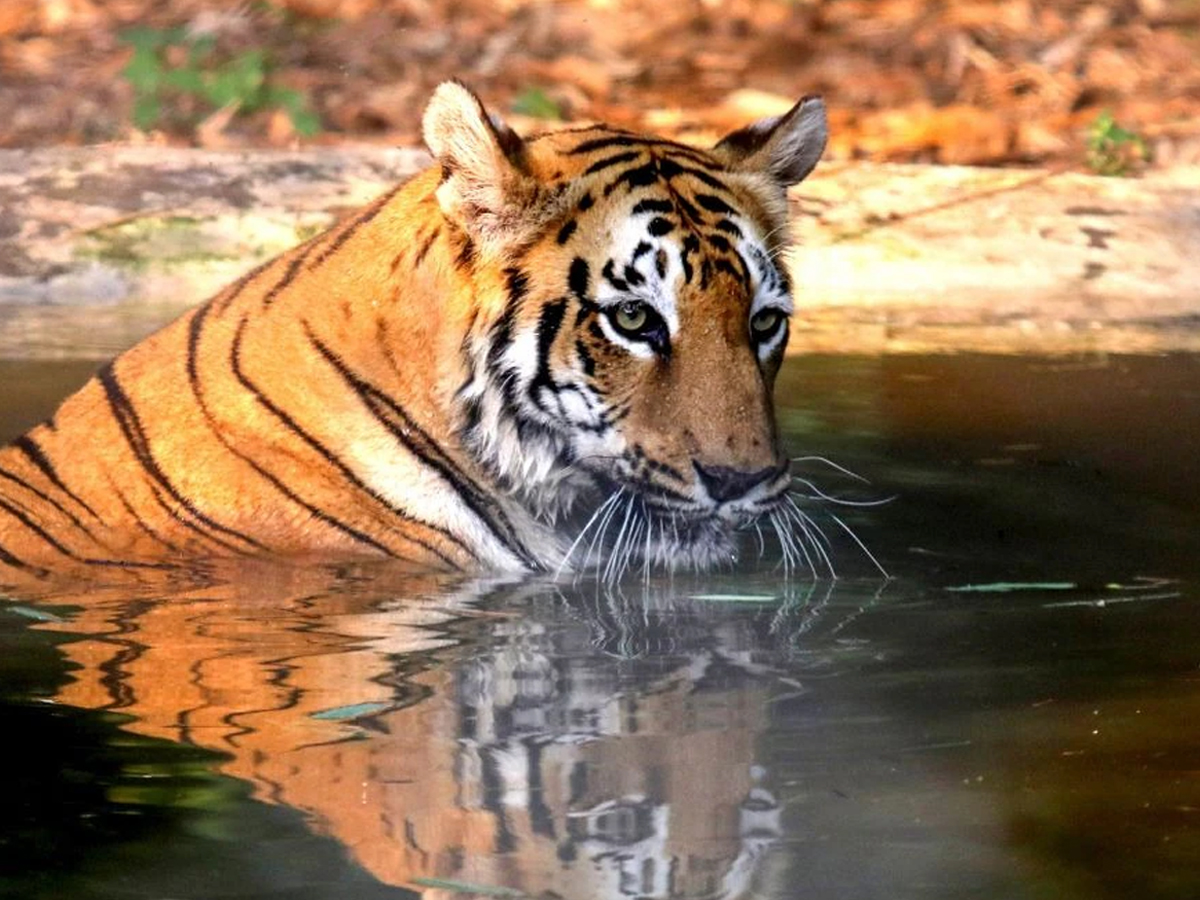
The Sundarbans, home to the world’s only mangrove-dwelling tigers, is all set to grow in size. The National Board for Wildlife (NBWL) has cleared West Bengal’s proposal to expand the reserve. With this move, the Sundarbans Tiger Reserve will spread over 3,630 sq km, making it the second-largest tiger reserve in India after Nagarjunasagar-Srisailam in Andhra Pradesh.
The expansion will include Matla, Raidighi, and Ramganga ranges in the South 24 Parganas district. These areas are not new to wildlife. Tigers already roam here, often moving in and out of the current reserve boundaries.
Officials counted 20 tigers outside the reserve and 81 inside in 2022. The fact that at least one tiger was mentioned in both records demonstrated how easily these creatures transcend borders. The expansion will now bring these zones under official management.
A Long-Pending Proposal
West Bengal’s principal forest secretary, Debal Ray, welcomed the decision. He said, “This is an important milestone for us. It has been a long-overdue process now, and bringing these ranges under the reserve’s management will give us more room to protect both wildlife and the fragile ecosystem.”
ALSO READ: Delhi HC Rules Delhi University Not Required to Share PM Modi’s Degree Records
The idea of expanding the Sundarbans has been around for more than two decades. It was first discussed in 2002 but gained momentum only in 2022, when the state sent a detailed proposal to Delhi. Earlier this year, the National Tiger Conservation Authority approved it, and now the NBWL, chaired by the Prime Minister, has cleared it too.
Why the Expansion Matters
According to experts, this expansion goes beyond size or numbers. Wider animal pathways, less human-wildlife conflict, and more room for tigers to roam freely are all benefits of expanding the reserve. It also improves conservation by giving staff better control over patrolling and protection.
The Sundarbans area is unique because it combines wildlife conservation with climate protection. Its mangrove forests support fishing communities, defend coastlines from rising waters, and provide natural barriers against storms. The Sundarbans are a UNESCO World Heritage Site, which was designated a tiger reserve in 1973 as part of Project Tiger.
Impact on Local Communities
The news raises both questions and hopes for the residents of South 24 Parganas. On the one hand, it pledges more stringent safeguards for wildlife and forests. On the other hand, additional limitations on routine activities like fishing and wood collection may be imposed on the communities living close to the forest line.
Balancing tiger conservation with human livelihood needs will be the key challenge in the next chapter of this delta’s story.
Once formalities are completed, the Sundarbans will stand just behind Nagarjunasagar-Srisailam, which covers 5,937 sq km, as India’s second-largest tiger reserve. Conservationists believe this expansion is a major step in protecting Bengal’s famous mangrove tigers and strengthening India’s global position in wildlife conservation.