Hamirpur (Himachal Pradesh) [India], June 22 (ANI): A comprehensive social audit of government schools in Himachal Pradesh’s Hamirpur district has uncovered significant deficiencies in infrastructure, student safety, basic amenities, governance, and educational quality, raising serious concerns about the effective implementation of the Right to Education (RTE) Act in the home district of Chief Minister Sukhvinder Singh Sukhu.
The findings were presented during a public hearing held in Hamirpur on Monday, which was attended by over 500 stakeholders, including parents, teachers, School Management Committee (SMC) members, elected representatives, education officials, and members of the local community. Deputy Director (Education Quality), Hamirpur, Navin Sharma, also participated in the hearing and reviewed the audit findings.
The social audit was conducted by a team from Himachal Pradesh University under the leadership of Dr. Randhir Ranta. The team assessed 146 schools, nearly 20 per cent of the district’s 704 schools, while the remaining institutions will be covered in four subsequent phases.
Presenting the report, Dr Ranta said the objective of the exercise was not to find fault but to identify both achievements and shortcomings in order to improve the quality of education.
“The purpose of the social audit is not fault-finding but fact-finding. The report points to numerous challenges and gaps in the school education system. The performance of many schools falls short of the quality standards guaranteed under the Right to Education Act,” he said.
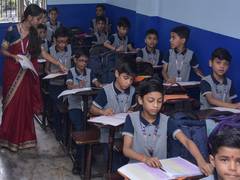
According to the report, nearly 8 per cent of the surveyed schools lack adequate classroom space and sufficient rooms for teaching and non-teaching staff, affecting both academic activities and school administration. Around 56 per cent of schools were found to have inadequate furniture, forcing many students to study without proper seating arrangements.
While drinking water facilities were available in 92 per cent of schools, the audit found that 97 per cent did not provide certified or hygienic drinking water suitable for children.
Student safety emerged as one of the most critical concerns. More than 32 per cent of schools had not constituted School Safety Committees, exposing children to risks related to disasters, mental harassment, and sexual abuse. The report further revealed that 27 per cent of schools lacked boundary walls or fencing, raising safety concerns, particularly for female students.
Accessibility for children with disabilities was another major area of concern, with nearly 84 per cent of schools lacking barrier-free access. Additionally, 63 per cent of schools did not have toilets designed for children with special needs.
The audit, however, noted that only one per cent of schools lacked kitchen facilities for the Mid-Day Meal programme, indicating a relatively satisfactory implementation of the nutrition scheme.
Members of the audit team highlighted menstrual hygiene management as a neglected area.
“More than 19 per cent of schools do not provide sanitary pads to adolescent girls despite the importance of such facilities in ensuring regular attendance and protecting their health and dignity,” said Bachan Singh, a member of the social audit team.
The report also identified serious shortcomings in grievance redressal mechanisms. Nearly one-third of the schools surveyed did not have complaint and suggestion boxes, a requirement under the Right to Education framework.
Furthermore, none of the schools surveyed had access to professional counselling services, while facilities and support systems for children with special needs were found to be inadequate, reflecting gaps in inclusive education practices.
On a positive note, library infrastructure was found to be comparatively strong, with more than 70 per cent of schools meeting prescribed norms and standards.
The audit also pointed to weak monitoring mechanisms, observing that field-level education officials were not conducting school visits as frequently as mandated under departmental guidelines.
Implementation of co-curricular and national integration programmes was also found lacking. According to the report, the “One Nation, Great Nation” programme was not being implemented in 69 per cent of schools.
Responding to the findings, Deputy Director (Education Quality) Hamirpur, Navin Sharma, said the state government was committed to improving educational standards and addressing deficiencies highlighted in the report.
“The Himachal Pradesh government is serious about improving the quality of school education. While the district’s overall performance has been fairly good, we are committed to addressing all shortcomings identified during the social audit,” Sharma said.
An interactive question-and-answer session during the public hearing allowed participants to discuss deficiencies and suggest corrective measures. Parents and community representatives demanded urgent improvements in infrastructure, stronger monitoring systems, better transport connectivity, and greater accountability within the education sector.
The audit report will be submitted to the state education department for further action. Education experts attending the hearing stressed that unless these systemic deficiencies are addressed, the objective of providing equitable and quality education to every child under the Right to Education framework will remain difficult to achieve.
The remaining phases of the social audit are expected to provide a more comprehensive assessment of the challenges facing school education across Hamirpur district. (ANI)
The article has been published through a syndicated feed. Except for the headline, the content has been published verbatim. Liability lies with original publisher.