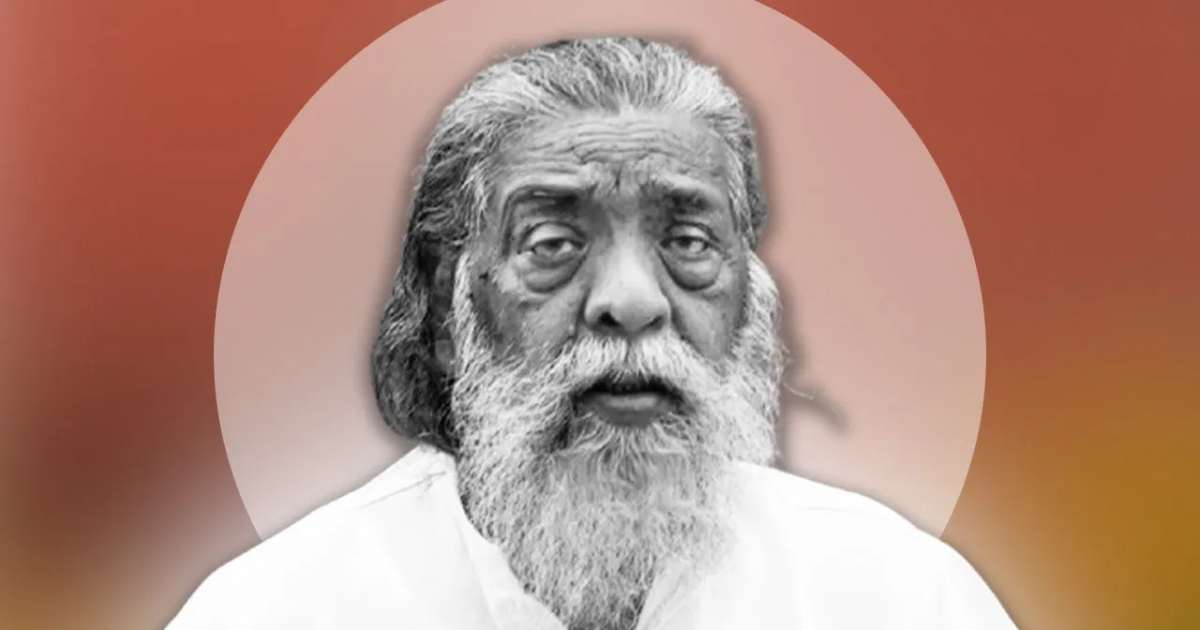
The legacy of Shibu Soren, the seasoned tribal leader who was instrumental in the formation of Jharkhand, changed the political landscape of the nation. With the passing of Soren, 81, the founder of the Jharkhand Mukti Morcha, a political era that saw tribal movement gain national prominence comes to an end.
Shibu Soren, born on January 11, 1944, in Nemra village (now in Jharkhand) belonged to the Santhal tribe. The killing of his father by money lenders when Soren was in his teens left a deep imprint on his later life in the form of agitation. Soren formed the Santhal Navyuvak Sangh by the age of 18 to fight for tribal rights. He was popularly known as ‘Dishom Guru’ (leader of the land)
PM Modi highlighted Soren’s efforts to empower the tribal population in a post on X.
Shri Shibu Soren Ji was a grassroots leader who rose through the ranks of public life with unwavering dedication to the people. He was particularly passionate about empowering tribal communities, the poor and downtrodden. Pained by his passing away. My thoughts are with his…
— Narendra Modi (@narendramodi) August 4, 2025
Hemant Soren, the chief minister of Jharkhand and the son of Shibu Soren, posted on X, “Respected Guru Dishom has left us all,” expressing his profound sadness on his father’s passing. I’ve become empty today.
आदरणीय दिशोम गुरुजी हम सभी को छोड़कर चले गए हैं।
आज मैं शून्य हो गया हूँ…
— Hemant Soren (@HemantSorenJMM) August 4, 2025
A life of intense struggle in childhood
On November 27, 1957, Soren was 15 years old when his father, Shobaran Soren, was allegedly murdered by moneylenders in the Lukaiyatand forest, about 16 kilometers from the Gola block headquarters. He was profoundly affected by this and it served as a springboard for his subsequent political engagement.
Founding Jharkhand Mukti Morcha (JMM)
In 1972-73, along with A.K. Roy and Binod Bihari Mahato, Soren co-founded the Jharkhand Mukti Morcha (JMM) during a public meeting at Golf Ground Dhanbad. The party became the principal political platform for tribal mobilisation, land-rights struggles and demands for Statehood. Since then, the JMM continued to mobilise the tribal populations across Chota Nagpur and Santhal Pargana regions, organising large protests and people’s courts against the exploitation by landlords and industries.
Their decades-long efforts bore fruit in the creation of Jharkhand state on November 15, 2000. He served as a member of the 16th Lok Sabha from May 2014 to 2019, his eighth election to the Lower House from Dumka. In June 2020, he was elected to the Rajya Sabha. Serving as Union Coal Minister from May 23 to July 24, 2004, November 27, 2004, to March 2, 2005, and January 29 to November 2006, he was a pivotal member of the UPA cabinet. Elected eight times to the Lok Sabha from Dumka, with two stints to the Rajya Sabha, Soren also served as the Chief Minister of Jharkhand in 2005, 2008-09 and 2009-10. Despite short stints due to coalition politics, he remained a key player in state politics.
Legal issues
He was cited as the primary suspect in the 1975 Chirudih massacre case, which resulted in the issuance of an arrest order against him in July 2004. He went underground for short time before being arrested.
Soren and other defendants were convicted on November 28, 2006, of the high-profile 1994 kidnapping and murder of his former personal secretary, Shashinath Jha. She was slain in Ranchi because he knew of a political payback deal between the Congress and JMM, according to the CBI, which made this assertion in a 1993 no-confidence motion against the Narasimha Rao government.
The founding patriarch is still involved in Jharkhand politics his son Hemant Soren is currently the CM, while other members of the family continue to serve in the JMM. Tribal representation in the state is still commanded by the party.