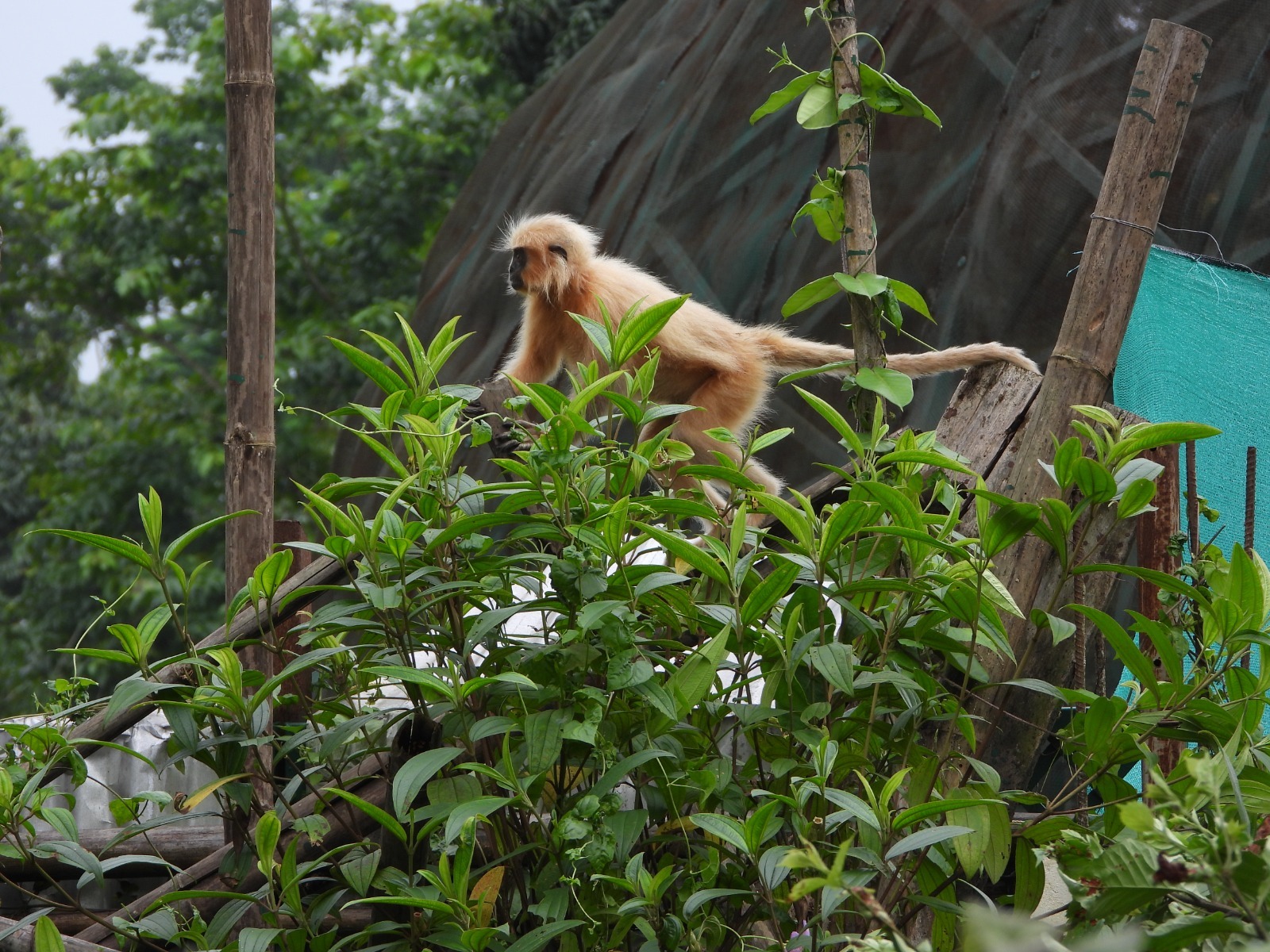
Seven endangered Golden Langurs rescued from an alleged international wildlife trafficking network have been successfully released back into the wild at Sikhna Jwhwlao National Park after completing rehabilitation and scientific monitoring, Assam Forest Minister Jayanta Mallabaruah said today.
Sharing the development on social media platform X, the minister said the release marked an important step in the state’s wildlife conservation efforts. He noted that members of the media had recently sought an update on the rescued primates, whose trafficking case had attracted national attention earlier this year.
“I am happy to inform that the seven Golden Langurs have now been successfully released back into their natural habitat at Sikhna Jwhwlao National Park after undergoing rescue, rehabilitation and careful scientific monitoring,” Mallabaruah said.
He credited forest officials, wildlife experts, enforcement agencies and local communities for making the release possible. “Their return to the wild is a testament to the coordinated efforts of everyone involved in their rescue and rehabilitation. This also sends a strong message to wildlife criminals that Assam has zero tolerance for poaching and wildlife trafficking,” he added.
The langurs were among eight endangered Golden Langurs rescued during a major operation conducted earlier this year by the Special Task Force (STF) of Assam Police in Chirang district. Acting on specific intelligence, STF personnel from Guwahati, assisted by Sidli Police, intercepted suspected wildlife traffickers during a late-night operation along National Highway-27 in the Sidli area.
The operation led to the arrest of nine suspected traffickers, including a Bangladeshi national, and exposed an alleged international wildlife trafficking network. Authorities rescued eight Golden Langurs, a Schedule-I species protected under the Wildlife (Protection) Act and recognised as one of the world’s most endangered primates. One of the rescued animals later died despite efforts by veterinarians to save it.
Following the rescue, the remaining seven langurs were placed under the care of wildlife specialists and veterinary teams, who closely monitored their health and behaviour before certifying them fit for release.
The animals have now been reintroduced into Sikhna Jwhwlao National Park, which spans more than 316 square kilometres across Chirang and Kokrajhar districts in the Bodoland Territorial Region. The park forms part of the Manas Biosphere Reserve and provides a vital habitat for the Golden Langur and several other rare and endangered wildlife species.
Reiterating the government’s commitment to biodiversity conservation, Mallabaruah said Assam would continue strengthening measures to combat wildlife crime. “Together, we remain committed to safeguarding Assam’s natural heritage and ensuring that future generations inherit a thriving ecosystem and healthy wildlife populations,” he said.