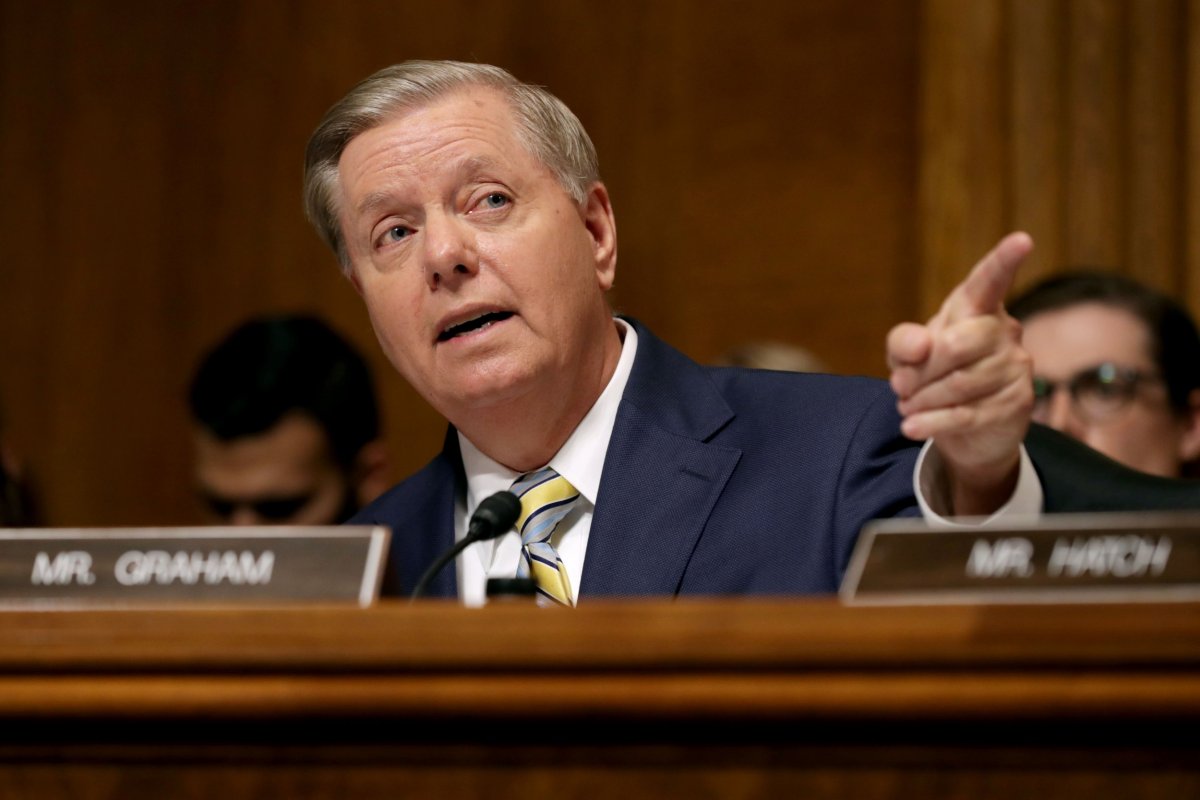
The recent statement of warning against India by Senator Lindsey Graham, a senior Republican leader and ally of Trump, could change the dynamics of US-India trade. During his recent trip to New Delhi, Graham hinted at tariffs imposed by the US on India if American economic sentiments are not addressed.
Lindsey Graham is a Republican politician and attorney who serves as the senior United States Senator from South Carolina. He has maintained the seat since 2003.
While India is still waiting for tariff letters from the US, here are five facts about Lindsey Graham, who openly warned numerous countries about the impending letters from the White House.
He graduated in 1977 from the University of South Carolina with a Bachelor of Arts degree in Psychology. He graduated with a Juris Doctorate in 1981 from the University of South Carolina School of Law.
Active in reserve service in Iraq in April 2007 for a two-week stint and again in August 2007, the recess for the US Senate in August 2009 Graham spent in Afghanistan.
Presently he is viewed as one of the most loyal and significant allies of Trump in the Senate. Known for his hawkish views pertinent to foreign policy and hard stance on trade, Graham sits on important Senate committees including Armed Services, Judiciary and Appropriations. His visit to India seen in diplomatic circles as part of Trump’s broader re-engagement with global partners ahead of the 2024 US presidential election has become noticeable due to its frank character.
Trade Frictions Score High
During public interactions and in discussions with Indian officials, Graham signaled dissatisfaction over ongoing trade imbalances between the two nations. Citing issues such as market access barriers and tariff structures that disadvantage US exports, he warned that a second Trump administration would likely adopt more aggressive trade policies if corrective steps are not taken preemptively by India.
While relatively restrained in its approach to trade with India, should Graham’s comments reflect the mood of a forthcoming administration, things would be greatly different.
It is not the first time that a Trump-aligned policymaker has expressed deep concern regarding India’s trade policy. The Trump administration had withdrawn India’s preferential trade status under the Generalized System of Preferences (GSP) in 2019 for not doing enough to provide fair market access to American products.
Graham’s current remarks echo those concerns, implying a possibility of punishing trade measures being placed in the near future. Acting as an informal emissary of Trump-era economic views suggests that India may need to reassess parts of its trade-and-investment strategy lest it not retain frictionless access to American markets.
Diplomatic Overtones-Strategic Implications
Graham pointedly mentioned some of the areas of economic disputes but emphasised that the US-India strategic partnership has acquired paramount importance, particularly concerning a common concern about China’s assertiveness and the need for enhanced cooperation in the Indo-Pacific. He regards India as a democratic counterpoise in the region and notes that bilateral relations go beyond trade, touching defense, technology, and regional stability.
His remarks further suggest that prospects for economic cooperation could also be contingent upon India’s willingness to resolve outstanding concerns involving intellectual property, pharmaceutical standards, and digital trade regulations.
Broader Policy Influence of Graham
As an experienced legislator endowed with a prominent voice in both domestic and foreign policy discussions, Graham has been an architect of the contemporary Republican consensus on defense, immigration, and international alliances. His increasing prominence on the global stage, especially through diplomacy and visits, suggests that he may become a kind of foreign policy proxy for a Trump comeback.
While India is positioning itself to aggressively deepen engagement with the US, irrespective of electoral outcomes, it may indeed be a matter of striking a balance between strategic accommodation and commercial recalibration- especially if checks like Graham’s become more pronounced in their influence on shaping future bilateral frameworks.