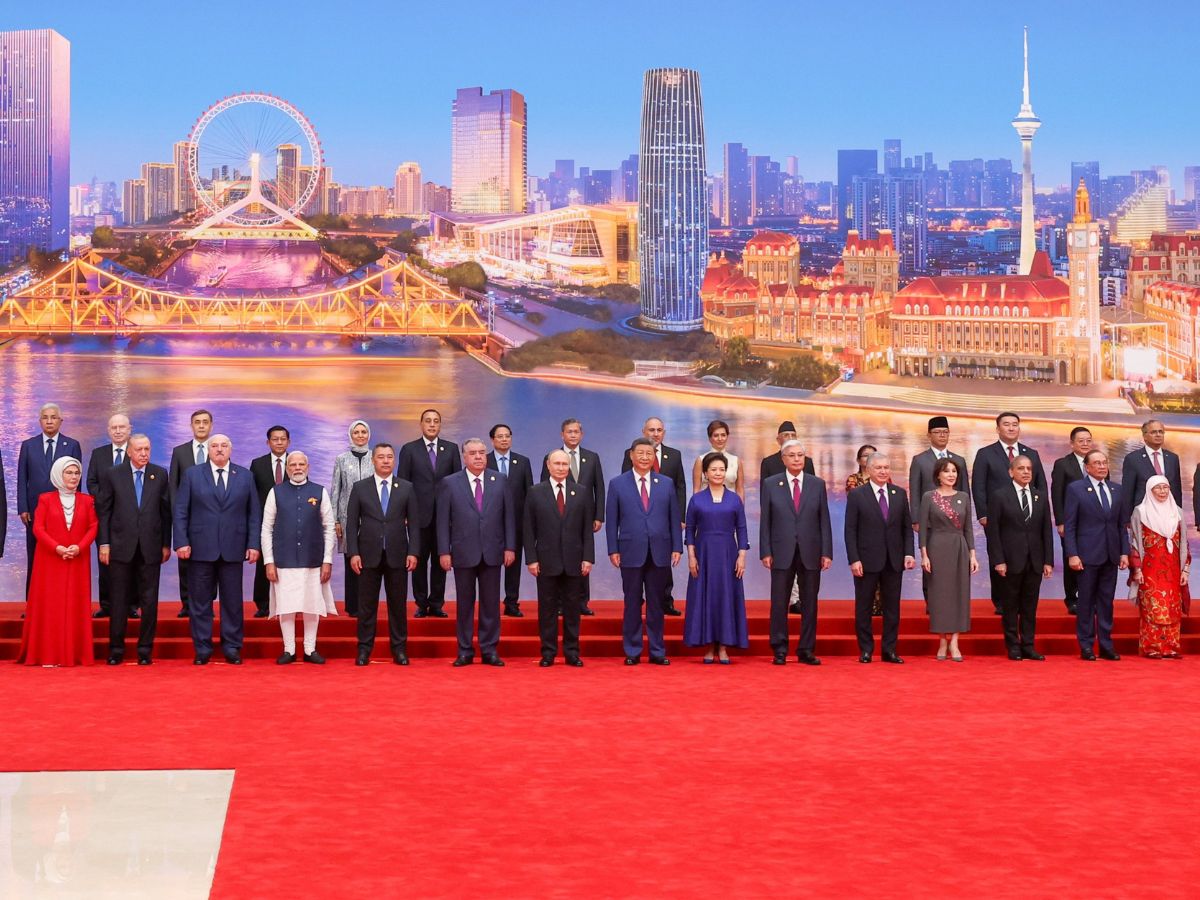
India’s presence at the Shanghai Cooperation Organisation (SCO) Summit 2025 in Tianjin has centred on shaping regional stability, fostering stronger multilateral relations, and recalibrating key partnerships, especially with China. Prime Minister Narendra Modi’s visit, his first to China in seven years signalled a renewed diplomatic momentum, amplified by a series of productive dialogues with President Xi Jinping and other Eurasian leaders. He also met with nation-state heads of Kyrgyz, Uzbekistan, Aremnia, Turkmenistan, Lao and others.
Restoring Dialogue and Bilateral Cooperation
PM Modi met President Xi Jinping twice, marking India’s openness to repairing relations after years of border tensions. Their talks went beyond competition, with an eye toward viewing the “Dragon and the Elephant” as Asia’s growth partners. Modi touched on key matters, such as countering terrorism and the huge trade deficit with China, while inviting Xi to India for the 2026 BRICS Summit. Xi showed his support for India’s future BRICS presidency and highlighted cooperation over confrontation.
Had a fruitful meeting with President Xi Jinping in Tianjin on the sidelines of the SCO Summit. We reviewed the positive momentum in India-China relations since our last meeting in Kazan. We agreed on the importance of maintaining peace and tranquility in border areas and… pic.twitter.com/HBYS5lhe9d
— Narendra Modi (@narendramodi) August 31, 2025
Strategic Priorities and Initiatives
India promoted “connectivity without coercion” through insisting on open, inclusive trade and infrastructure proposals that are respectful of sovereignty. The Indian team brought the focus to counter-terrorism, open trade practices, and sustainable development to ensure these remained the core of the SCO collective agenda.
India’s National Security Advisor Ajit Doval and Foreign Secretary Vikram Misri were also actively involved, along with PM Modi, in major diplomatic interactions. PM Modi stressed that permanent peace on the border and reducing the trade deficit would be essential for altering mutual perceptions between the two nations.
Delighted to meet Nepal PM Mr. KP Oli in Tianjin. India’s relations with Nepal are deep-rooted and very special.@kpsharmaoli pic.twitter.com/2PBj3LRyRK
— Narendra Modi (@narendramodi) August 31, 2025
Regional Impact and Global Realignments
Against the backdrop of US pressure for tariffs and changing global agendas, India’s position at the SCO heralded a foreign policy rethink, upholding Eurasian multilateralism and moving away from reliance on any one power bloc. India aligned itself as an advocate of a multipolar global order, joined by China, Russia, and Central Asian states to tackle climate change, energy security, and technology-led development as a collective. The agreement at the summit manifested the growing power of the Global South in determining regional orders.
Nutshell
India’s assertive engagement at the SCO Summit 2025 is a watershed moment in regional diplomacy. By strategic engagement, building trust with China, and focusing on transparency and cooperation, India is facilitating the bloc towards increased integration, enhanced security mechanisms, and collective prosperity. With Eurasia confronting new challenges, India’s changing role in the SCO will play a vital role in ensuring peace, economic development, and well-balanced global power.