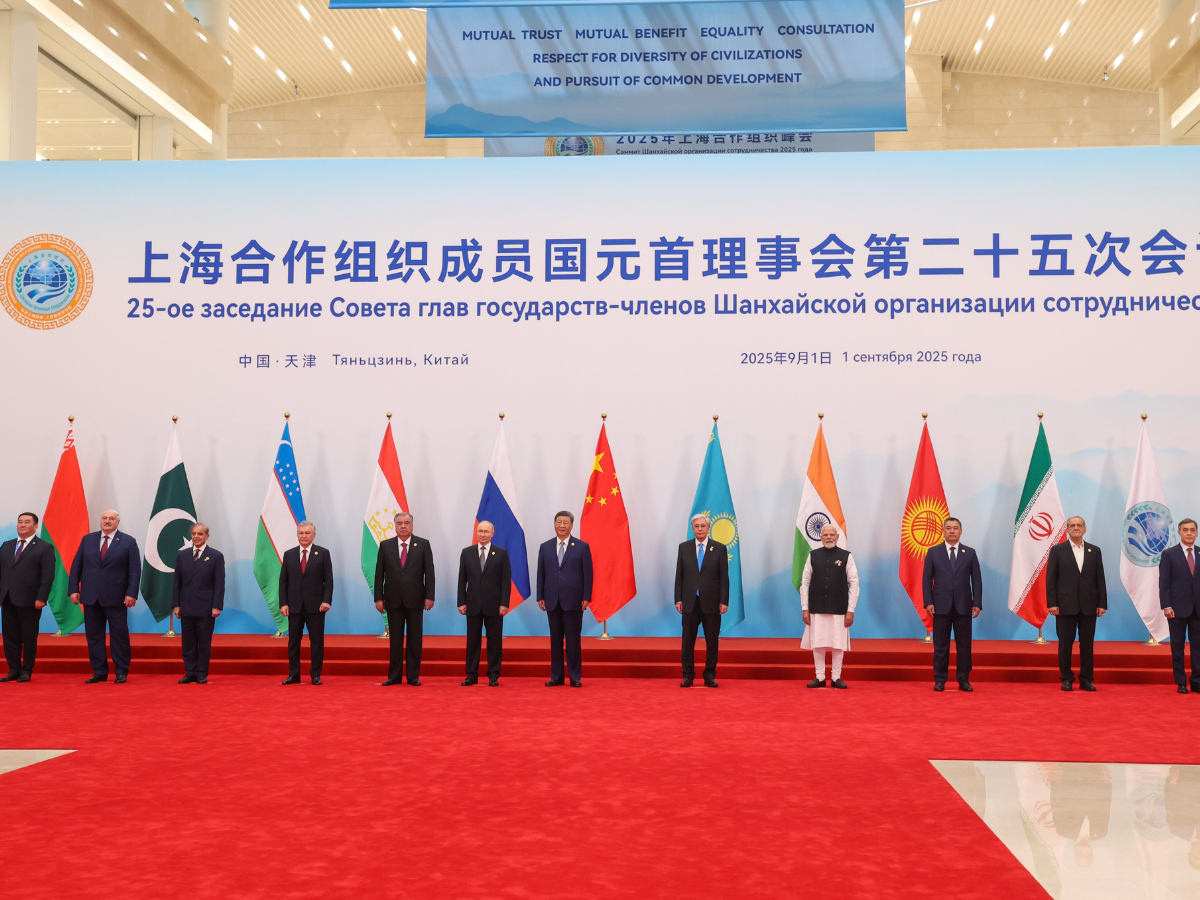
The SCO Summit in Tianjin, China concludes is a milestone in Eurasian diplomacy with Prime Minister Narendra Modi joining it, reflecting India’s emerging leadership role in influencing the shifting global order. PM Modi’s tweet, “Concluding a fruitful visit to China, where I participated in the SCO Summit and met with different world leaders. Also reiterated India’s position on important global issues. Thankful to President Xi Jinping, the Chinese government and people for the successful organisation of this Summit,” reflects the spirit of collaboration and constructive engagement that defined the event. It will be interesting to see how this partnership evolves and mutually benefits the member nations towards productive outcomes.
Summit Themes and India’s Priorities
This year’s summit, themed “Upholding the Shanghai Spirit: SCO on the Move,” brought together leaders from ten member countries including China, Russia, India, Pakistan, Iran, Kazakhstan, and others. Major subjects were regional security, counterterrorism, trade and connectivity, energy cooperation, climate change, and the role of technology in the world economy. Modi clearly enunciated India’s position with emphasis on the trio of Security, Connectivity, and Opportunity as the pillars of its approach. Modi urged collective action against terrorism, insisted on accountability in cross-border terror, and opposed double standards, a clear message in the direction of supporting a principled world order.
Sharing my remarks during the SCO Summit in Tianjin. https://t.co/nfrigReW8M
— Narendra Modi (@narendramodi) September 1, 2025
India’s proposals on connectivity, such as the construction of the Chabahar port and International North-South Transport Corridor, emphasised that infrastructure should be respectful of national sovereignty. Modi also promoted youth empowerment, innovation, and increased cultural exchanges, which embodied India’s dream of inclusive and sustainable development under the SCO umbrella.
World Leaders and Shifting Global Alignments
The summit enabled important bilateral talks, such as those between Modi, President Xi Jinping, and Vladimir Putin, which suggested attempts at resetting complicated relations in an age of evolving power balances. China’s hosting the summit reinforced its aspiration to be the central diplomatic broker and economic giant of Eurasia.
The Tianjin Declaration stood tall, adopted during the summit and it set out commitments on counter-terrorism, regional peace, economic cooperation, and action on climate, representing collective will to transcend old divisions and build pragmatic multilateralism.
Evolving World Order: Insights
The 2025 SCO Summit marks the ascendance of Eurasia as a major centre of gravity in international politics. With an ambitious agenda that covers security, trade, and climate, the SCO is more and more projecting itself as a player on matters long dominated by Western institutions. India’s firm stance and constructive diplomacy indicate its role as an emerging bridge between East and West, dedicated to reforming the rules of cooperation while upholding sovereignty and ethical standards.
In sum, PM Modi’s tweets and India’s active engagement highlights not just the success of the summit but a shift towards a more multipolar, dialogue-driven, and security-conscious world order incubated in Eurasian consensus and strategic balance.