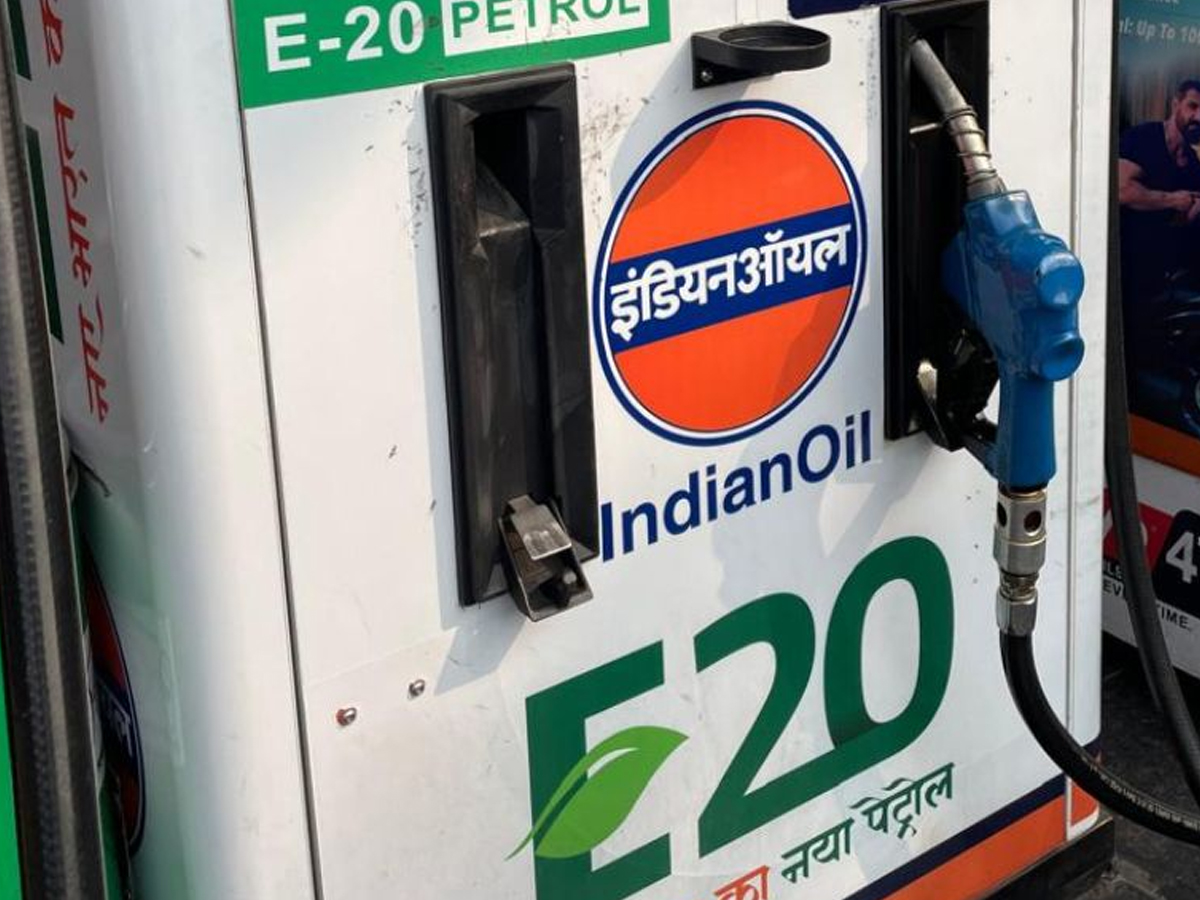
The Supreme Court on Monday dismissed a Public Interest Litigation (PIL) that challenged the rollout of 20 percent Ethanol Blended Petrol (E20). The petitioner had demanded that consumers be given an option to buy ethanol-free petrol.
A Bench led by Chief Justice of India (CJI) BR Gavai and Justice K Vinod Chandran rejected the plea after the Central government defended E20 fuel. The court agreed with the government’s stance that the new fuel directly benefits sugarcane farmers.
Government Defends E20 Fuel
Attorney General R Venkataramani, appearing for the Centre, argued strongly in favor of E20. He said the move will help farmers and India’s energy needs.
“This petitioner is an Englisher (sic). Somebody from outside will dictate what petrol to use. Sugarcane farmers are benefitting from this. Now they will tell us not to,” Venkataramani told the court.
Supreme Court dismisses a plea that challenged the nationwide rollout of 20 per cent Ethanol Blended Petrol (EBP-20) and sought the option of ethanol-free petrol. pic.twitter.com/qZVyqWHlJA
— ANI (@ANI) September 1, 2025
The government highlighted that blending ethanol with petrol is a long-term policy decision that reduces oil imports, boosts renewable energy use, and supports the rural economy.
What the Petitioner Claimed
The petition was filed by advocate Akshay Malhotra. He argued that vehicles made before April 2023 are not compatible with E20 fuel. Even some BS-VI compliant vehicles, manufactured just two years ago, may not safely use E20.
Senior Advocate Shadan Farasat, representing the petitioner, said consumers must have the choice to opt for non-E20 fuel.
“We have to be given an option of what we want. We are not against E20, but at least let the supply persons inform us that it is so. Some vehicles are not compliant with the same. Only vehicles that have come post-April 2023 can tolerate E20,” Farasat said.
He admitted that ethanol blending is a logical step forward. However, he warned that most vehicles currently on Indian roads are not ready for E20 fuel.
Concerns Over Engine Safety
The petition raised safety concerns about vehicle engines. It said research reports and automobile experts have found that ethanol blending can cause corrosion, reduce fuel efficiency, and damage engines.
The plea also pointed out that any such damage would not be covered by insurance policies or manufacturers. This would leave vehicle owners without a remedy.
“As the vehicles are not compatible with ethanol-blended petrol, which will result in damage to the said vehicles, the claim raised in this regard will not be covered by the manufacturers or the insurance companies as the consumers have violated the terms specified,” the petition stated.
Global Practices Highlighted
The plea compared India’s fuel rollout with practices in other countries. It said in the United States, ethanol-blended petrol of 10 percent (E10) is common, but ethanol-free petrol is also available. In the European Union, blends of 5 percent (E5) and 10 percent (E10) exist with clear labelling.
The petitioner claimed that in India, such labelling does not exist, and only ethanol-mixed petrol is supplied without informing consumers about the composition.
Relief Sought in the Petition
The petition sought several directions, including:
- Mandatory supply of ethanol-free petrol at fuel stations.
- Proper labelling of ethanol content at pumps.
- Enforcement of the Consumer Protection Act for vehicle owners.
- A nationwide study on the impact of E20 on engines.