
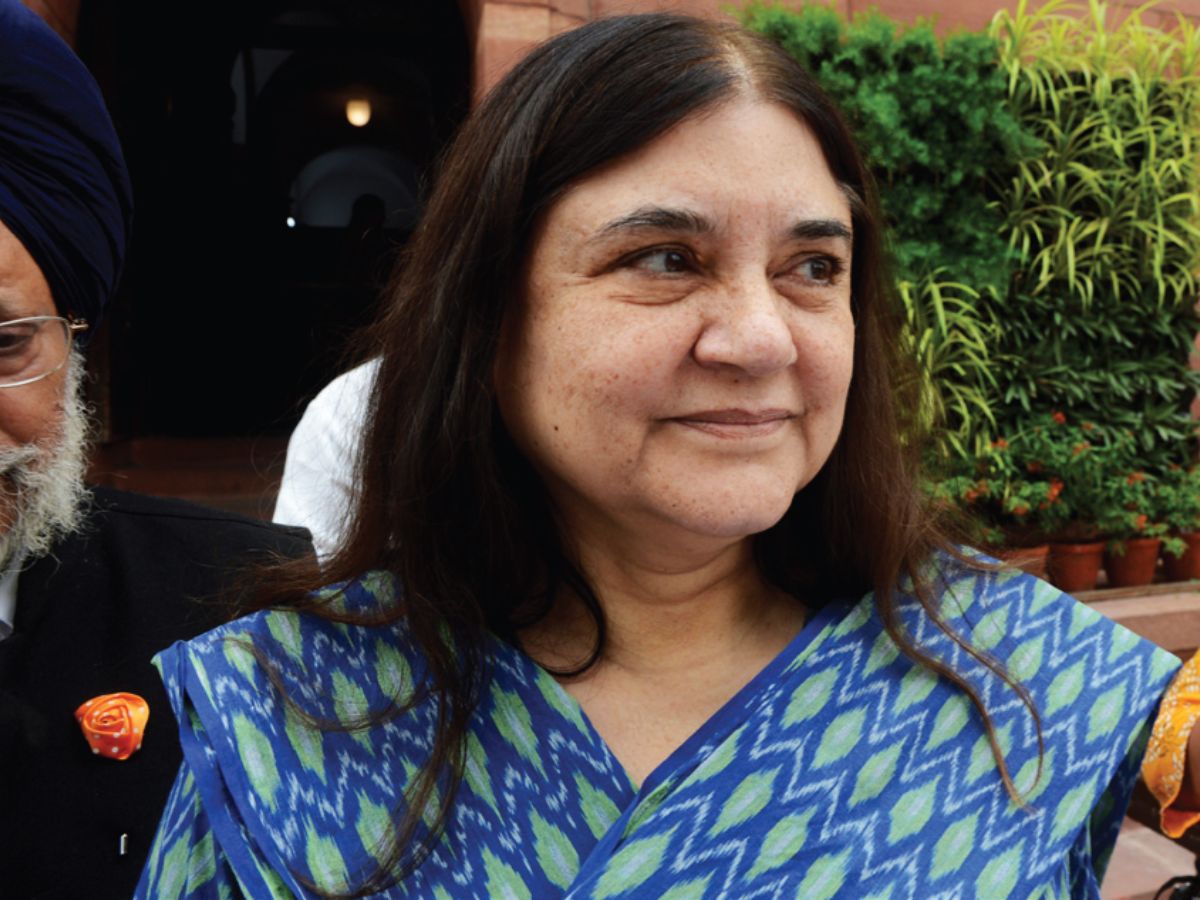
The Supreme Court on Tuesday expressed displeasure over certain public remarks allegedly made by Former union Minister Maneka Gandhi saying that they refrain from initiating contempt proceedings.
The Court remarked that while counsel had urged the judges to be circumspect, he should first examine the nature of remarks being made by his client. It observed that the client’s statements amounted to contempt, though the Court was choosing not to take cognisance of it as an act of magnanimity.
Senior Advocate Raju Ramachandran, appearing for Gandhi, said he was representing a cause and stressed the importance of rabies control and birth control programmes.
The Bench comprised Justices Vikram Nath, Sandeep Mehta and N.V. Anjaria heard the stray dogs matter for the fifth day.
Senior advocate Prashant Bhushan submitted that sterilisation had worked in some cities but failed in most due to poor implementation. He said the system must be transparent and accountable. He suggested designated officers and a mechanism for citizens to report unsterilised dogs.
The matter will be heard next on January 28, 2026, when submissions by the amicus curiae, NHAI, states and Union Territories are expected. The issue was heard extensively earlier this month.
Earlier during the hearing, there was a sharp confrontation between intervenors, including animal lovers and NGOs, and residents affected by stray dog attacks. Intervenors sought modification of earlier directions. They argued that stray dogs should be released back into the same areas from where they are picked up.
They also proposed scientific population-control models, claiming that proper sterilisation and vaccination could reduce dog population and bite incidents within a few years.
On the other hand, the victims’ side argued strongly for the removal of stray dogs from residential complexes and housing societies. They cited concerns over public safety, fear among residents, sleep disturbances and repeated complaints of inaction by authorities. Some residents said children were unable to study and elderly people were afraid to step out.