
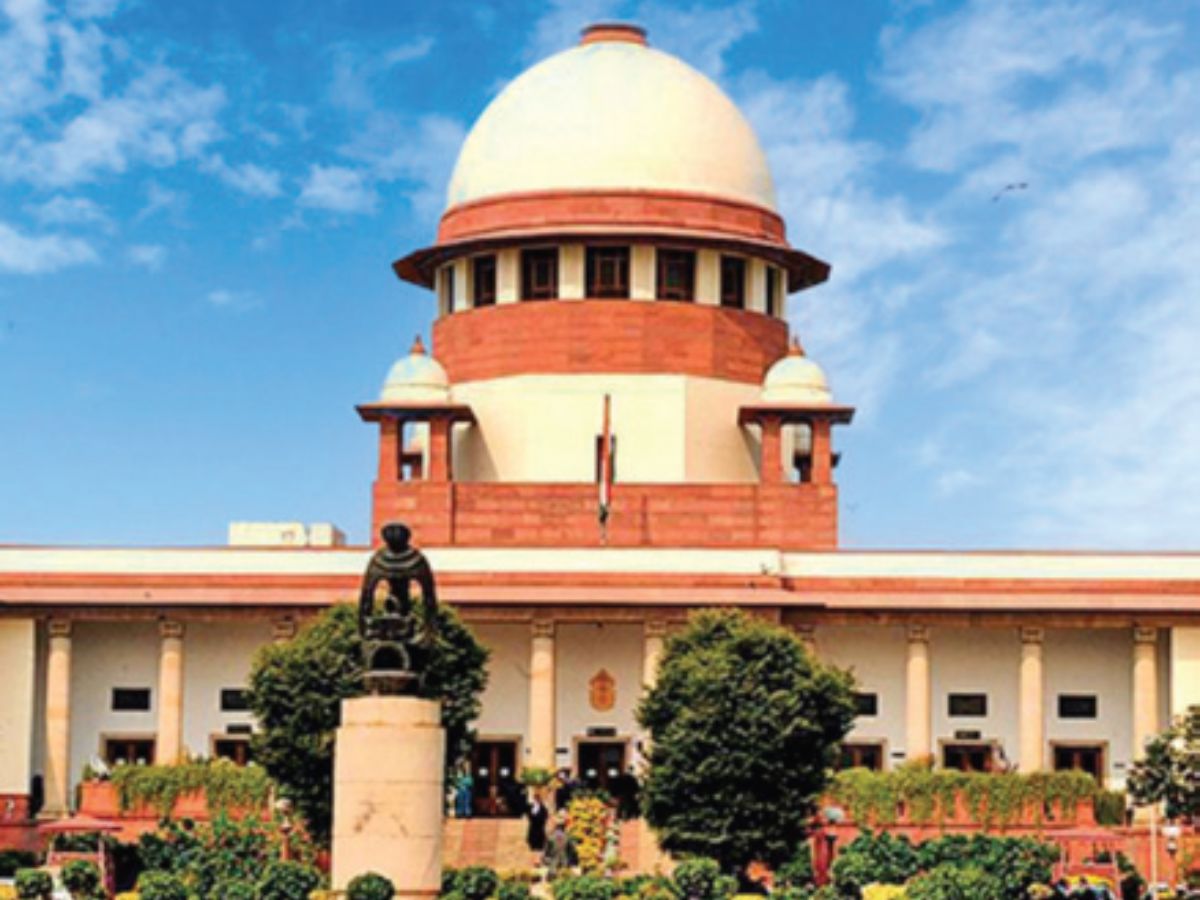
The Supreme Court of India on Thursday expressed serious concern over the culture of distributing ‘freebies’ ahead of elections, observing that such practices may hamper the country’s economic development. A bench comprising Chief Justice Surya Kant, Justice Joymalya Bagchi and Justice Vipul M. Pancholi made the observations while hearing a plea related to free electricity in Tamil Nadu.
The Court was hearing a petition filed by Tamil Nadu Power Distribution Corporation Ltd, which has challenged Rule 23 of the Electricity (Amendment) Rules, 2024. The company had proposed providing free electricity to all consumers, irrespective of their financial status.
The Supreme Court issued notice to the Centre and others, seeking their response within four weeks.
The Chief Justice questioned the practice of providing free electricity, food and bicycles without distinguishing between those who can afford to pay and those who cannot. He asked what kind of culture would be created if such benefits were extended to everyone.
The bench observed that most states are running revenue deficits, yet continue to announce such schemes.
The top court said states should focus on generating employment opportunities rather than distributing free benefits indiscriminately.
The judges further noted that once electricity tariffs are officially notified, it is surprising that substantial concessions are subsequently announced. The Court questioned whether such policies amount to appeasement.
The bench said welfare measures are understandable for those unable to afford basic services. However, extending benefits without assessing financial capacity raises serious concerns.
The Court also remarked that instead of investing in development projects, states are largely spending on salaries and free schemes, warning that such expenditure may adversely affect longterm economic growth.
Senior advocate Gopal Subramanium, appearing in the matter, argued that allocation of resources is a matter of governance and must be undertaken equitably. However, the Court maintained that unchecked distribution of freebies warrants careful scrutiny.
The matter will be heard further after responses are filed.