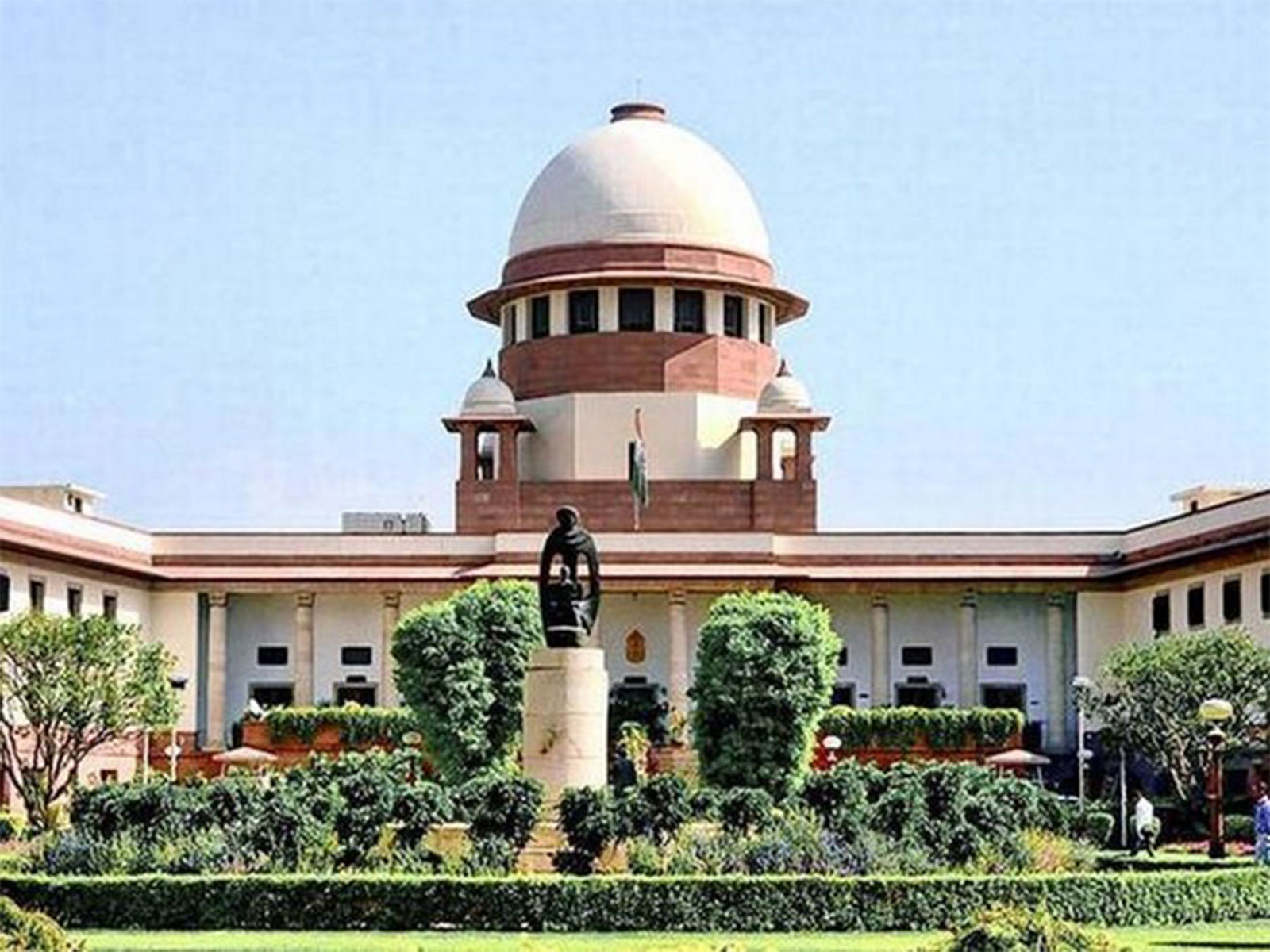
NEW DELHI: The Supreme Court on Tuesday sought the Maharashtra government’s response to a plea challenging the legality of the Banthiya Commission report and seeking to quash the same on the grounds that it fails to provide political reservation to the “backward class” in the Local Bodies.
The plea filed by Youth for Equality Foundation also seeks directions to the Maharashtra government to form a new dedicated commission to conduct an empirical study on political backwardness in all local bodies in the State and to identify politically backward classes in terms of Articles 243D (6) and 243T (6) (provisions mandating reservations for backward castes/women in Panchayat and Local Body elections) of the Constitution of India. After hearing submissions by Senior Advocate Gopal Sankarnarayanan appearing for the petitioner organisation today, a bench led by the Chief Justice of India (CJI) Surya Kant issued notice to the Maharashtra government.
The plea has alleged that the Maharashtra government granted these reservations without conducting the mandatory empirical inquiry into political backwardness and without satisfying the Triple Test laid down by this Court in the case of K. Krishna Murthy v. Union of India.
A constitution-bench in K Krishna Murthy held that reservations in local bodies under Articles 243-D and 243-T are constitutionally distinct from reservations in education and employment, as political backwardness is different from social or economic backwardness. To ensure that such reservations are constitutionally valid, the Court had down a mandatory ‘Triple Test’ which mandates that the State must appoint a dedicated commission to conduct a rigorous empirical inquiry into political backwardness.