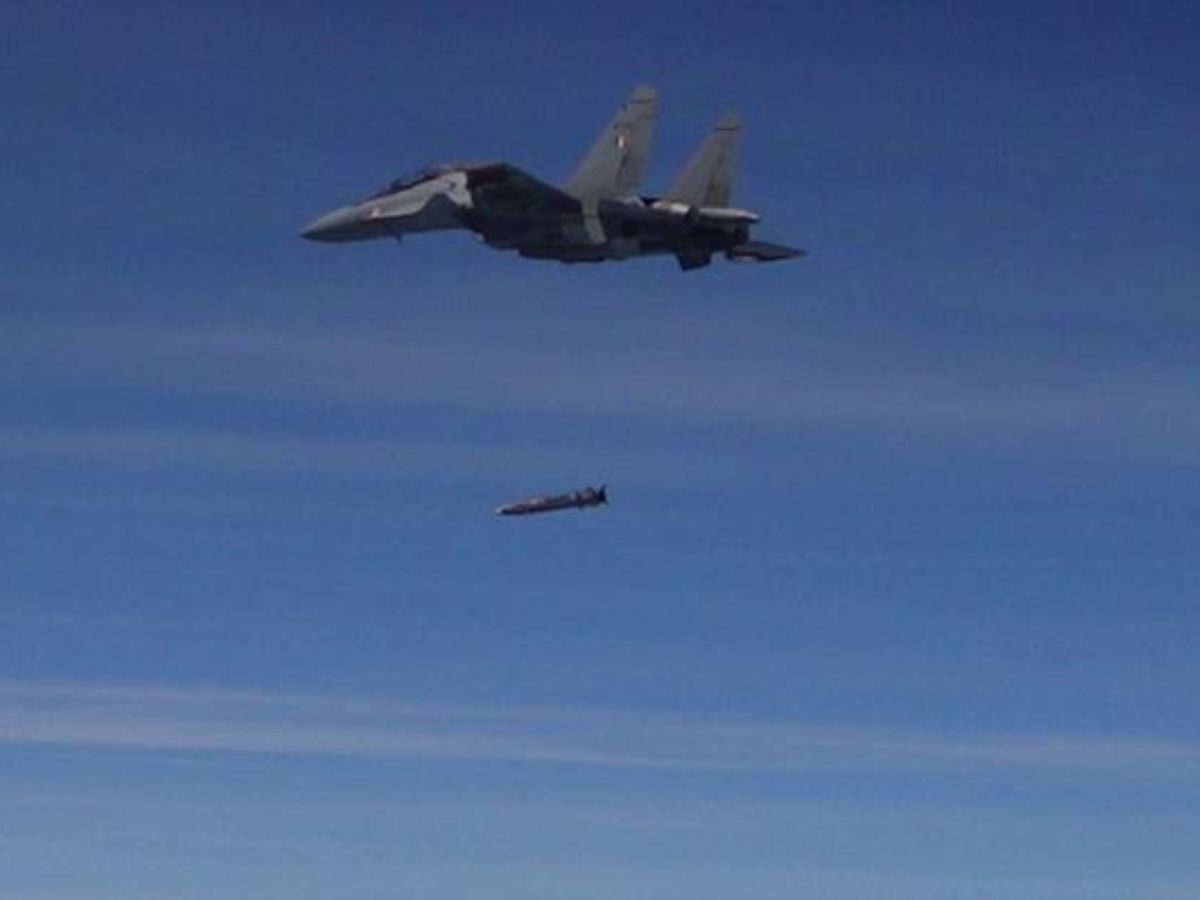
In a major boost to India’s indigenous defence capabilities, the Defence Research and Development Organisation (DRDO) and the Indian Air Force (IAF) successfully conducted flight-tests of the RudraM-II air-to-surface missile on June 2, 2026. The missile was launched from an airborne platform under extreme release conditions, validating its performance across a challenging flight profile.
According to the Ministry of Defence, the missile accurately engaged a predefined target after release, demonstrating pin-point strike capability. All mission objectives were achieved successfully, with flight data recorded and analysed through a network of range instrumentation deployed by the Integrated Test Range (ITR), Chandipur. The tests validated the missile’s guidance, control and overall system performance under operational conditions.
RudraM-II is an indigenously developed, solid-propelled air-launched missile designed for air-to-surface operations. Developed by DRDO’s Research Centre Imarat (RCI), Hyderabad, the missile programme has been executed in collaboration with several DRDO laboratories, including the Defence Research and Development Laboratory (DRDL), High Energy Materials Research Laboratory (HEMRL), Armament Research and Development Establishment (ARDE), and ITR. Public-sector and industry partners, including Hindustan Aeronautics Limited (HAL), regional military airworthiness agencies, quality assurance organisations and multiple private-sector firms, have also contributed significantly to the programme.
The RudraM-II missile is intended to neutralise a wide range of enemy assets and forms part of India’s growing family of indigenous precision-guided weapons. Previous developmental trials from the IAF’s Su-30MKI fighter aircraft had validated its propulsion, guidance and control systems, paving the way for the latest successful test campaign. The missile is expected to significantly enhance the IAF’s stand-off strike and suppression-of-enemy-defence capabilities.
Raksha Mantri Shri Rajnath Singh congratulated DRDO, the IAF, Defence Public Sector Undertakings, development-cum-production partners and industry stakeholders for the achievement. He stated that the successful tests reflect the growing maturity of India’s indigenous defence technologies and represent another significant step towards Aatmanirbharta in advanced weapon systems. Secretary, Department of Defence R&D and Chairman DRDO, Dr. Samir V. Kamat, also commended the teams involved for their dedication and technical excellence in achieving this milestone.