
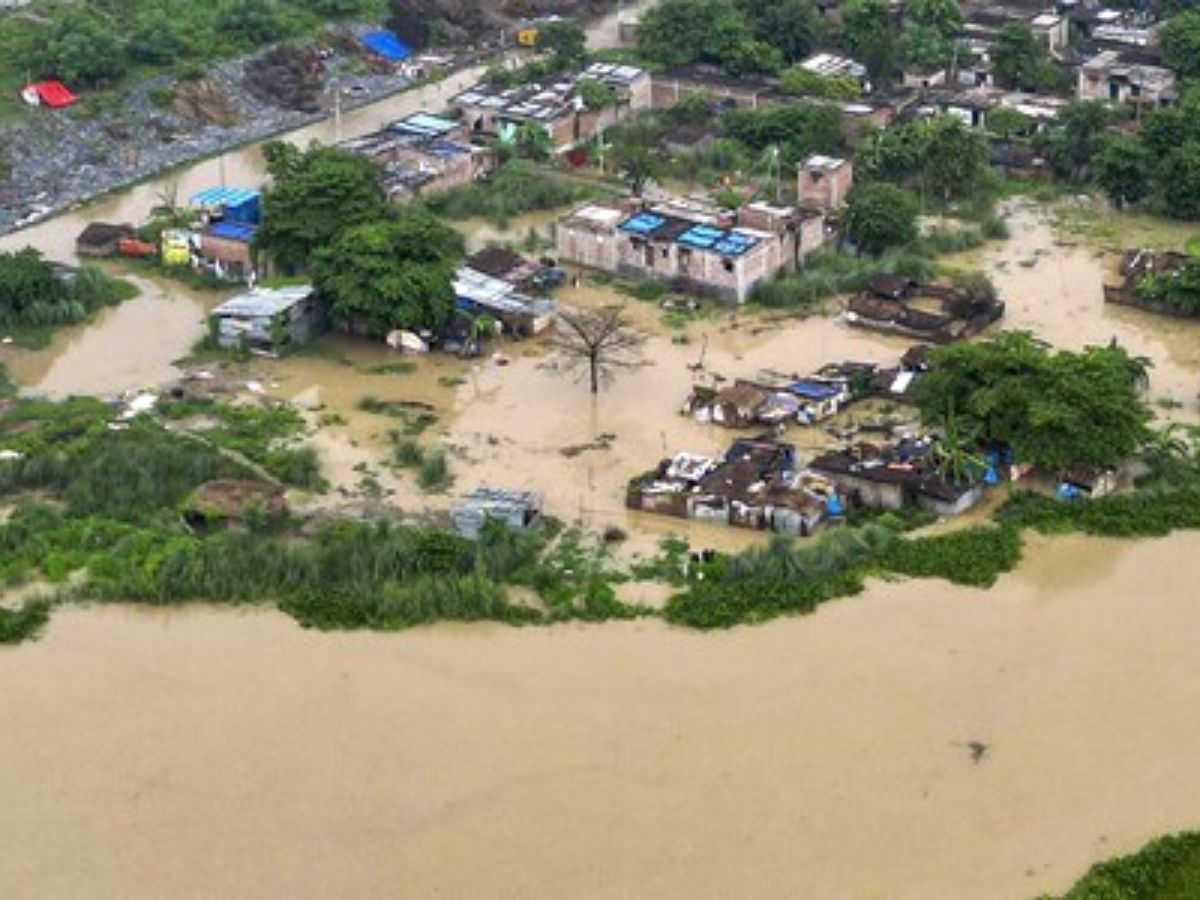
In Uttar Pradesh’s Gorakhpur division, the rapid rise in the water levels of the Rapti, Ghaghra (Sarju), Gandak, and Rohni rivers has prompted local officials to increase their preparedness for disasters. The Rapti River has risen 45 cm in the past day alone, causing anxiety in some low-lying areas and necessitating emergency evacuations.
Villages Begin Evacuation, Schools Shut
On Tuesday, district officials advised villagers from Bagha Dewar in Barhalganj tehsil to move to the designated flood relief camp at Patna Ghat in Barhalganj town. The primary school in the area has also been shut down temporarily as a safety measure. Additional District Magistrate (Finance and Revenue) Vineet Kumar Singh, accompanied by Irrigation Department’s Executive Engineer Vaibhav Singh, inspected the village and said that 83 families have been urged to take shelter at the relief site.
Also Read: All Airports on Maximum Alert After Terror Threat Warning
Water Levels Approaching Danger Marks
District Disaster Management Officer Gautam Gupta reported that the Rapti River in Bardaghat (Gorakhpur) is currently at 71.55 meters, about 3.70 meters below the official danger level. However, in Balrampur, the same river is just a meter short of breaching the danger mark. Additionally, the Badi Gandak and Rohni rivers are getting closer to hazardous levels; near Khadda town (Kushinagar) and Tirmuhani Ghat, respectively, they are flowing around one meter below the danger threshold.
The situation is even more concerning in Ayodhya and Deoria, where the Ghaghra River, also known as the Sarju, has crossed the Algin Bridge and is now flowing at 106 meters, approximately 40 centimeters above the danger level. In Barhaj town of Deoria district, the river is continuing to rise and is nearly touching the danger mark, raising serious alarm among local administrations.
Authorities on High Alert
In response to the swelling rivers, district authorities have intensified monitoring and preparedness measures across affected zones. In order to monitor water levels, evaluate embankments, and guarantee prompt communication with vulnerable communities, local disaster management teams are working in tandem with irrigation and civic authorities.
Relief camps have been set up in flood-prone areas, with essential supplies and medical support arranged to accommodate evacuees. The situation is being monitored by authorities, as forecasts indicate that rainfall in upstream regions will continue.
Residents living near riverbanks have been urged to stay alert, follow official advisories, and report any early signs of flooding or embankment breaches. Whether the current high alert level turns into a full-scale flood emergency will probably be decided in the next few days.