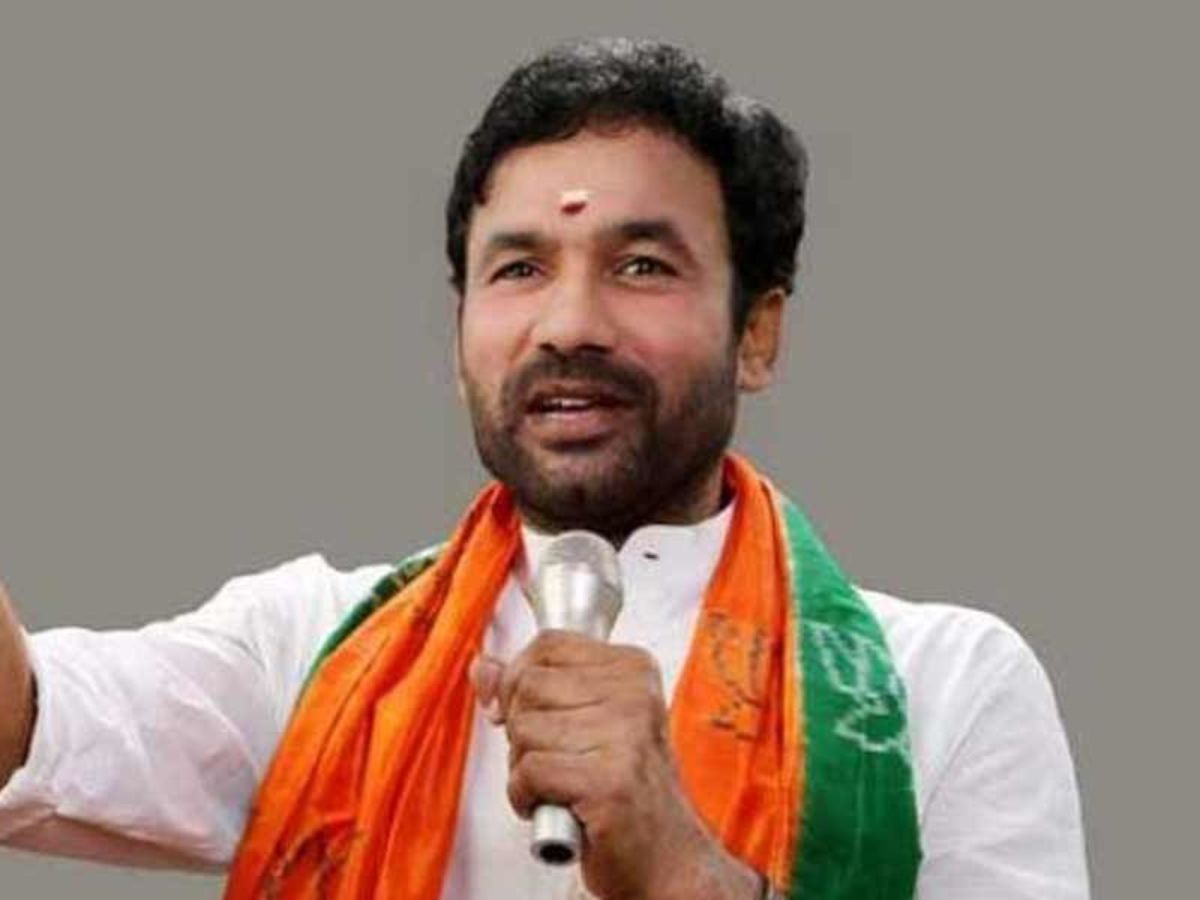
Union Minister G. Kishan Reddy described the Union Budget 2026–27 as a bold, reform-oriented blueprint aimed at reinforcing India’s economic strength, generating employment, speeding up infrastructure development, and ensuring sustained national growth. Speaking to the media, he termed it a “Reforms Express Budget” that steers clear of short-term populism and is firmly focused on the goal of building a Viksit Bharat by 2047.
He said the Budget mirrors the visionary leadership of Prime Minister Narendra Modi, under which the government has consistently introduced at least one major reform in every Cabinet meeting. This reform-driven mindset, he noted, is evident in the wide-ranging changes announced in areas such as foreign investment, information technology, critical minerals, and taxation.
Among the most significant measures benefiting the middle class is the sharp increase in the personal income tax exemption limit from ₹2–3 lakh to ₹12.5 lakh. In addition, taxes on commonly used consumer goods have been reduced, while the tax on money spent by students studying abroad has been lowered from 5 per cent to 2 per cent.
Highlighting Telangana’s gains, Kishan Reddy said the state’s share in central tax devolution has increased by 13.5 per cent, rising from ₹29,280 crore in 2025–26 to ₹33,180 crore in 2026–27.
The Budget gives strong thrust to infrastructure, especially railways, with seven high-speed rail corridors announced nationwide, including three from Hyderabad—Hyderabad–Pune, Hyderabad–Bengaluru, and Hyderabad–Chennai. He said these projects would significantly boost Hyderabad’s fast-growing IT, biopharma, and real estate sectors. Railway capital expenditure has been raised by 10 per cent to ₹2.77 lakh crore, while 42 railway stations in Telangana are being redeveloped under the Amrit Bharat Station Scheme.
The BioPharma SHAKTI programme will further strengthen Hyderabad’s position as the Pharma and Vaccine Capital of India by boosting domestic production of biologics and biosimilars. The textile sector has also received a boost through the TEX-ECO programme, with the Kakatiya Mega Textile Park in Warangal set to benefit.
For MSMEs, a ₹10,000 crore Growth Fund has been announced, expected to benefit around 38 lakh MSMEs in Telangana and support job creation.
Women’s empowerment has been strengthened with the decision to build one girls’ hostel in every district, including 33 hostels in Telangana, to support higher education in STEM fields.
Urban development has also been prioritised, with incentives for cities raising large municipal bonds, continuation of AMRUT funding for 32 towns in Telangana, and an allocation of nearly ₹28,740 crore for MRTS and Metro projects. On the Hyderabad Metro, Kishan Reddy said the Centre is ready to fund the project once the state government clarifies the proposal and submits a detailed DPR.
The Budget also promotes digital infrastructure by offering a tax holiday until 2047 for foreign companies using Indian data centre services, a move expected to attract more investments to cities like Hyderabad. Additionally, a Rare Earth Minerals Corridor spanning four states has been announced to strengthen energy and mineral security and reduce India’s heavy dependence on imports.
The Union Minister flagged governance concerns in Telangana, alleging that the phone tapping case has remained unresolved for over two years and involved misuse of government machinery. He said the issue is now before the High Court and should be addressed through due legal process.
Kishan Reddy accused both Congress and BRS of promoting corruption, claiming public trust in the two parties has eroded. He alleged internal conflicts within the KCR family over finances and accused ministers in the Revanth Reddy government of fighting over commissions. Pointing to the state’s financial stress, he said Telangana is struggling to pay retirement benefits and has pending dues of ₹51,000 crore to Singareni Collieries.
Expressing confidence in the BJP’s prospects, he said the party expects strong results in the forthcoming municipal elections. He added that the Union Budget 2026–27 lays a solid foundation for long-term economic growth, employment generation, and national development, with Telangana poised to benefit significantly as India moves towards becoming a developed nation by 2047.