
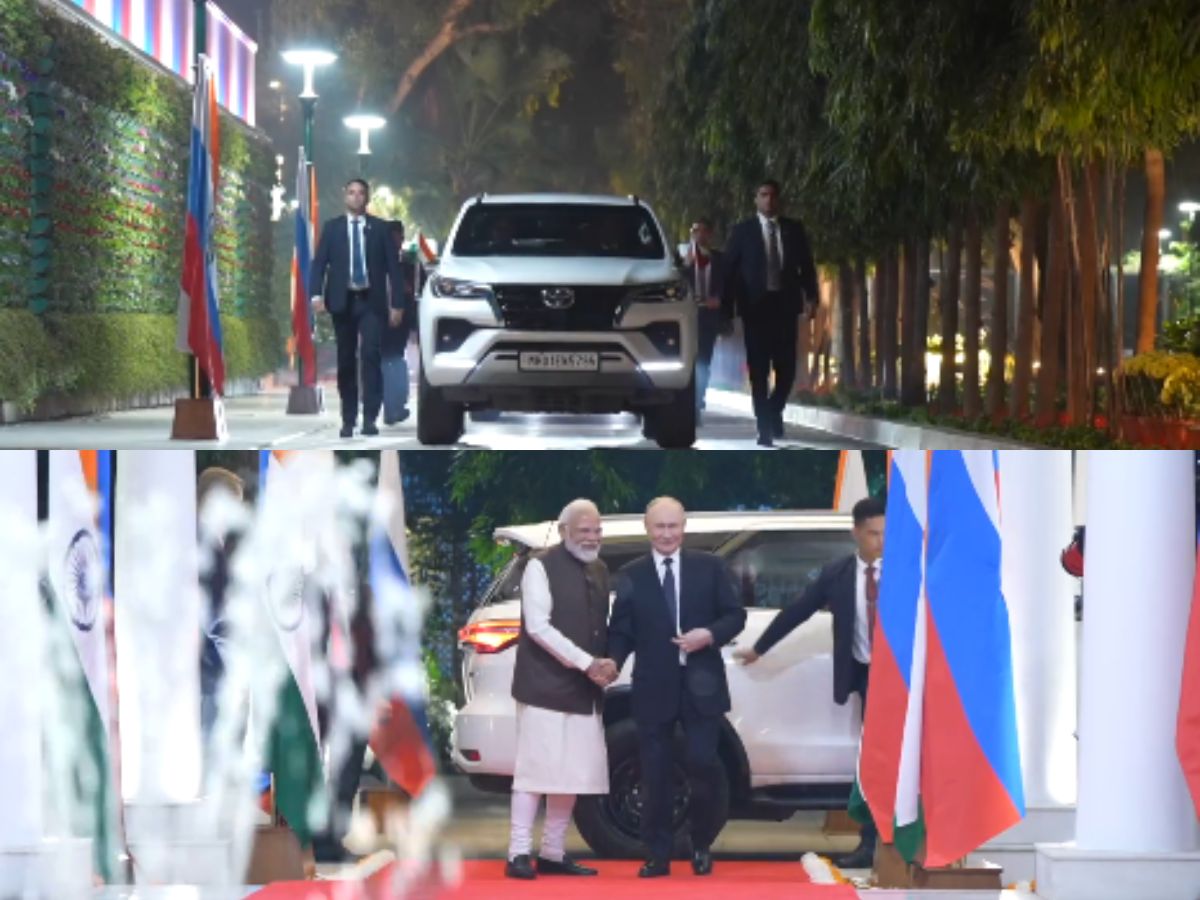
Prime Minister Narendra Modi broke standard diplomatic protocol on Thursday by personally receiving Russian President Vladimir Putin at Delhi’s Palam Technical Area upon his arrival for a two-day state visit. The two leaders then departed in the same car, a symbolic move underscoring the enduring strategic partnership between India and Russia at a time of intense global scrutiny. Putin’s first visit to India since Moscow invaded Ukraine in 2022 will include crucial discussions meant to strengthen bilateral cooperation.
What Do the Warm Gestures Signal?
PM Modi personally receiving him at the airport is a rare gesture usually meant for India’s closest partners, showing how important New Delhi considers its ties with Russia. The move also recalled the time President Putin waited for PM Modi for a joint car ride during an SCO summit in China.
These gestures carry strong diplomatic meaning, showing both countries’ deliberate attempt to display warmth and steady relations. They set the mood for the 23rd India-Russia Annual Summit on Friday, December 5, where the leaders will discuss global challenges while prioritising shared national interests.
What is on the Russia- India Summit Agenda?
The talks come at a critical juncture. Russia wants to stay relevant globally despite Western distancing, while India continues its fine diplomatic balance, preserving older ties as it builds relations with Western countries.
Key discussion points are expected to include:
- Trade & Energy: Building economic relations further, with attention on protecting energy trade despite Western pressure to reduce Russian oil buying.
- Defence Cooperation: Advancing old military-technical ties and joint manufacturing plans.
- Regional & Global Issues: Covering the Ukraine crisis, Afghanistan’s situation, and coordination at international platforms.
Why is This Visit Significant?
This is President Putin’s first trip to India since the Ukraine war escalated, making it a highly watched diplomatic moment. It highlights India’s independent foreign policy, often called “strategic autonomy,” as it welcomes a leader largely avoided by the U.S. and Europe.
The visit also follows recent increased pressure from the United States on India regarding its purchase of Russian oil. By rolling out the red carpet, India is demonstrating its intent to pursue a relationship based on its own strategic calculations and historical ties.
Your Questions Answered: Modi-Putin Summit FAQs
Q: Why did PM Modi personally receive Putin at the airport?
A: Such a gesture is unusual and generally given only to trusted friends. It indicates India’s intent to preserve solid ties with Russia despite international criticism linked to the Ukraine war.
Q: What are the main goals of this visit for India?
A: Key goals include securing stable and discounted energy supplies (oil), advancing defence cooperation with a focus on joint manufacturing, and discussing regional stability, all while balancing its relationships with Western nations.
Q: What does Russia hope to achieve?
A: Russia aims to show it is not isolated globally, bolster economic partnerships to offset Western sanctions, and maintain its influential defence and strategic relationship with a major power like India.
Q: Will the Ukraine war be discussed?
A: Almost certainly. While India has not condemned Russia, it has consistently called for dialogue and peace. The leaders are expected to discuss the conflict’s global implications.
Q: What are the key events during the state visit?
A: The agenda has the annual summit and bilateral discussions on December 5, then a formal reception at Rashtrapati Bhavan and a wreath-laying ceremony at Rajghat, Mahatma Gandhi’s memorial, on December 6.